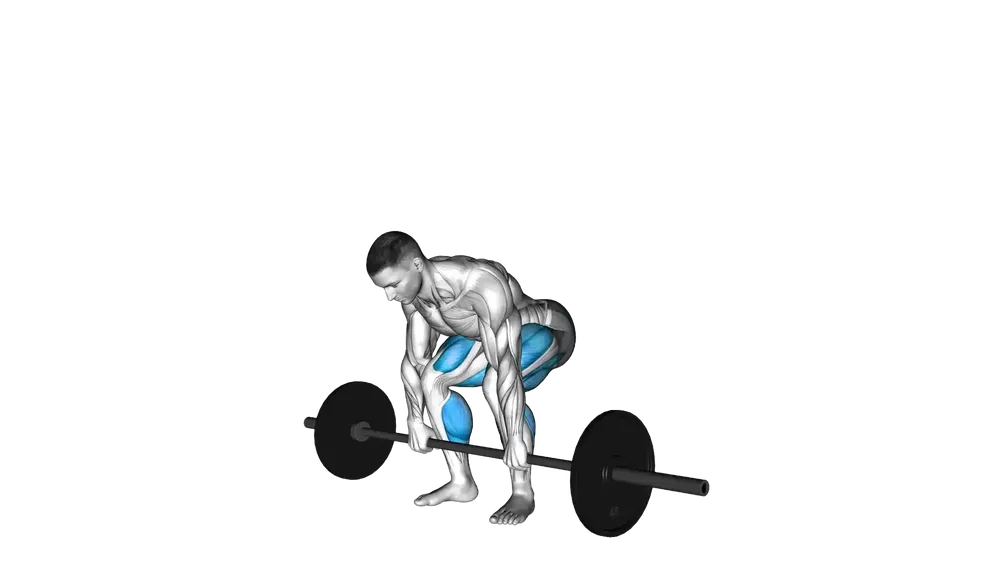
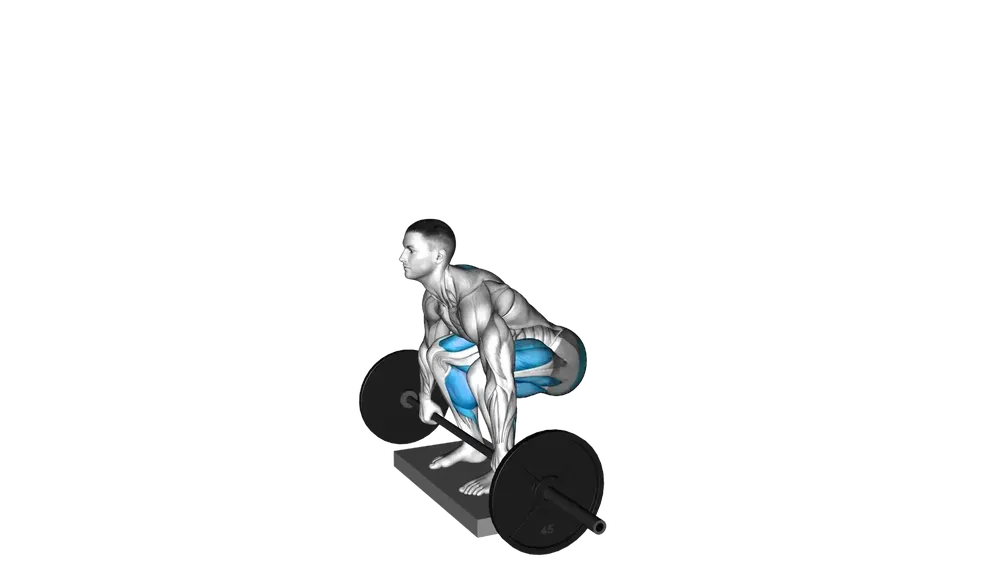
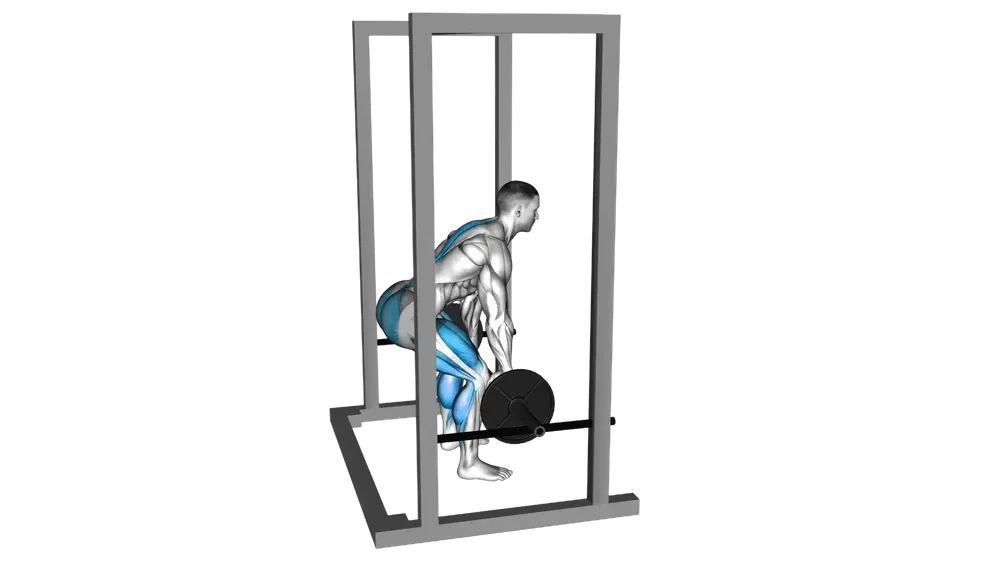
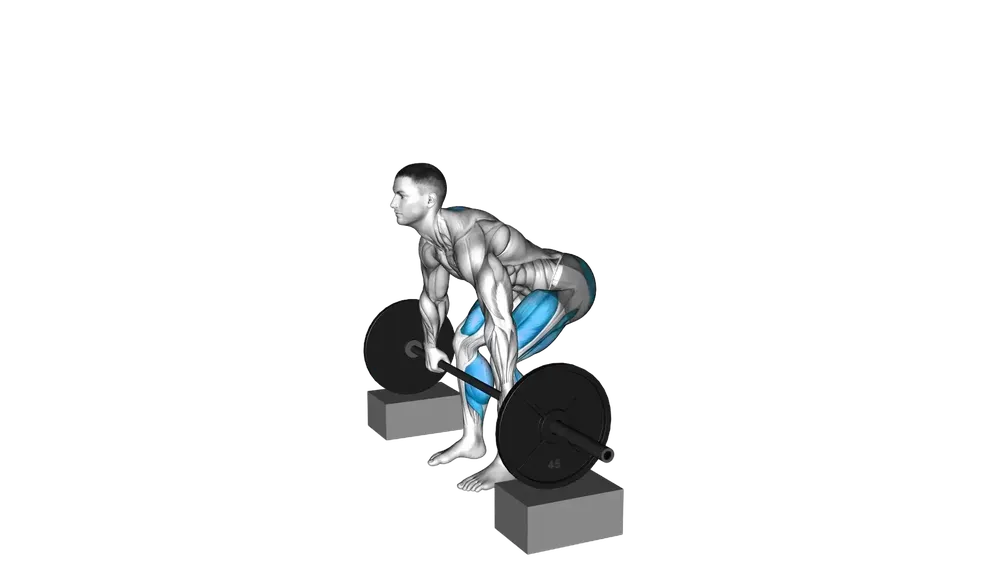
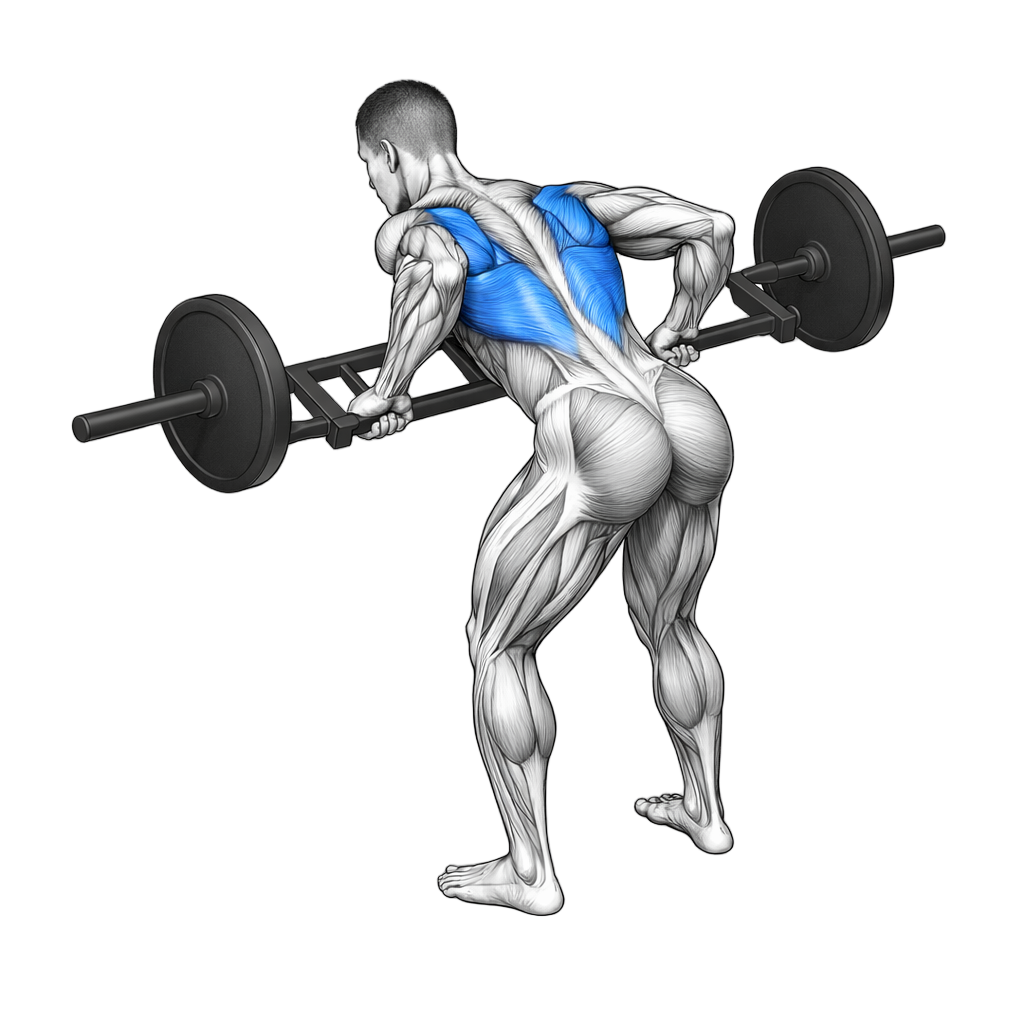
Stand inside and row heavy for a thick, dense back.
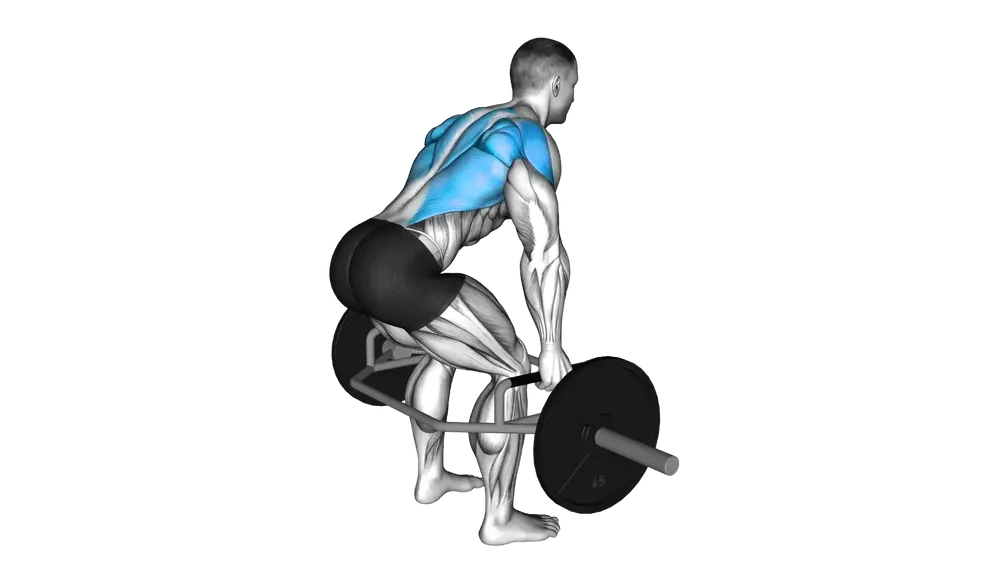
Hold your hinge position steady, don't stand up to swing the weight.
Standing inside the frame with neutral handles at your sides lets you row heavy loads through a strong, natural pulling line, elbows driving straight back as the lats and mid-back contract hard at the top. Because the weight is centred around your body instead of in front of it, the hinge costs less lower-back effort, leaving more in the tank for the actual rowing. It earns its place as a heavy back thickness builder for lifters who want big rows without the wrist and back complaints of a straight bar.
The lats and the muscles across your mid-back do the pulling, with the biceps assisting on every rep. The neutral grip tends to make it easy to feel the elbows driving back, which keeps the back rather than the arms in charge.
Fatigue is unhinging you. When the weight gets heavy, the temptation is to stand up and heave. Lock your hinge angle before the set, lower the load if you must, and finish each rep with a deliberate squeeze at the waist.
Absolutely. It loads heavy, progresses cleanly and covers horizontal pulling as well as any row. Pair it with a vertical pull like pull-ups or pulldowns and the big rocks of back training are covered.