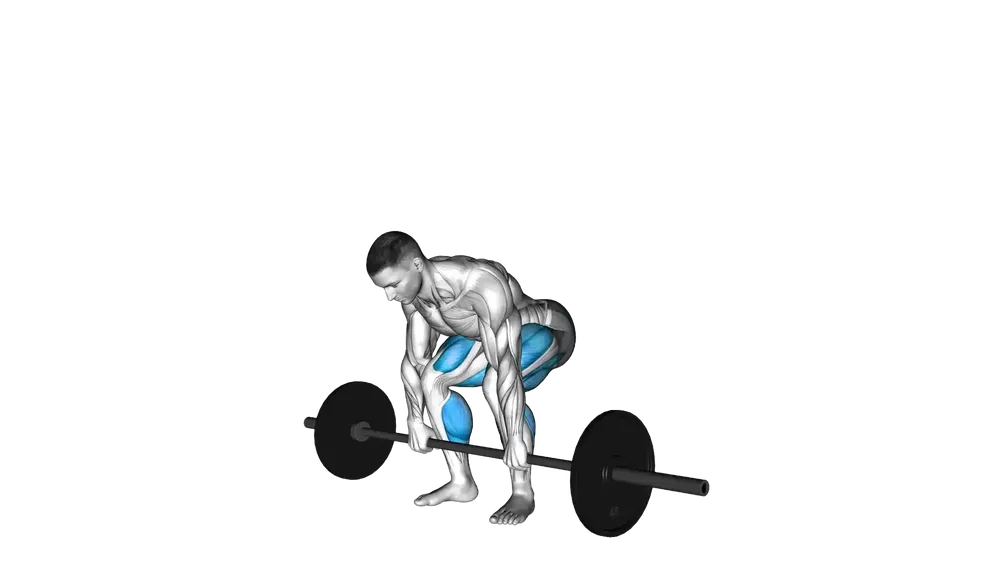
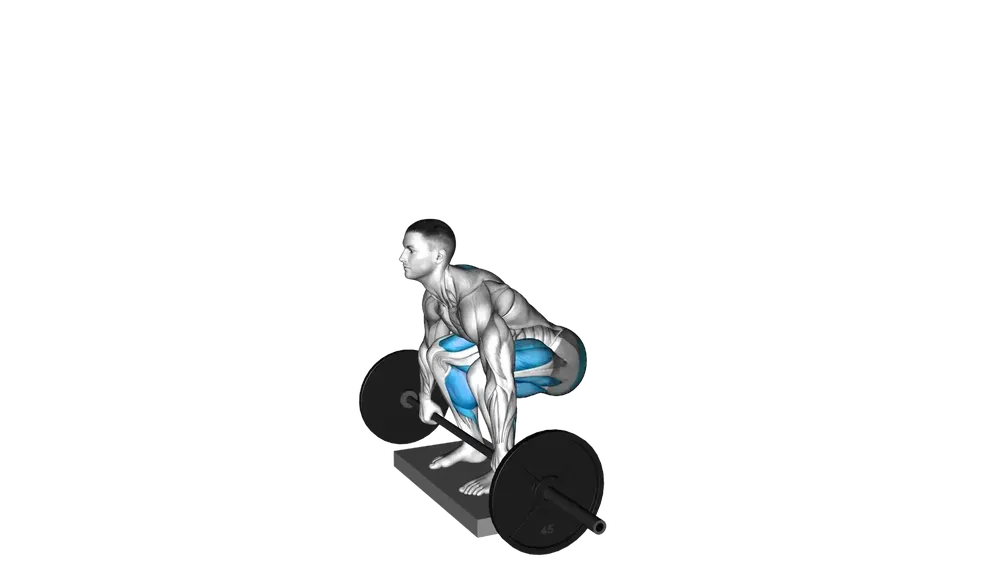
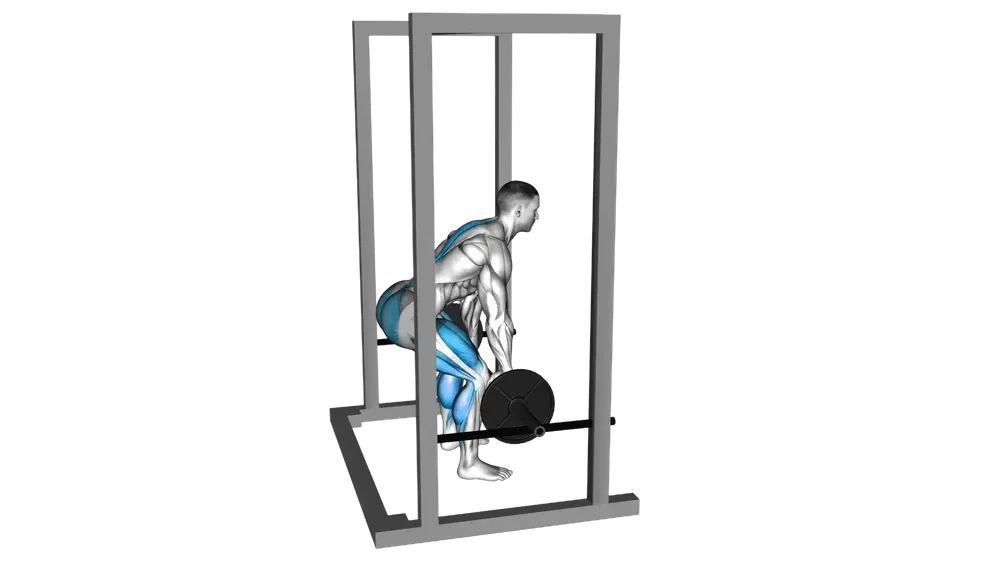
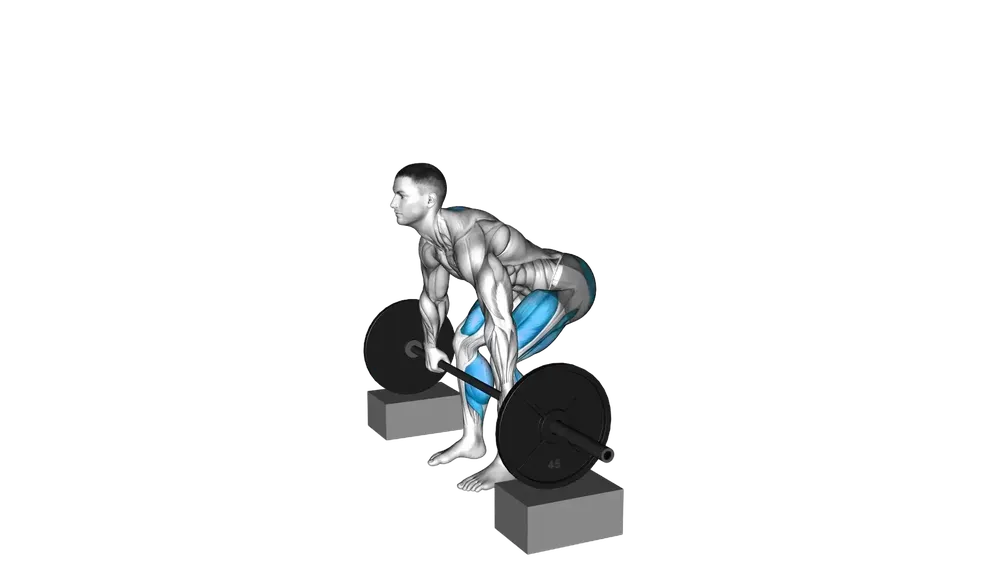
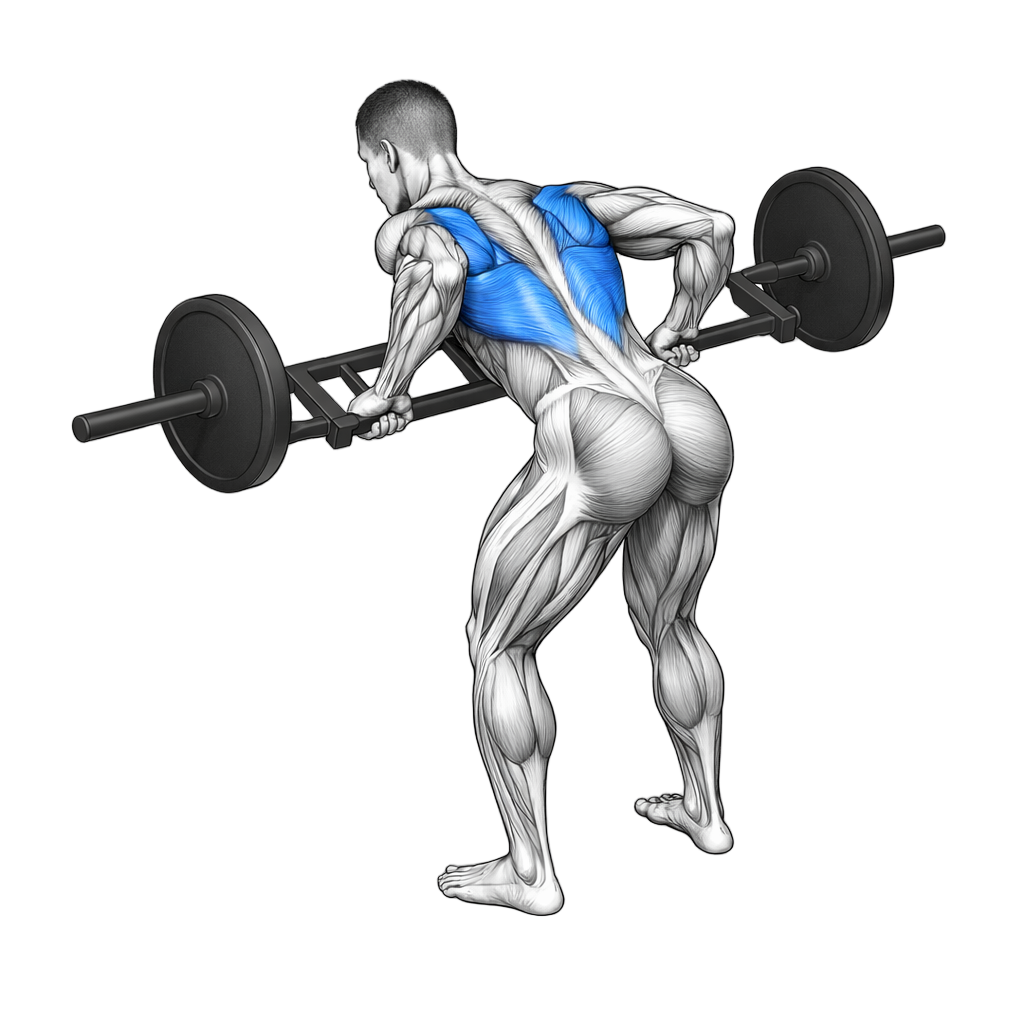
Neutral grip on the trap bar means a stronger, safer row.
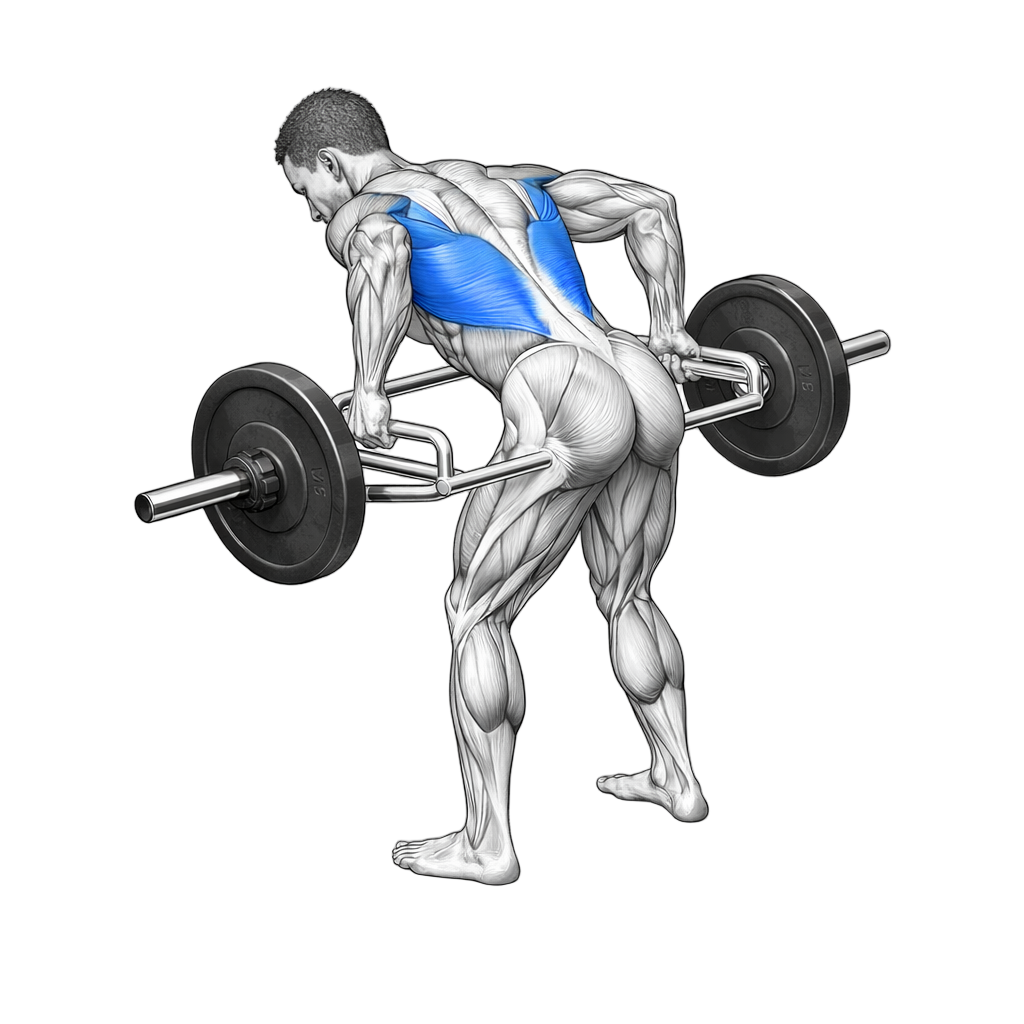
Keep your torso angle fixed and pull to your waist, let your back do the work, not your hips.
Hinging inside the trap bar puts the neutral handles right at your sides, so the row pulls through your strongest wrist and elbow line while the frame keeps the load balanced around you rather than out in front. The lats and mid-back drive the elbows back, the biceps assist, and the centred load makes the hinge noticeably easier to hold than a barbell row. It earns its place as the row for going heavy without your lower back or wrists cashing the cheque.
The load surrounds you instead of hanging in front of your shins, which takes strain off the lower back, and the neutral handles keep your wrists and elbows in their happiest line. Most lifters find they can row heavier with cleaner form inside the bar.
Somewhere around 45 degrees or a bit lower, deep enough that the pull travels to your waist with elbows driving back. Pick your angle, brace, and keep it welded in place, a torso that pumps up and down is doing hip work, not back work.
They are different lifts sharing a bar. The deadlift trains the whole body lifting from the floor, the row holds a hinge and pulls with the back. In a full programme they complement each other rather than compete.