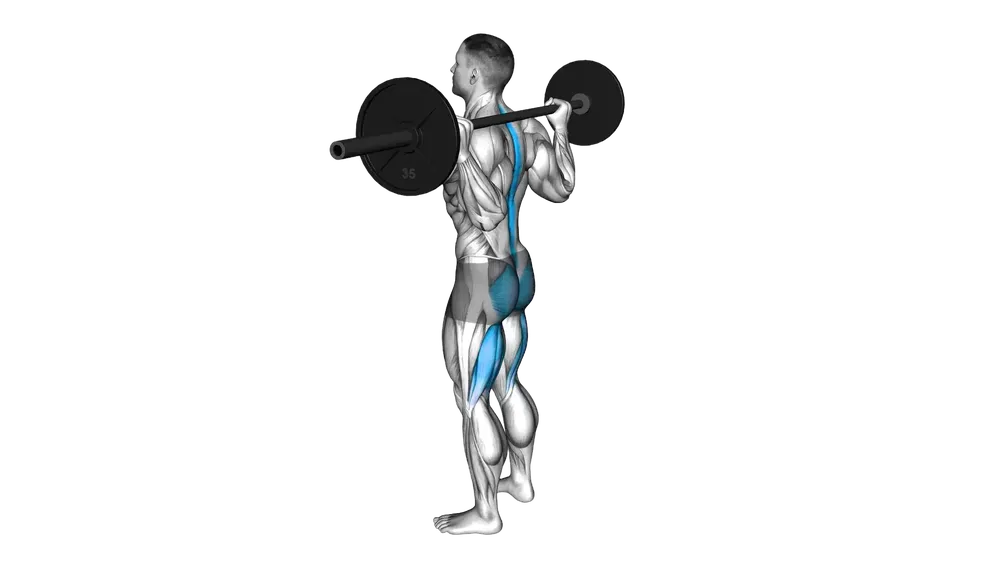
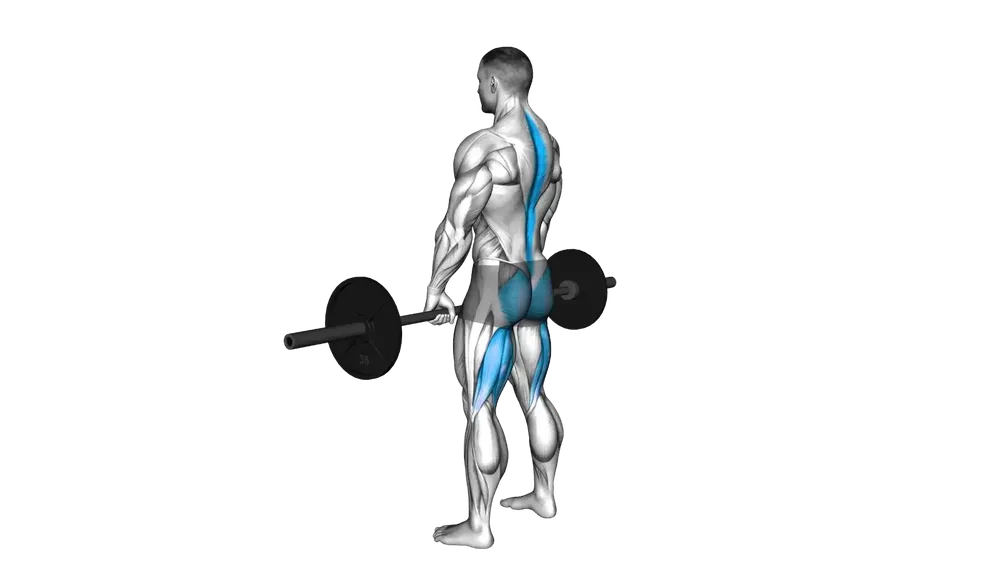
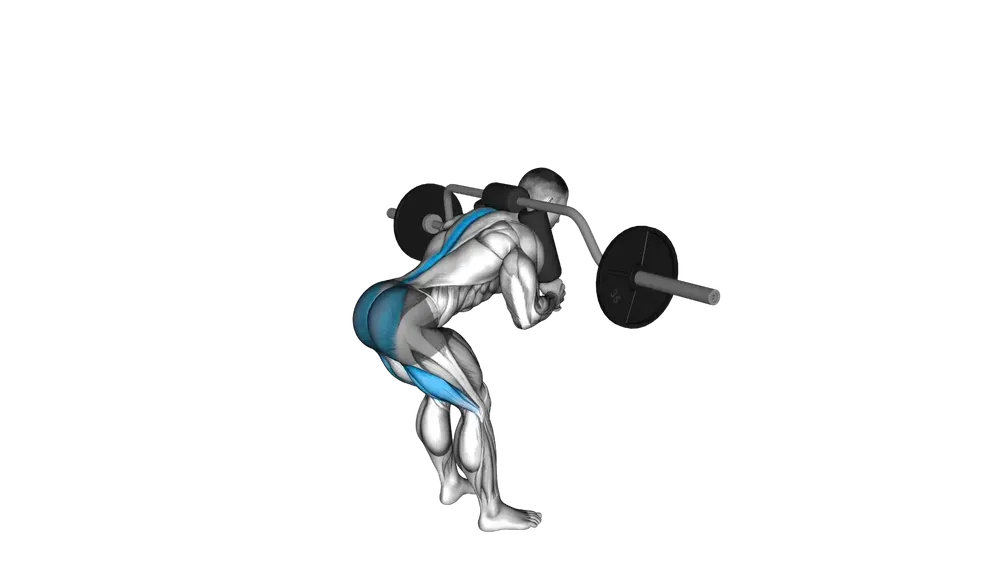
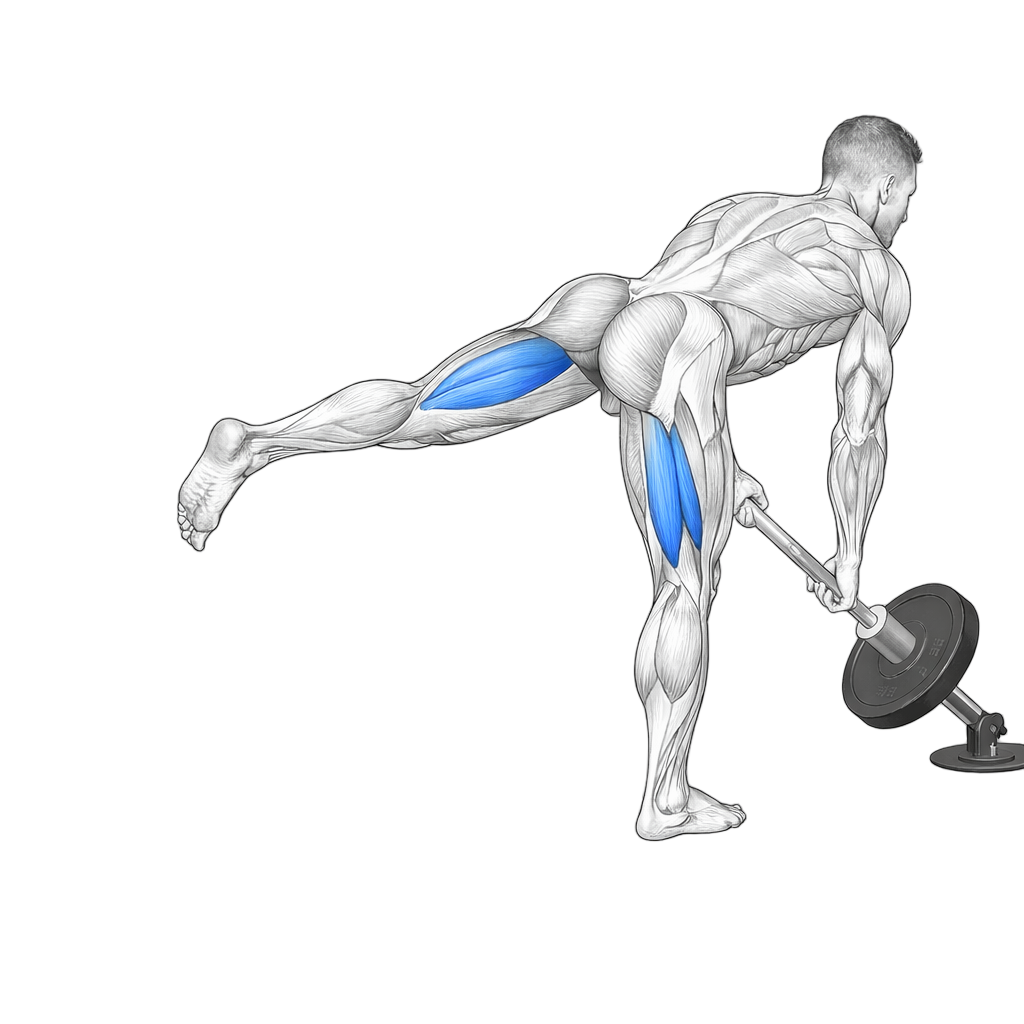
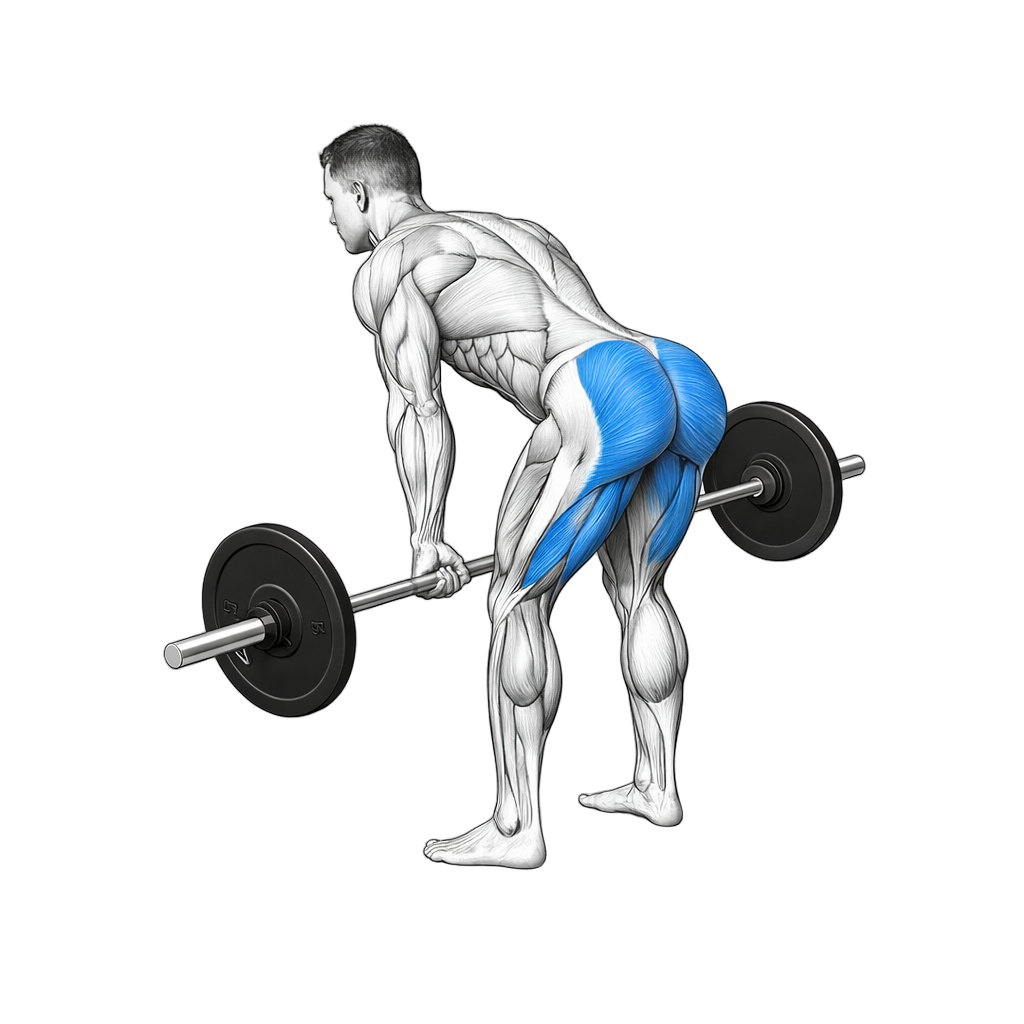
Hinge with the bar on your back and feel hamstrings you forgot you had.
Keep your back flat and stop when your hamstrings cap out. Don't round to chase more depth.
With the bar across your upper back and knees nearly straight, hinging forward stretches the hamstrings under load through their full length while they and the glutes fight to control your torso on the way down and drive it back up. The back earns its listing too, bracing isometrically to keep your spine flat against the leverage of the bar sitting so far from your hips. It is a potent posterior chain builder that rewards modest weights and punishes ego loading.
Knee bend. A standard good morning allows a soft, slightly bent knee, the stiff-legged version keeps the legs nearly straight, which shifts even more of the stretch and workload onto the hamstrings. Expect to use less weight and feel more.
Light, then lighter than that. The bar sits a long way from your hips, so leverage does the loading for you. Most lifters get plenty from a fraction of their squat weight with a slow lower and a hard hamstring stretch.
Only as far as your hamstrings allow with a flat back. For most people that is a torso somewhere between 45 degrees and parallel. The moment your lower back starts to round, you have gone past your range.