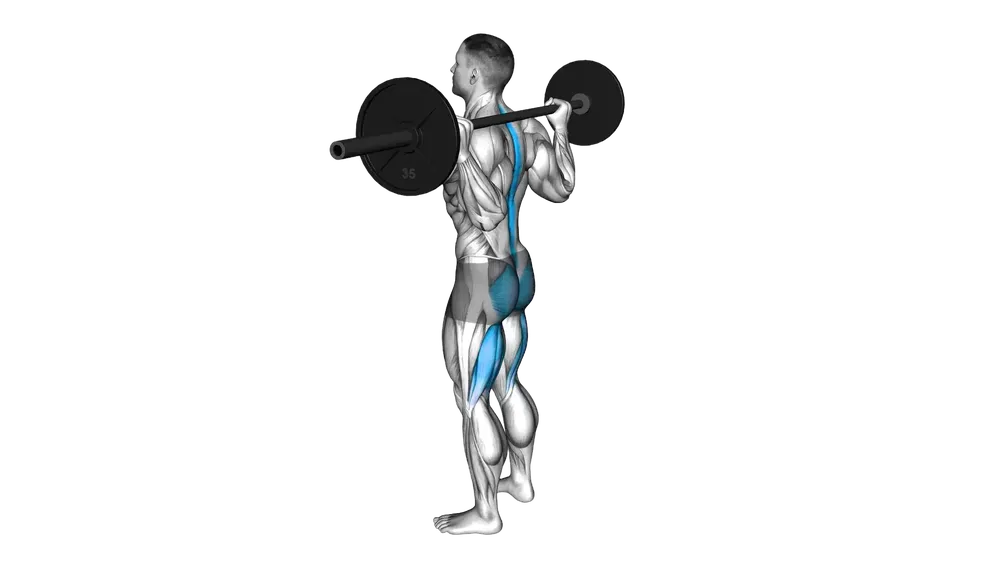
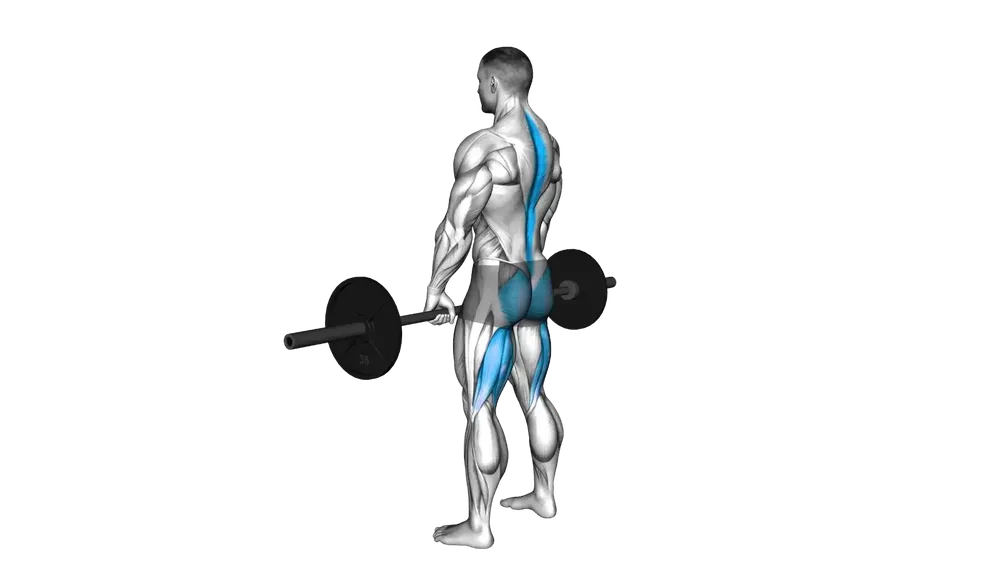
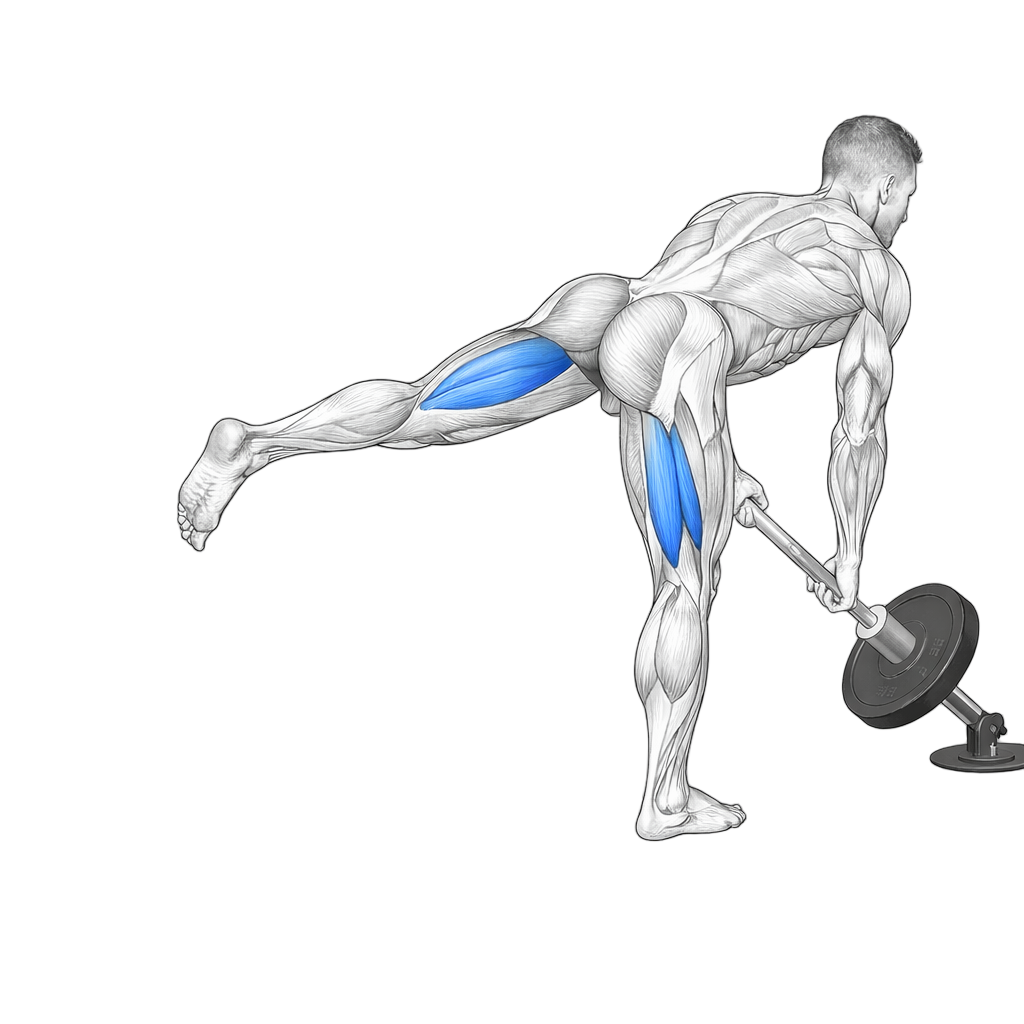
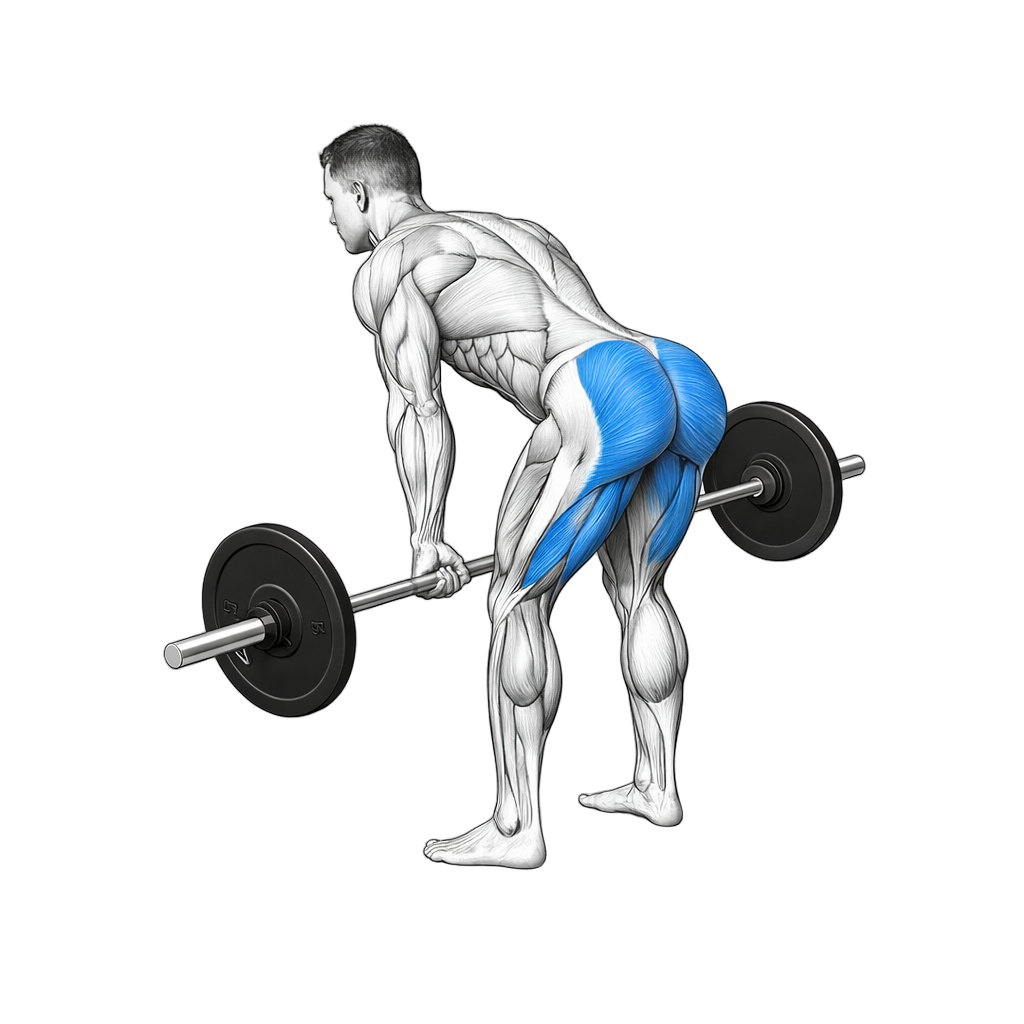
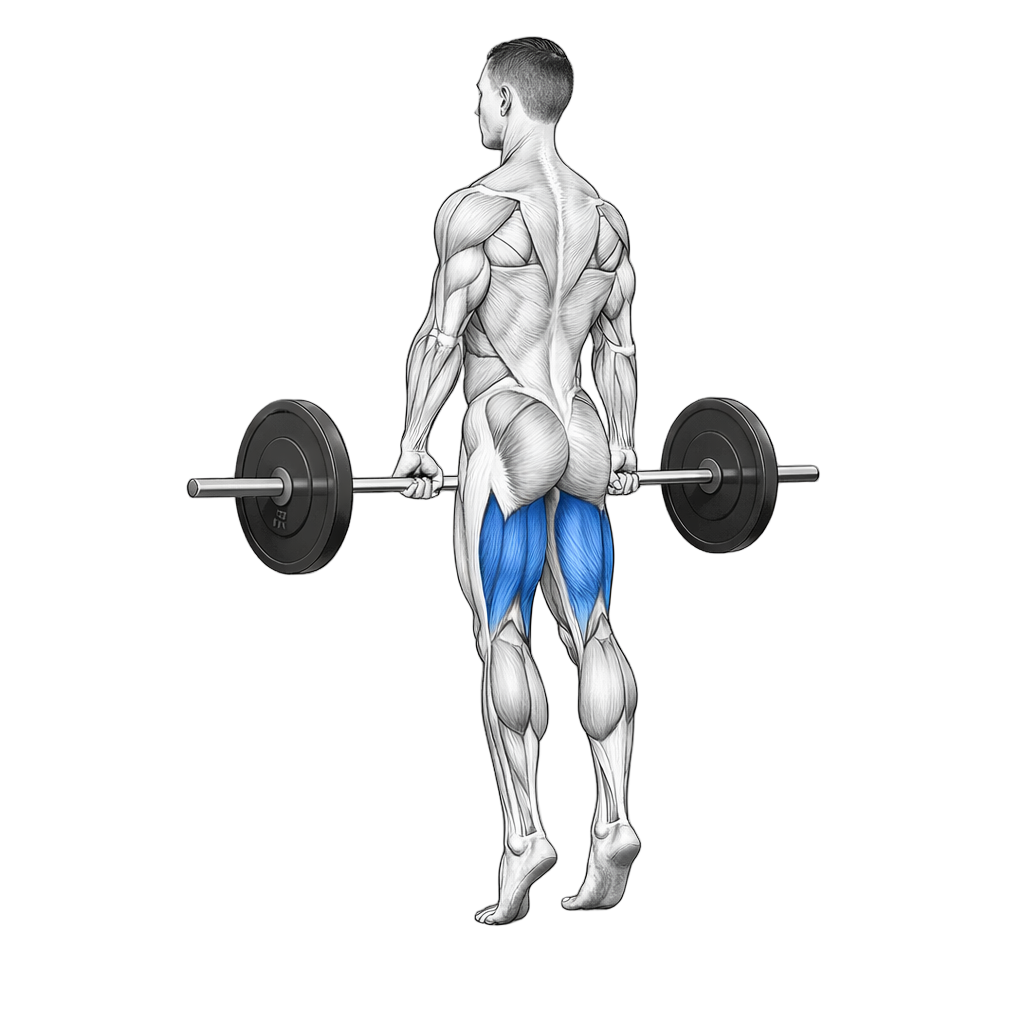
Hinge with the padded yoke bar to torch hamstrings without the shoulder strain.
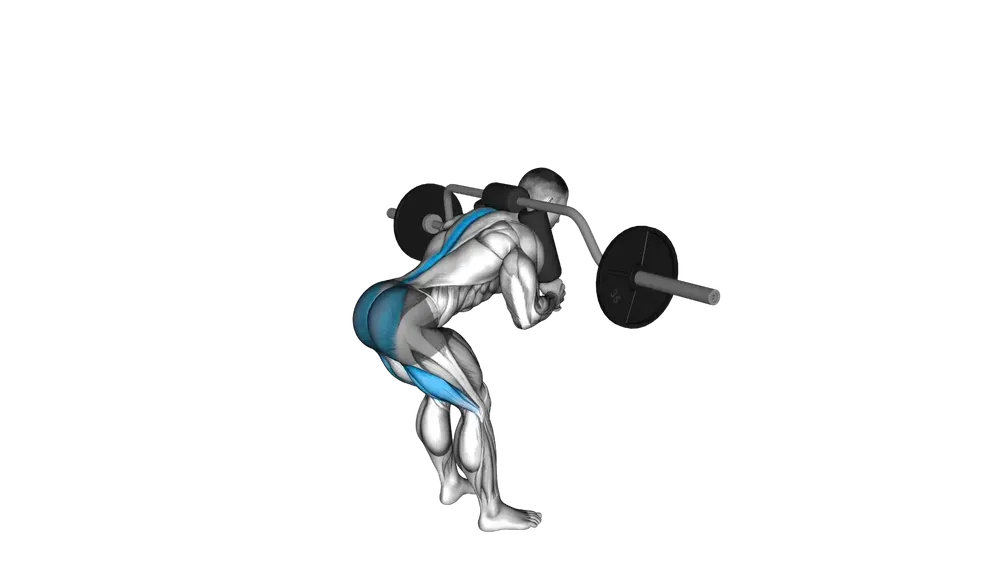
Keep your back flat and hinge from the hips, the bar's forward pull tests your bracing.
The safety bar sits high on your traps and tips your torso forward, so the good morning becomes a loaded hinge that stretches your hamstrings deeply as your chest lowers. Your back has to work the whole time to keep your spine rigid against that forward pull, which is exactly what makes this variation such a strong posterior-chain builder. The padded yoke and forward handles also mean you can do it without wrenching your shoulders into a low bar position.
The handles let you hold the bar in front without shoulder strain, and the pad sits comfortably on your traps. The camber also shifts weight slightly forward, which challenges your bracing more and keeps the load honest.
Until you feel a strong hamstring stretch with your back still flat, usually a torso somewhere near 45 degrees or a bit below. The moment your back starts to round, you have gone past your range for that load.
Much lighter than your squat. This is a hamstring and back builder, not an ego lift, so start with just the bar, own the hinge, and add weight only while every rep stays flat backed and controlled.