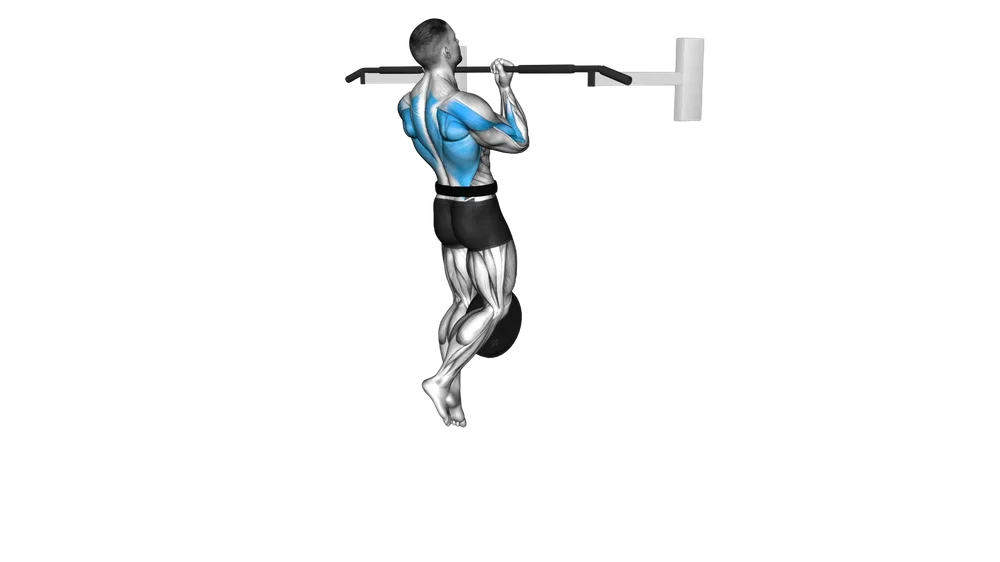
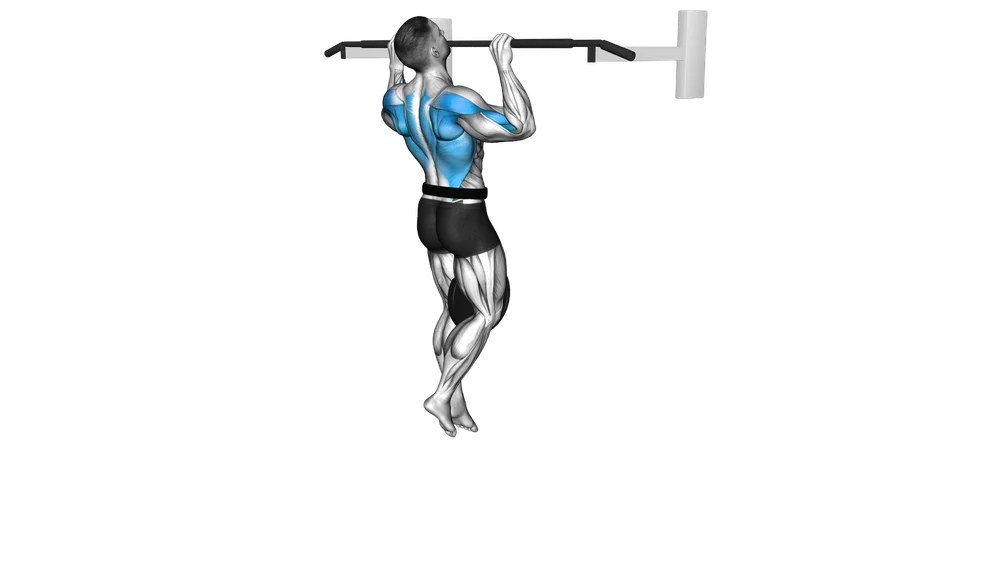
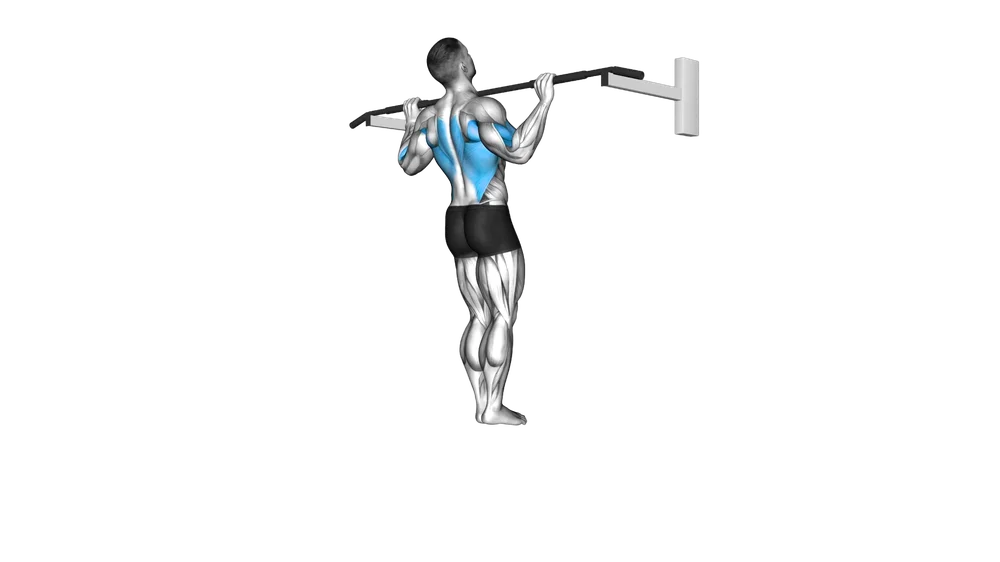
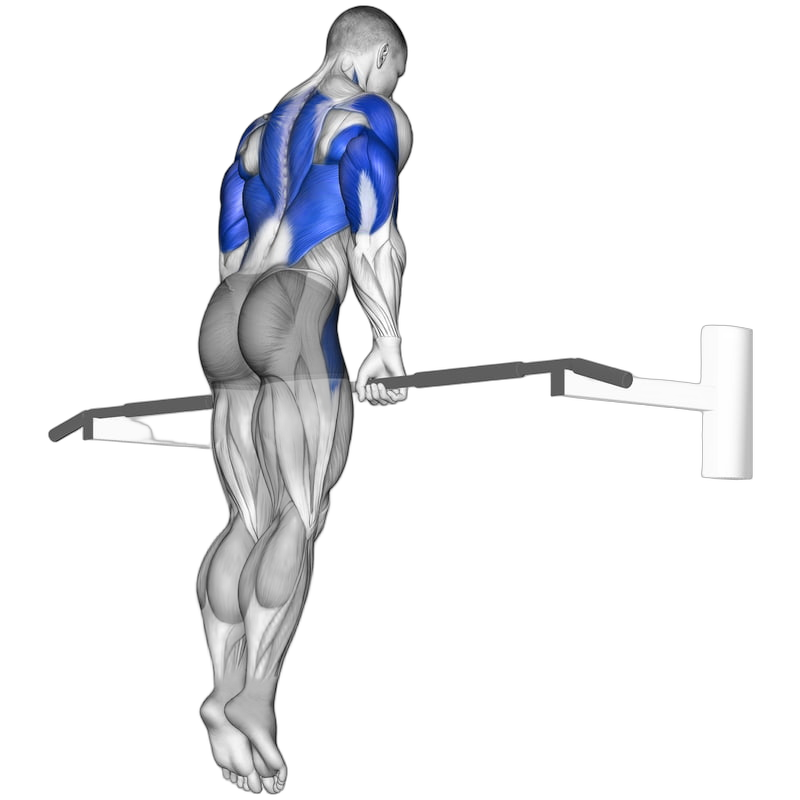
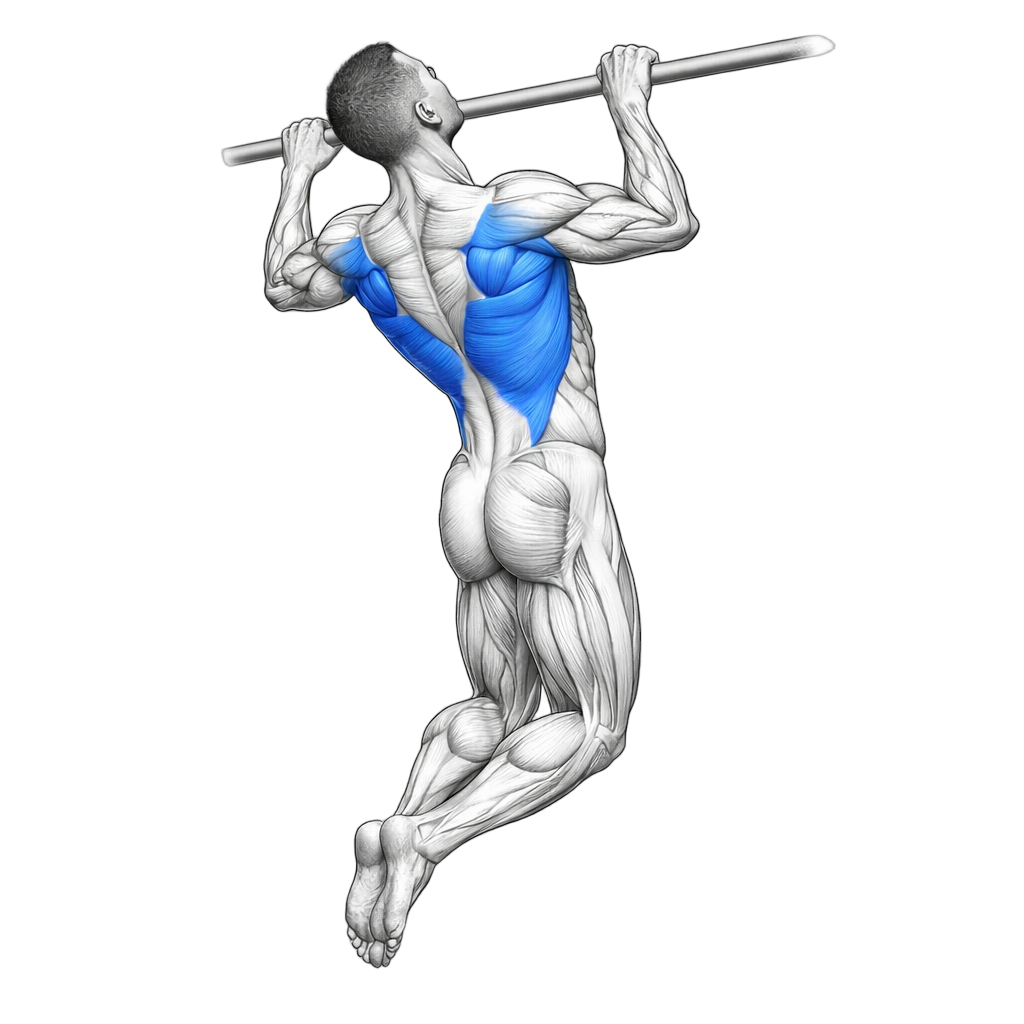
Get to the top and just hang out. Your back will scream.
Keep your chin above the bar and elbows pulling down. Don't let your shoulders creep up to your ears.
Parking your chin over the bar turns the top of a pull-up into an isometric, forcing the lats and the rest of your back to hold peak contraction for time instead of touching it for a split second. The biceps work hard to keep the elbows closed and the forearms fight to keep the grip alive, which is usually what fails first. It earns its place building top-end pulling strength, and it is one of the best drills for anyone chasing a first strict pull-up.
Massively. Owning the top position builds the exact strength most beginners lack, so jump to the top, hold as long as you can, and lower slowly. That combo is a proven route to rep one.
Whatever you can hold with chin over the bar and shoulders pinned down, even 5 seconds counts. Build toward 10 to 20 second holds across a few sets before adding more.
A dead hang is arms straight at the bottom and mostly trains grip and shoulder positioning. The pull-up hold happens at the top with elbows bent, so your back and biceps carry the load, not just your hands.