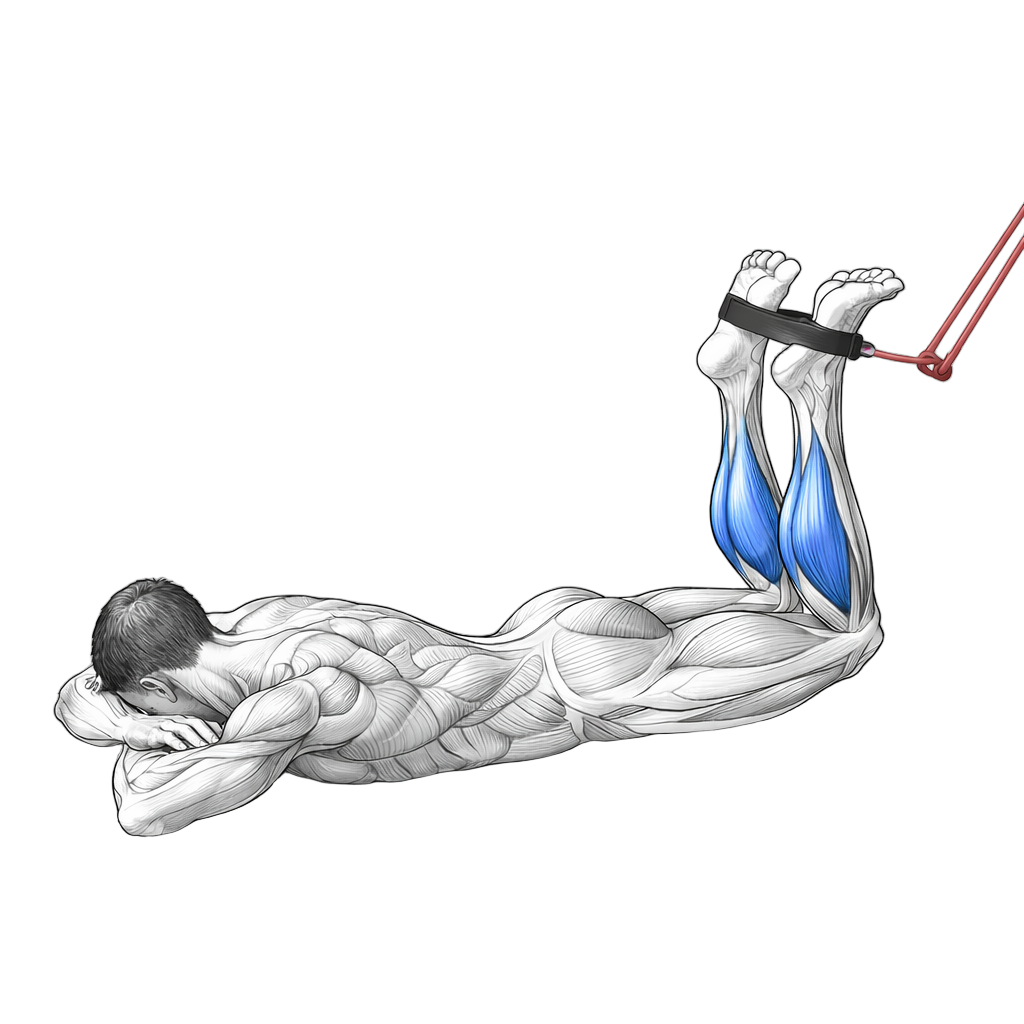
Band tension turns a simple hinge into hamstring fire.
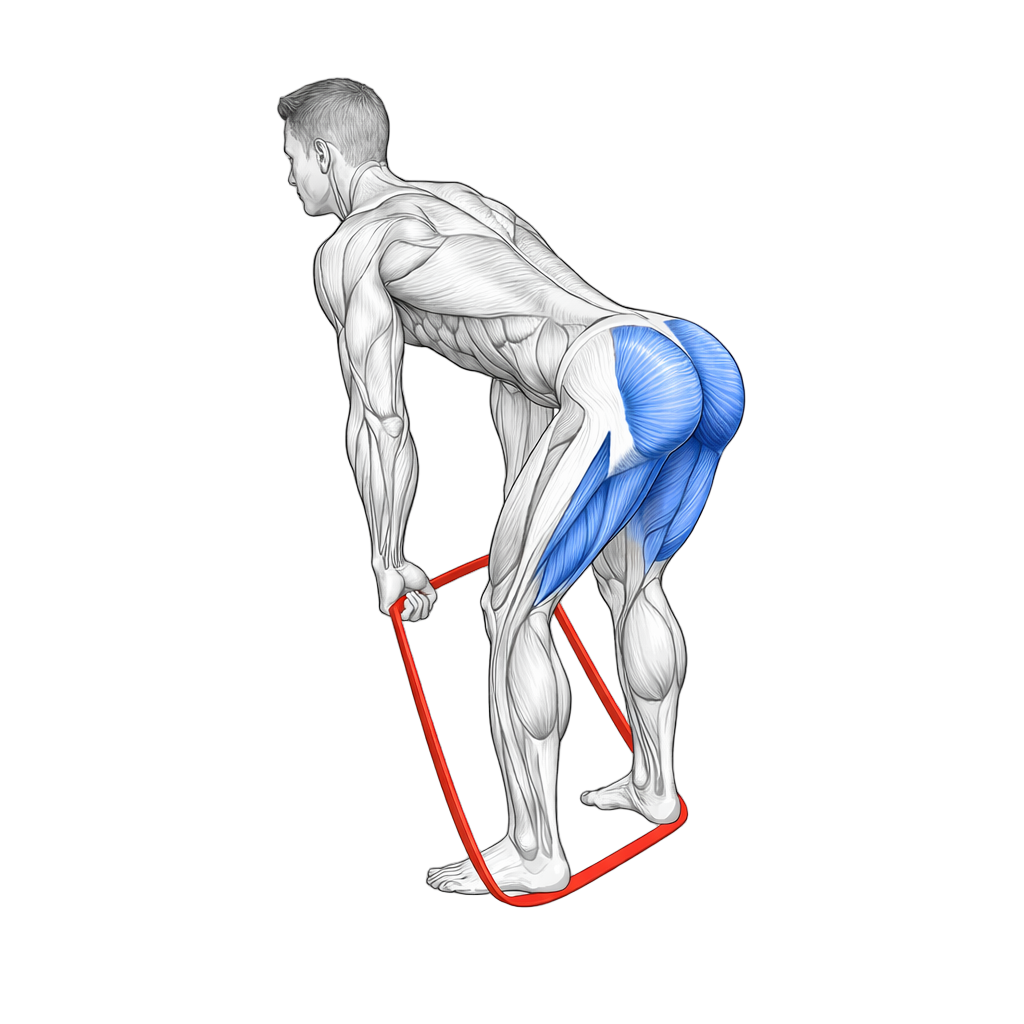
Resist the band on the way down too, don't just snap back up.
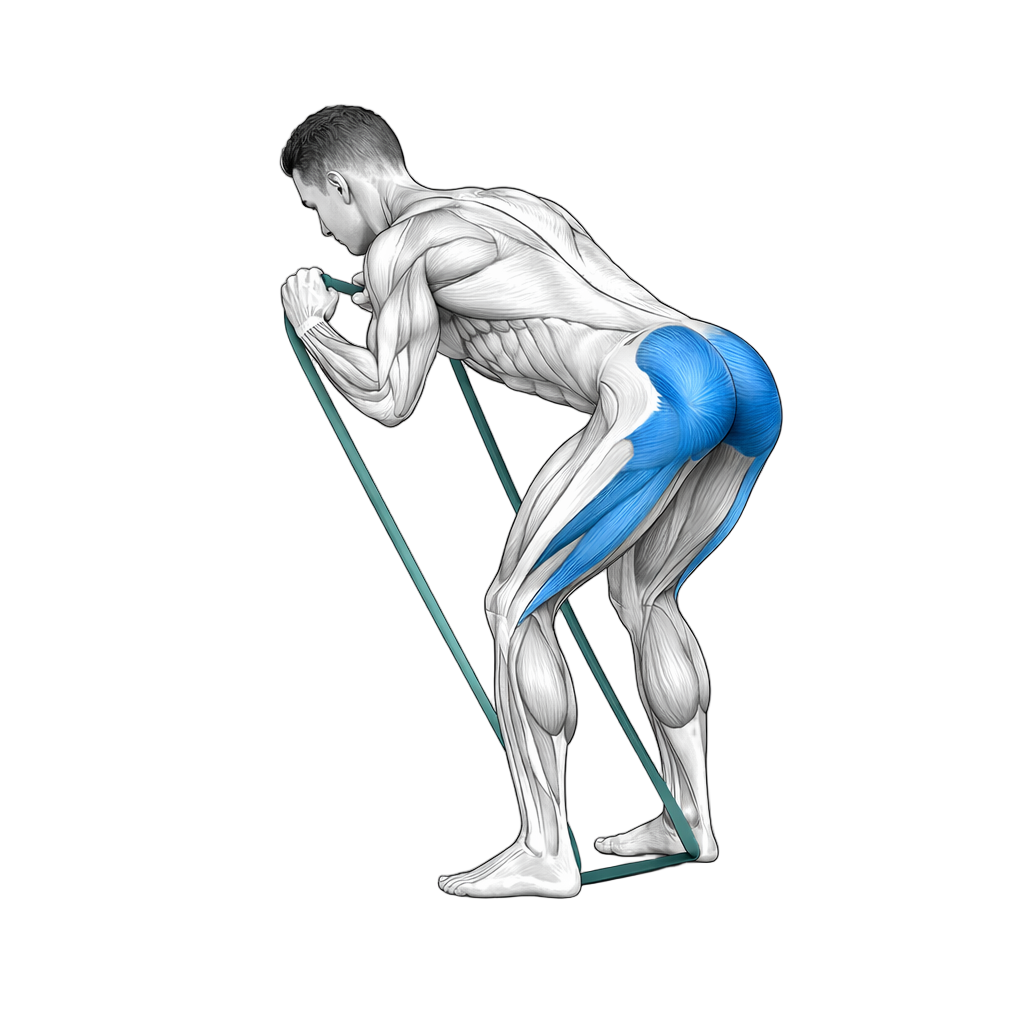
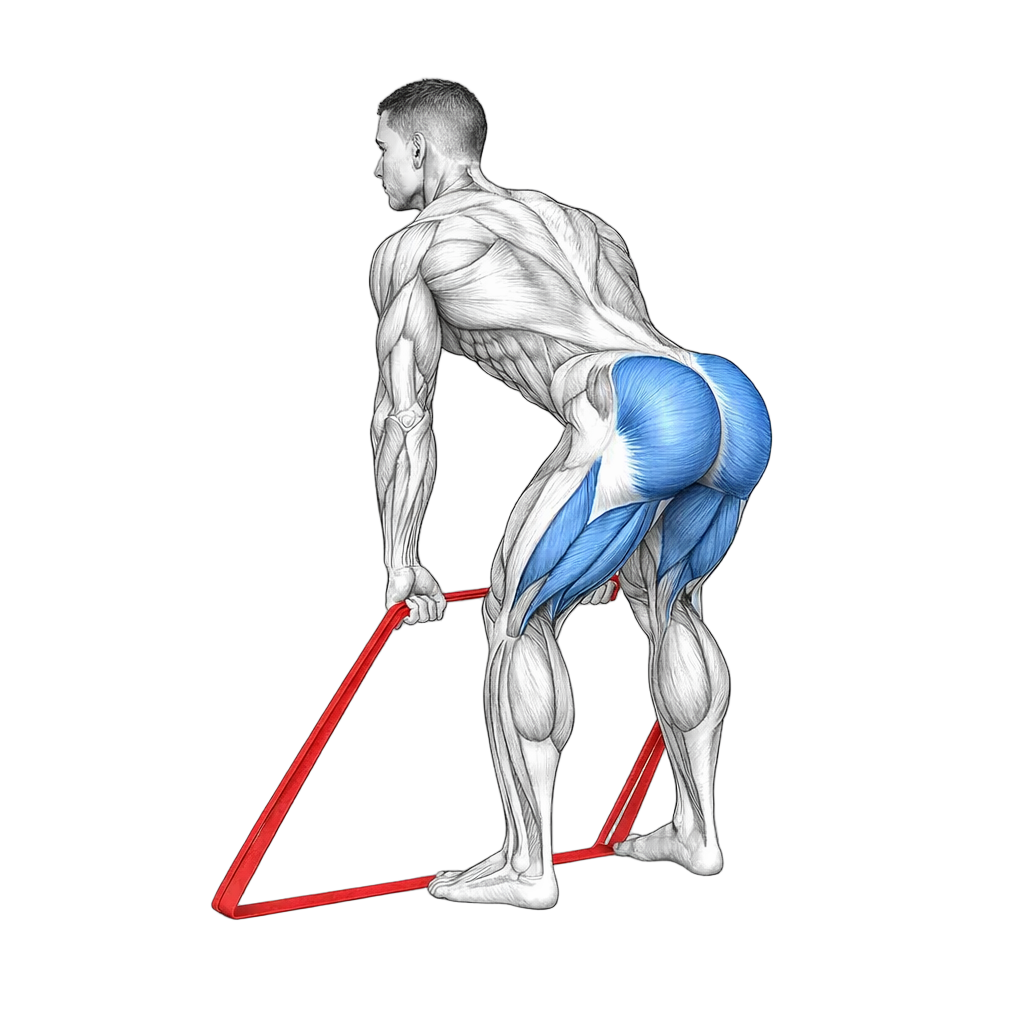
The banded RDL keeps the knees mostly fixed and sends the hips straight back, stretching the hamstrings long while the band's tension grows as you stand. The glutes drive the finish against the band's peak pull, which makes the lockout squeeze impossible to skip. Because it demands a slow, resisted descent in both directions, it's one of the best tools for actually feeling the hamstrings work rather than just moving through a hinge shape.
The RDL keeps knees nearly fixed and the range shorter, isolating the hip hinge and hamstring stretch, while the deadlift version bends more at the knees and works through a longer range. If you want maximum hamstring feel, RDL is the pick.
Until your hamstrings hit a strong stretch with your back still flat, usually around mid-shin or knee height depending on your build. Depth is set by the stretch, not by touching anything.
You're probably squatting it, bending the knees and dropping the hips. Soften the knees once, lock that angle, and push your hips straight back like closing a car door with your backside. The stretch should arrive fast.