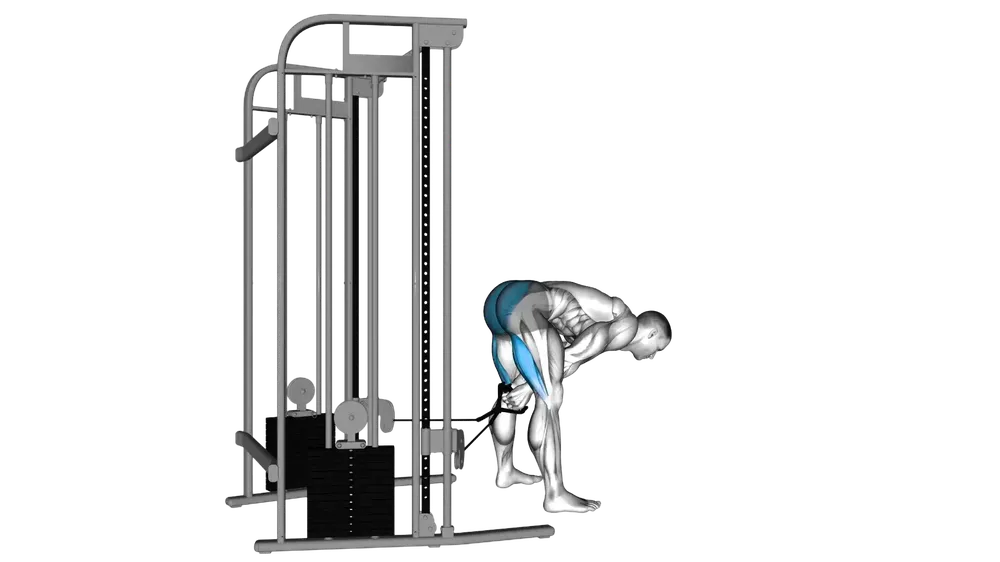
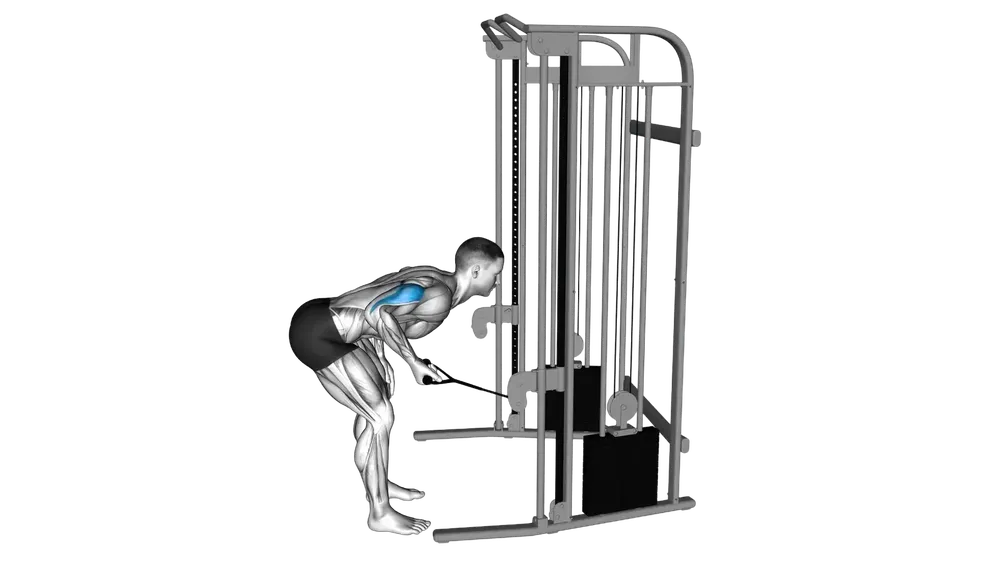
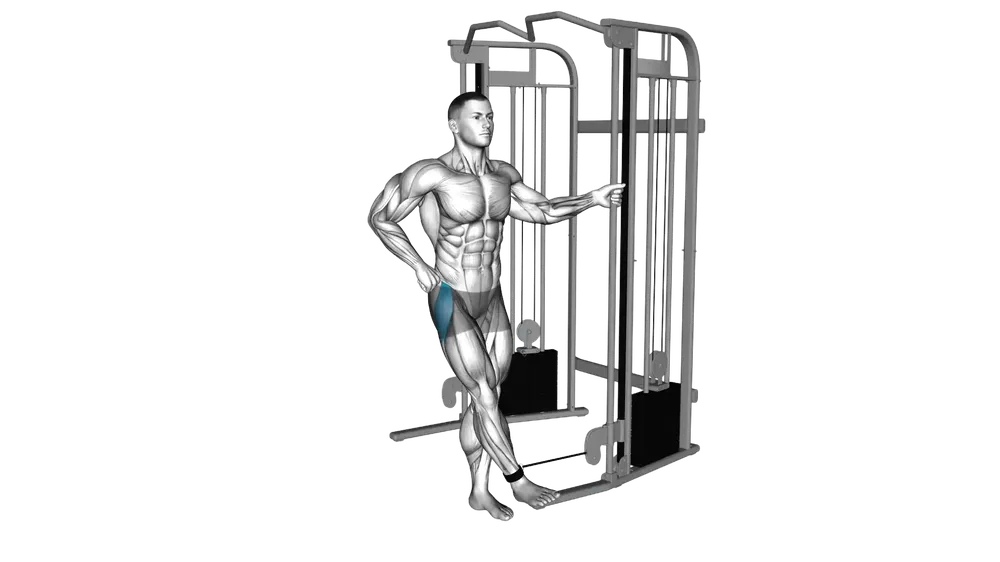
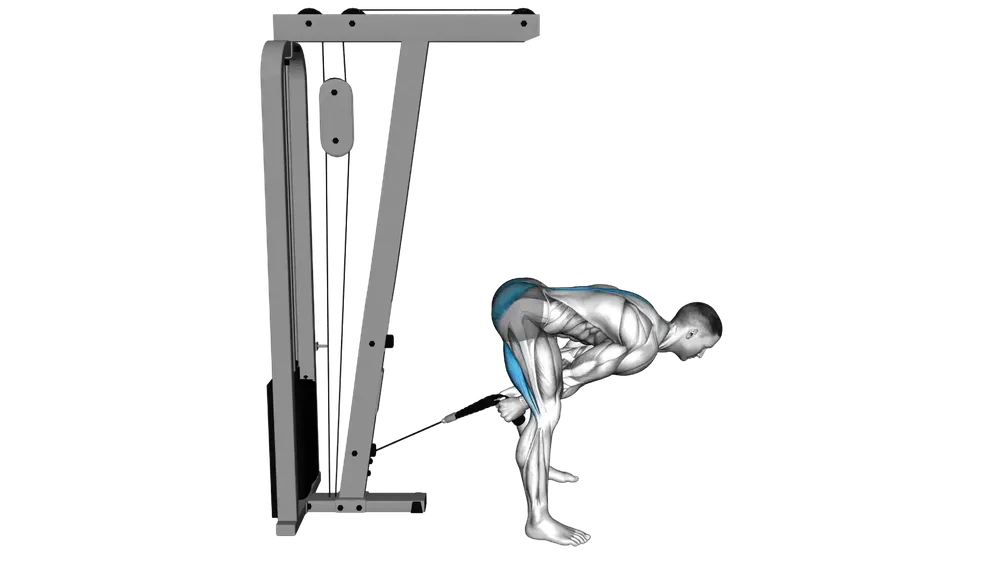
Standing glute drive, all cable tension.
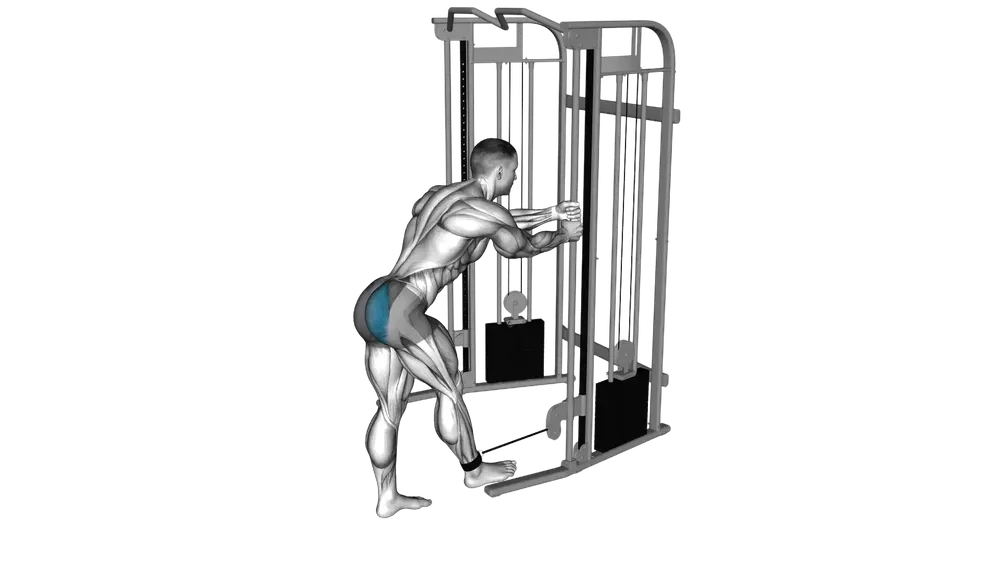
Push through the glute, not the lower back. Keep your hips facing forward.
With an ankle cuff on the low pulley, the glute drives the leg straight back against smooth cable resistance that stays on the muscle through the full sweep, no dead spots like you get swinging a leg against gravity alone. One leg works while the other stands and stabilises, so each side gets an honest, isolated turn. It suits anyone chasing direct glute volume without loading the spine, and it doubles as a fix for lifters whose lower back keeps stealing hip extension work.
You are arching to fake extra range. Brace your core, keep your hips square to the stack, and stop the leg where the glute stops moving it, the last few degrees of a big arch are all spine.
Less than your ego wants. This is an isolation move for a muscle working through a short arc, so pick a load you can sweep back smoothly and squeeze at the top for controlled reps.
It is essentially the cable version of a kickback, and the low pulley plus ankle cuff gives a longer, smoother line of pull than most kickback machines. Whichever lets you feel the glute working through the whole rep is the one to keep.