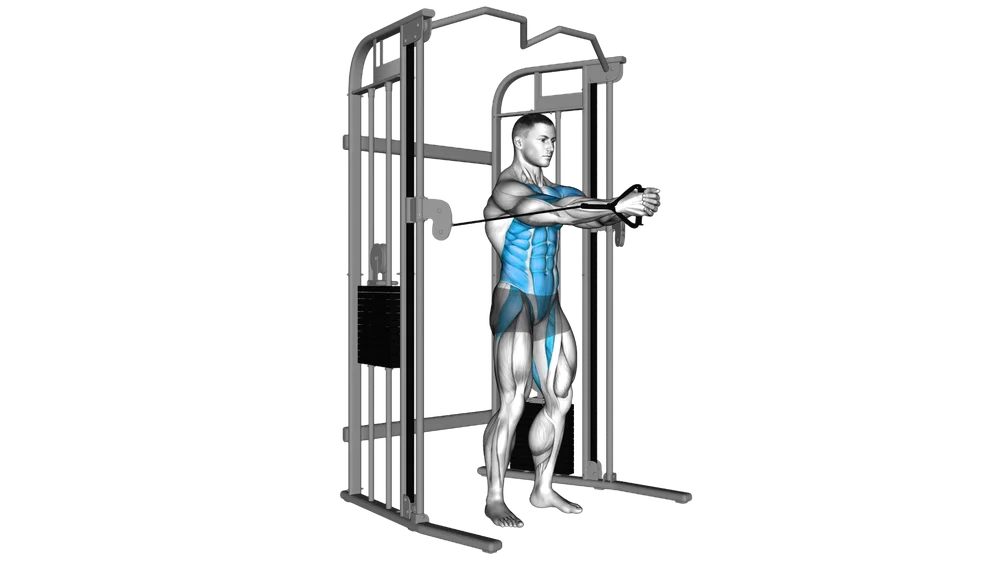
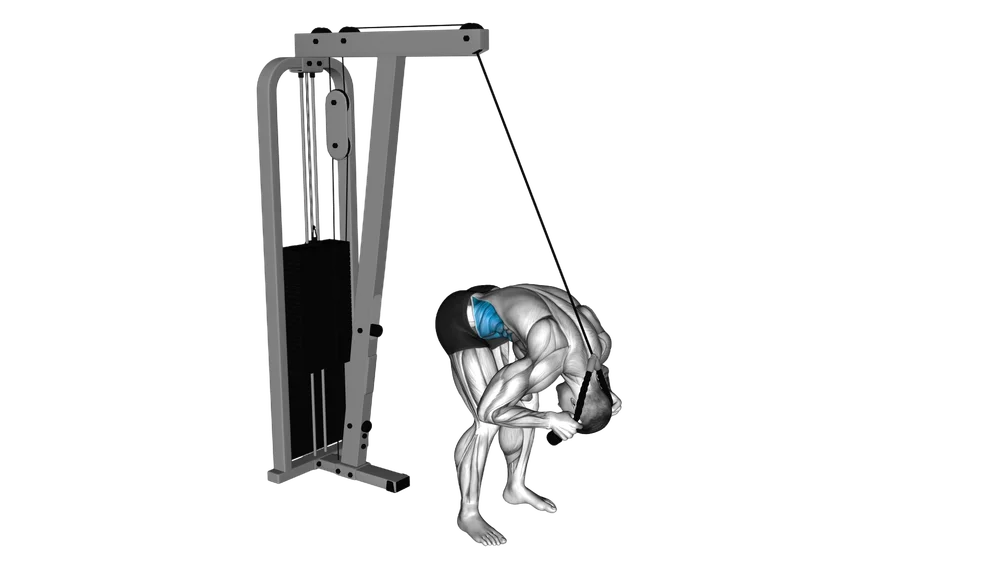
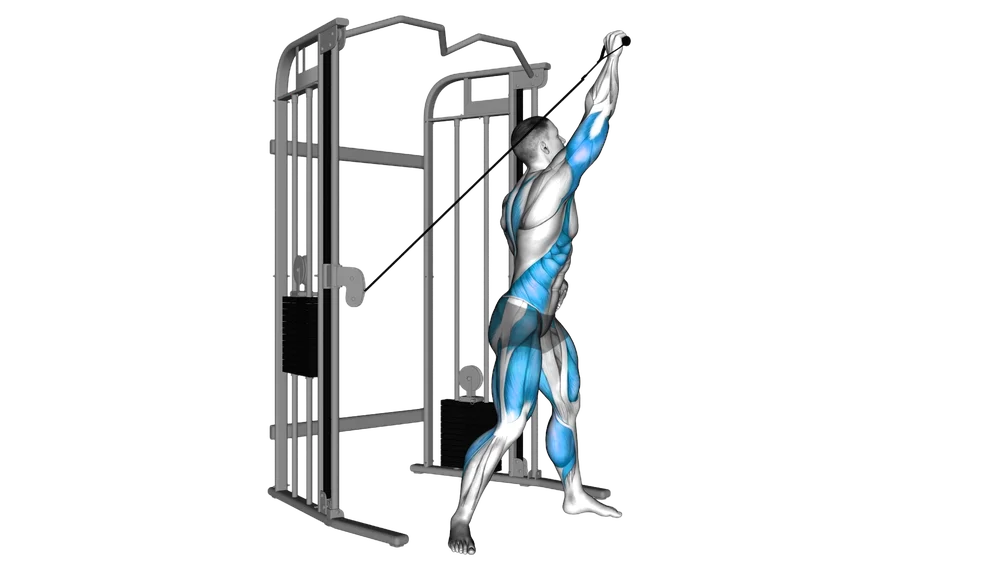
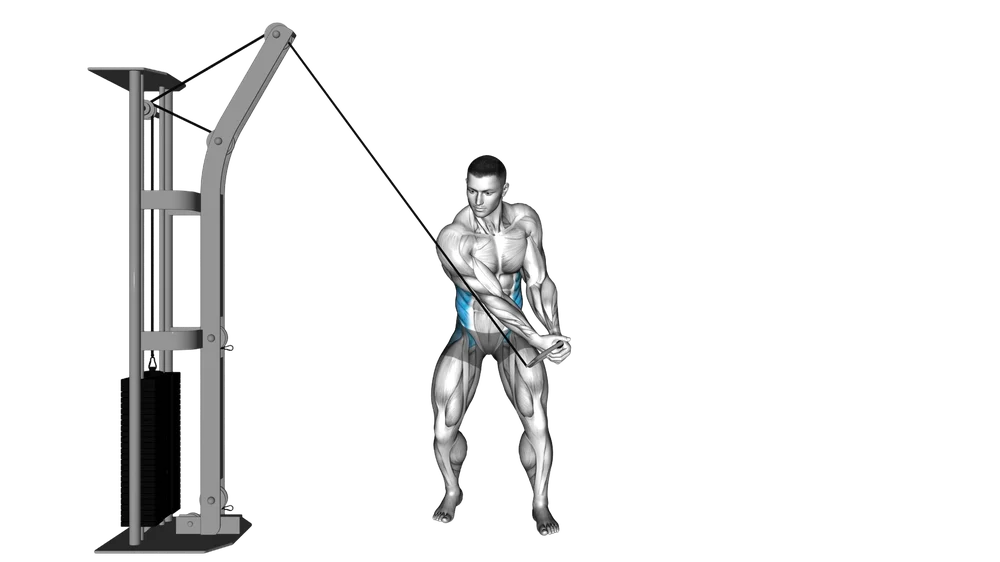
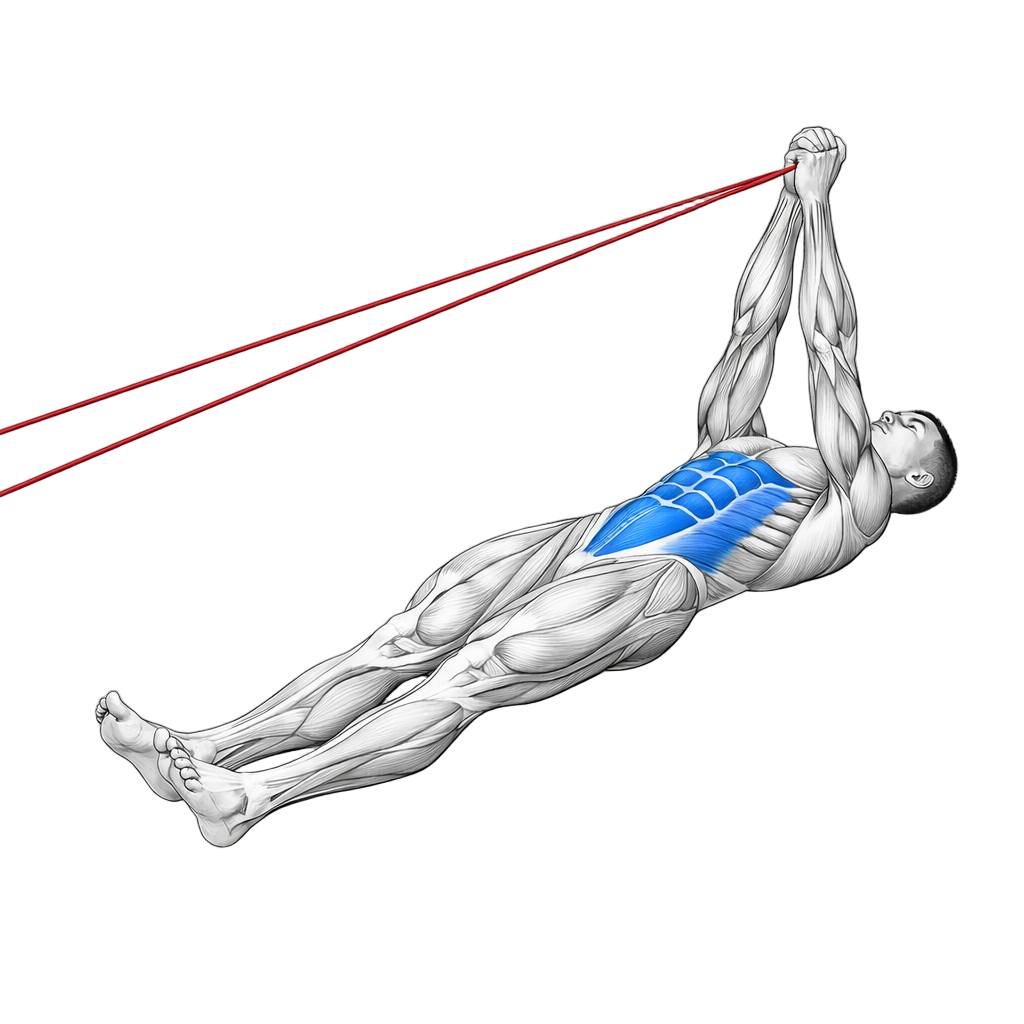
Set the cable, rotate through, carve those obliques.
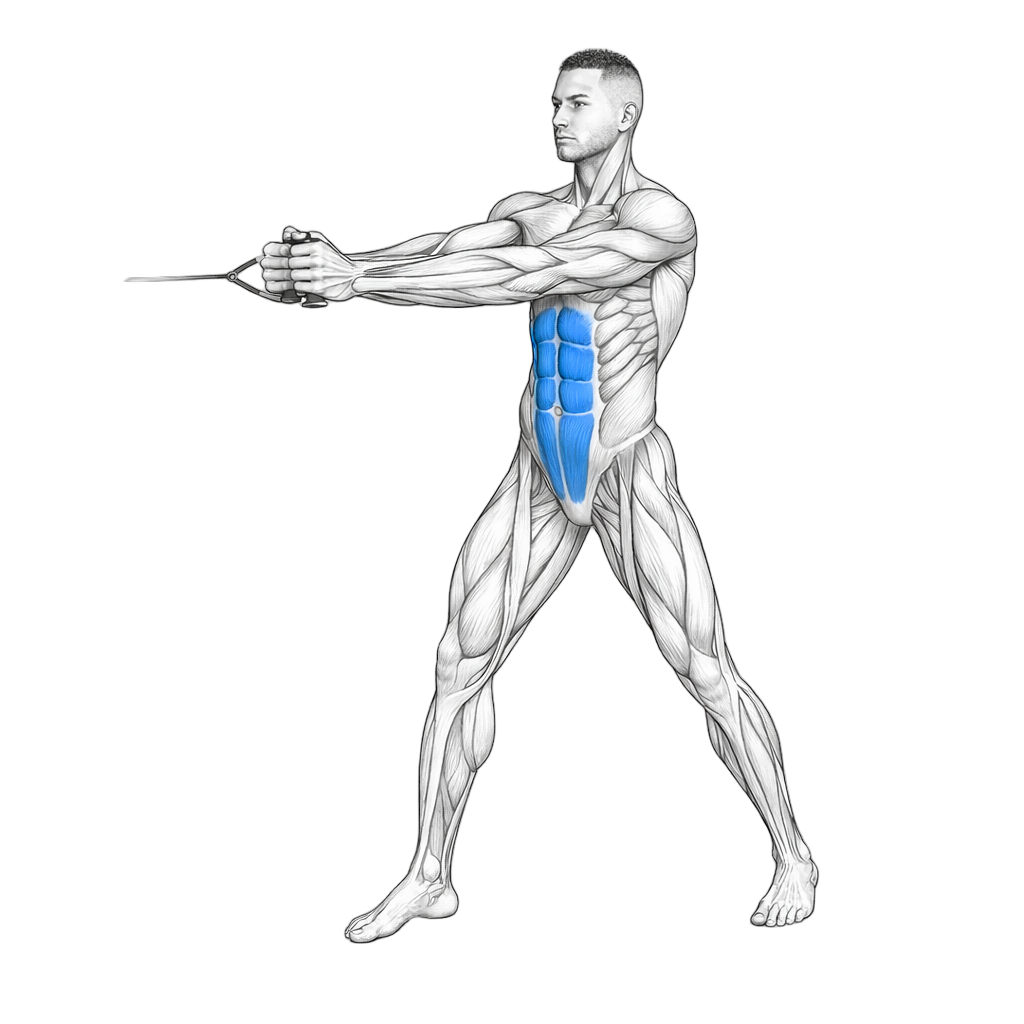
Turn from your trunk and pivot your hips, keep your arms long and steady.
The cable stack gives rotation something no free weight can, constant sideways tension through the entire arc, so your obliques are loaded from the first degree of the turn to the last. Working one direction at a time, the trunk produces the twist while your arms simply hold the handle out as a lever. It fills a gap most programmes leave open, loaded rotation, which is the pattern behind every throw, punch, and swing.
Opposite jobs. The Pallof press resists rotation, you fight to stay still, while the cable twist produces rotation against load. Strong cores need both, so treat them as a pair rather than picking one.
Yes, long and steady, they are just the lever connecting the cable to your trunk. If your elbows bend and the movement becomes a pull across the body, the load has left your obliques.
Almost everyone has a dominant rotation direction from daily life and sport. Start your sets on the weaker side, match the reps, and the gap closes over time.