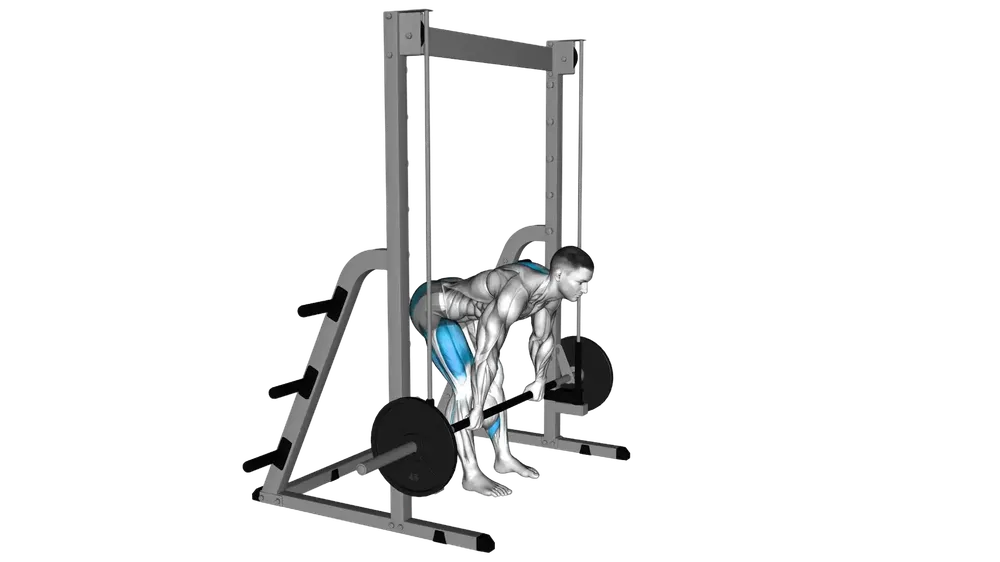
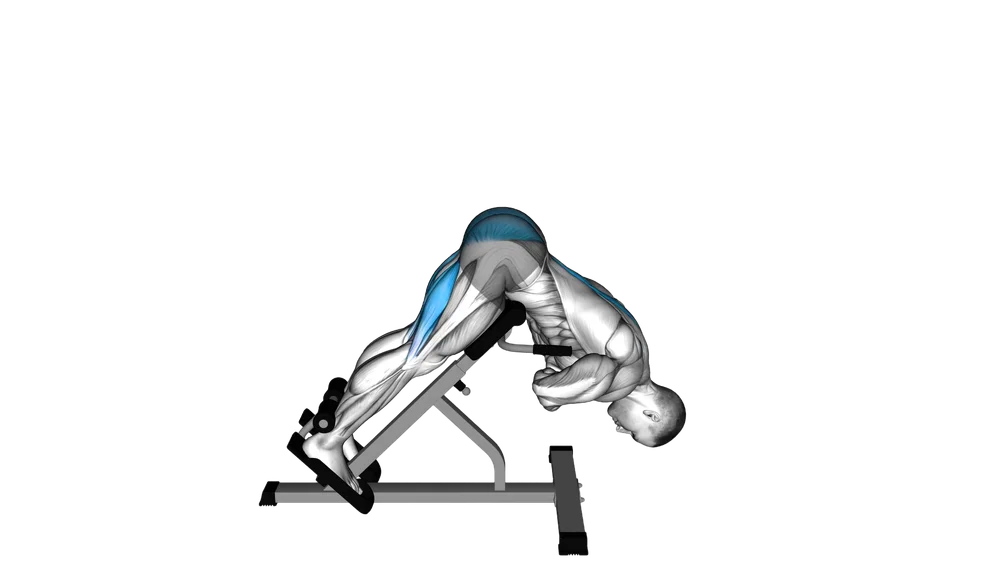
Locked bar path means you just hinge and stretch.
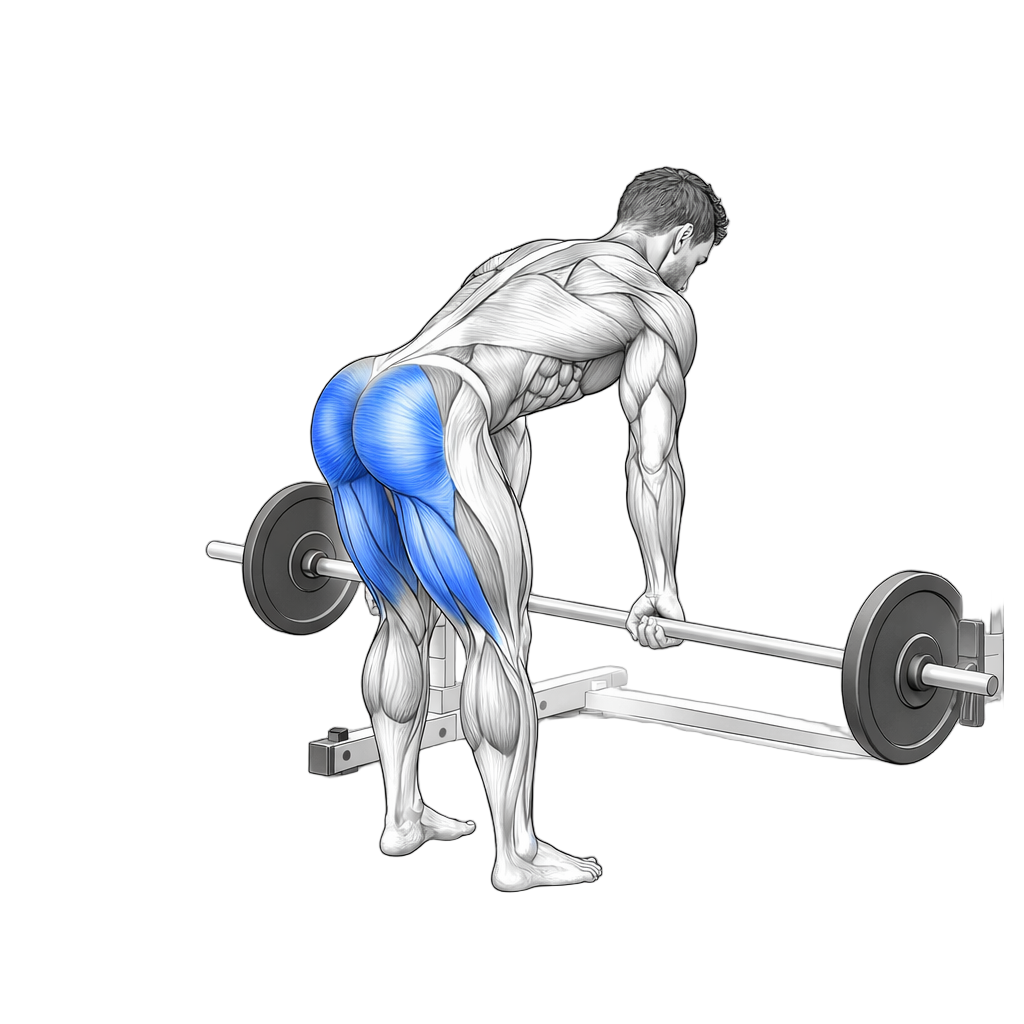
Keep the bar close to your shins, let your hips travel back not down.
With the bar riding a fixed vertical track, this hinge strips away the balance demands of a free bar and lets you sink everything into the hamstring stretch. Keeping the legs nearly straight forces the hamstrings to lengthen under load through the whole descent, while the glutes take over to drive the hips forward at lockout. It earns its spot as a hamstring builder for lifters who want a deep, repeatable stretch without worrying about the bar drifting away from them.
For pure hamstring growth it holds up well, because the fixed path lets you focus entirely on the stretch and hip drive. You lose some stabiliser work, so keep a free-weight hinge in your programme if you also want that.
Lower until you feel a deep stretch in your hamstrings without your lower back rounding. For most people that is around mid-shin, and range grows as your hamstrings loosen up.
No, keep a slight soft bend in the knees and hold it constant. Locking them out hard shifts stress to the knee joint and usually forces your back to round early.