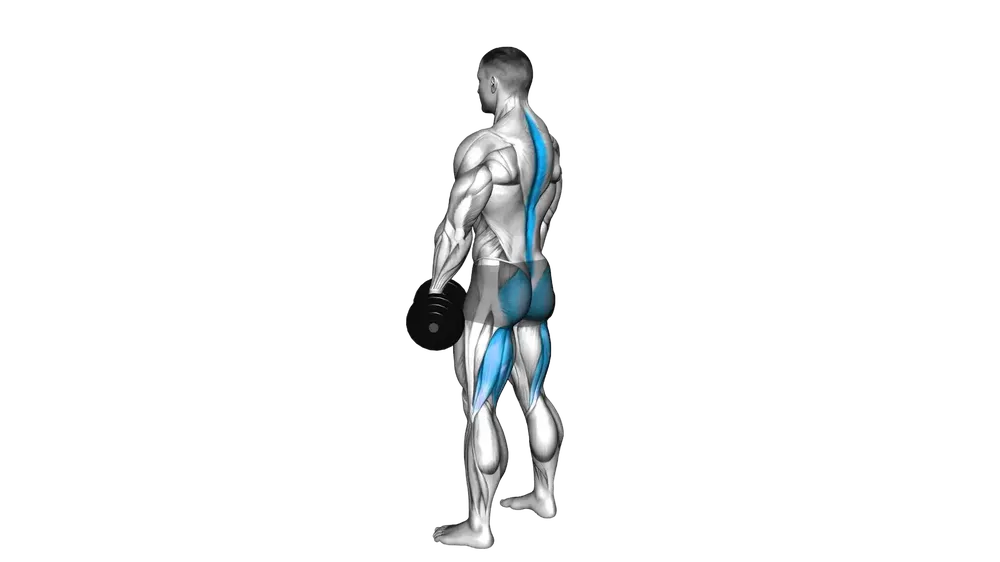
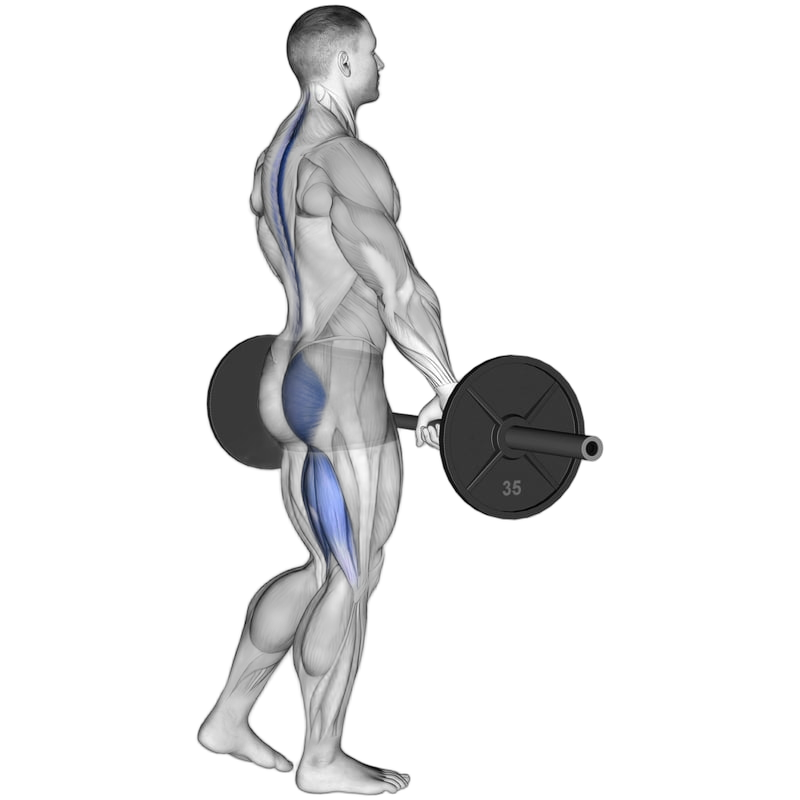
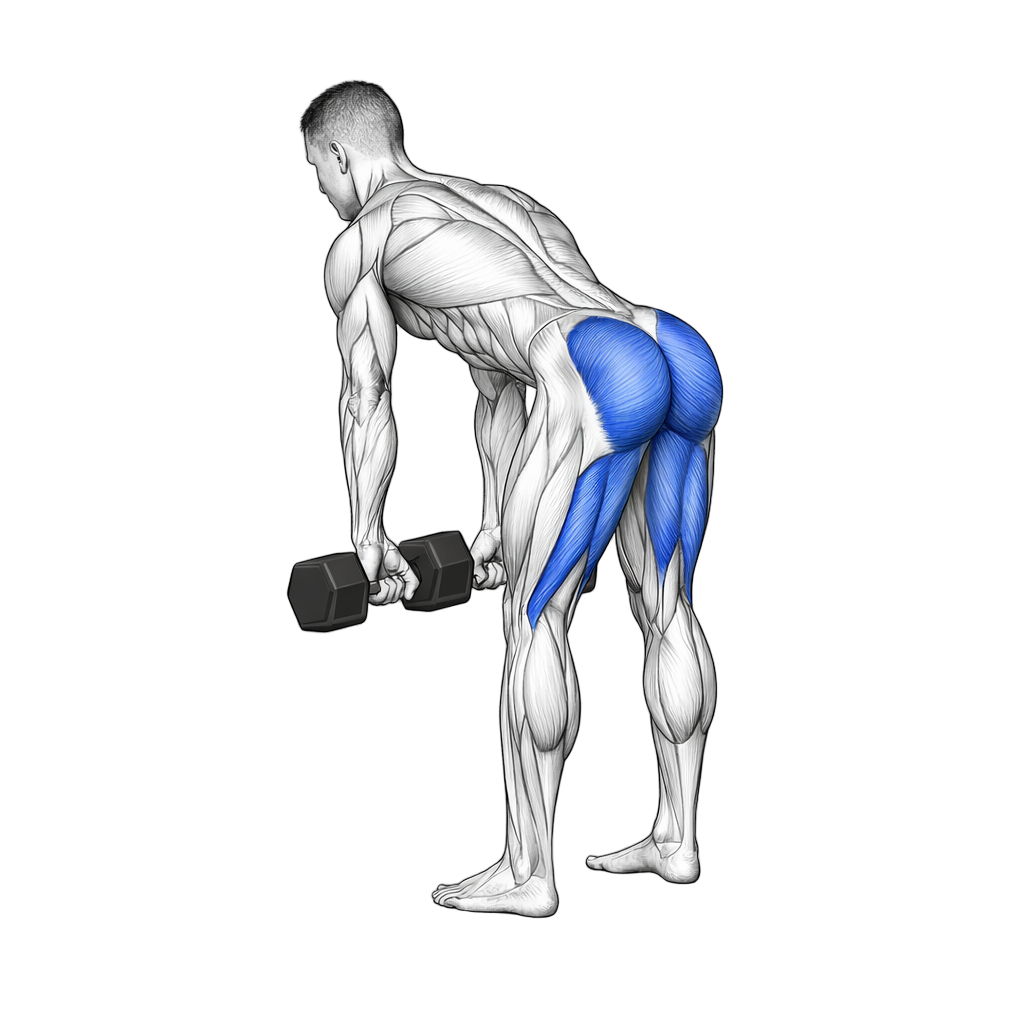
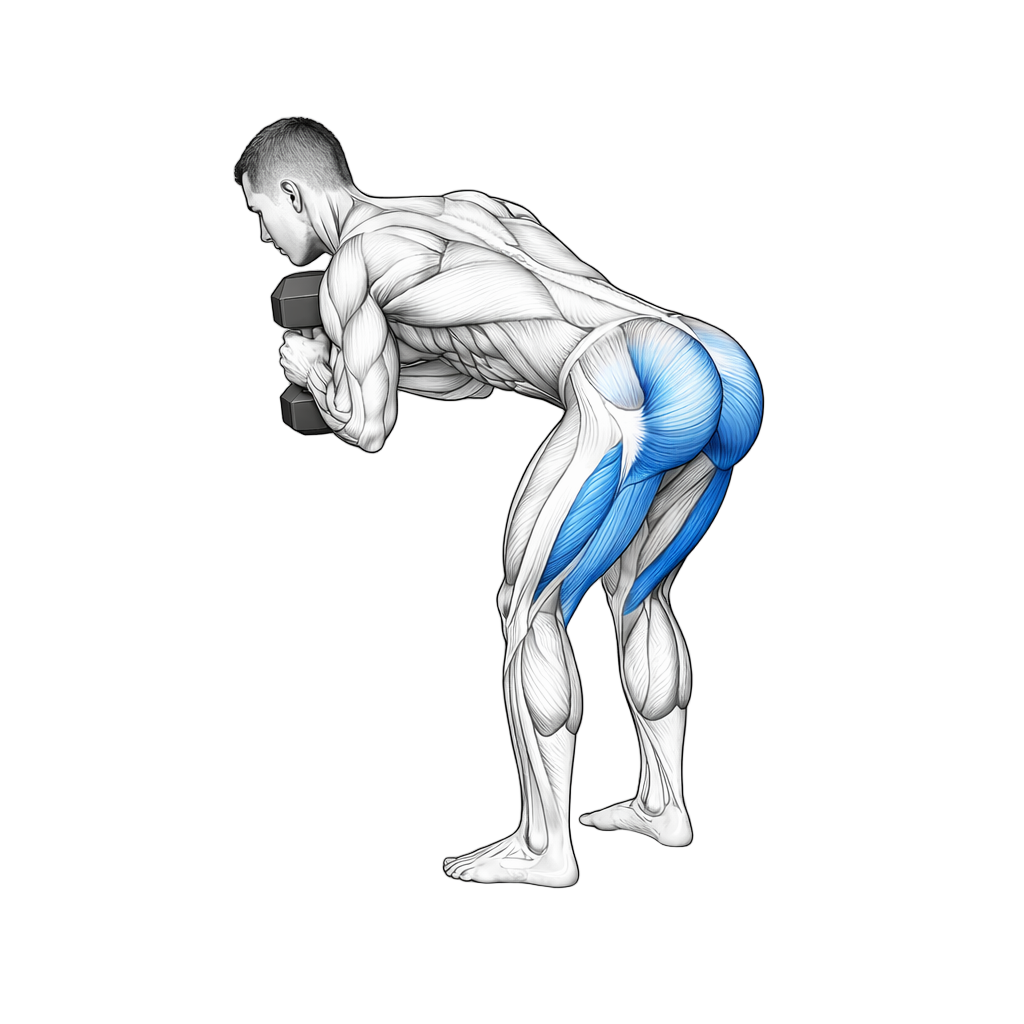
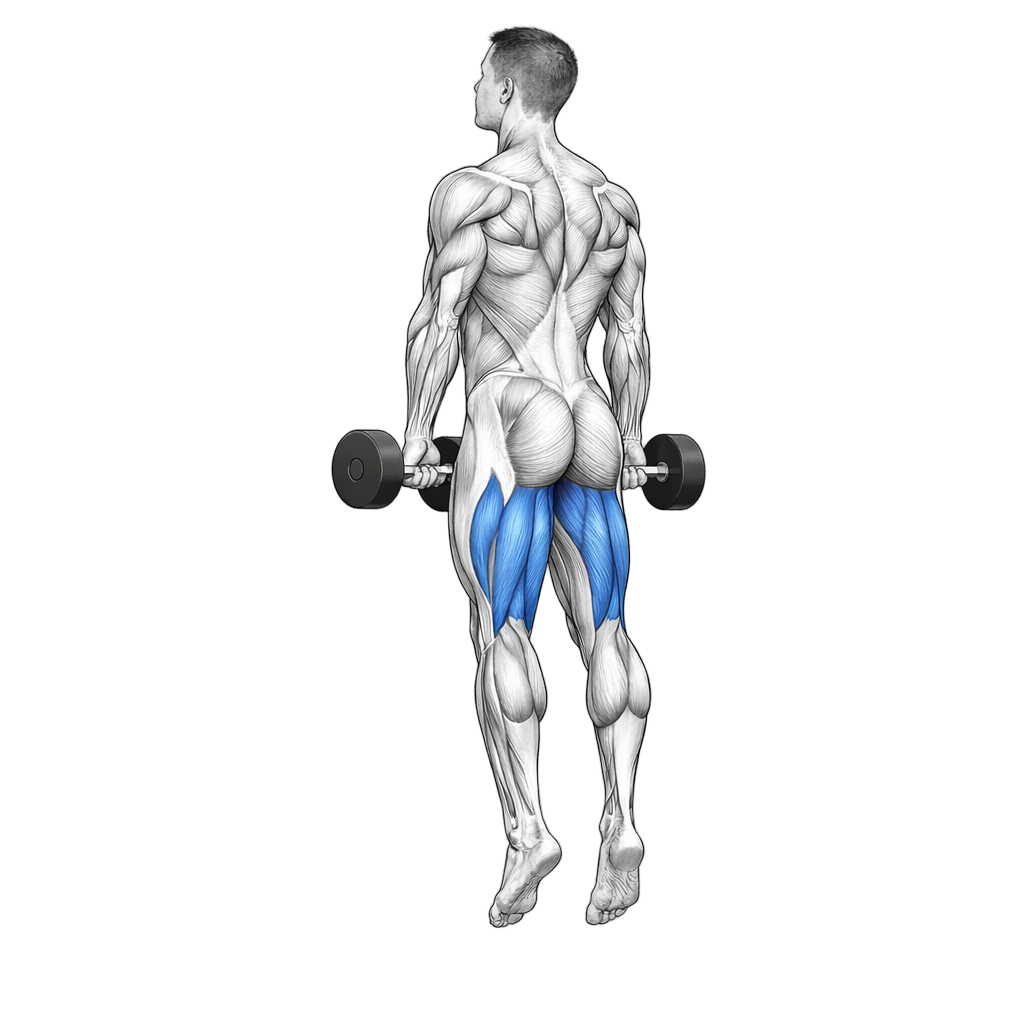
One dumbbell, one leg, total posterior-chain control.
Keep your hips square to the floor. Don't let the lifting leg's hip rotate open.
Balancing on one leg while hinging turns the RDL into a hamstring exercise with a steering problem, the standing leg's hamstrings load through the stretch while the glutes control the hip from every angle at once. Holding the dumbbell in the opposite hand counterbalances the hinge and encourages the hips to stay square. Each side works completely alone, which is exactly why single-leg hinging exposes what two-legged deadlifts hide.
The offset load counterbalances you and gently pulls your hips square, which is the hardest part of single-leg hinging. Same-side loading works too, but opposite hand is the friendlier starting point.
Slow everything down, soften the standing knee, and grip the floor with your foot. If it is still a wobble fest, keep the back toe lightly on the ground as a kickstand until the pattern is grooved, then progress to the full lift.
The lifting leg's hip rotating open is your body escaping the hamstring stretch. Think about pointing that hip at the floor for the whole rep, and shorten the range until you can hinge without twisting.