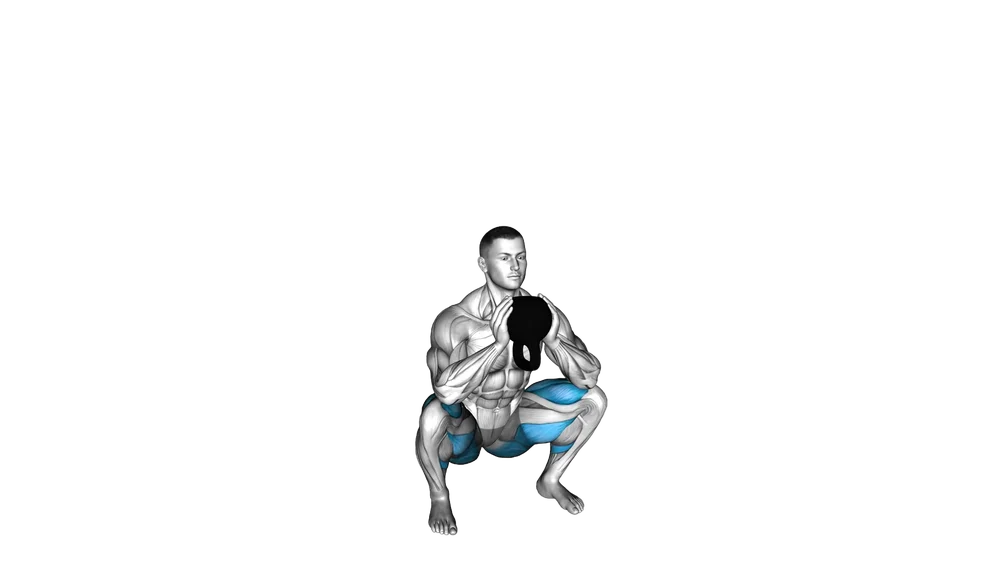
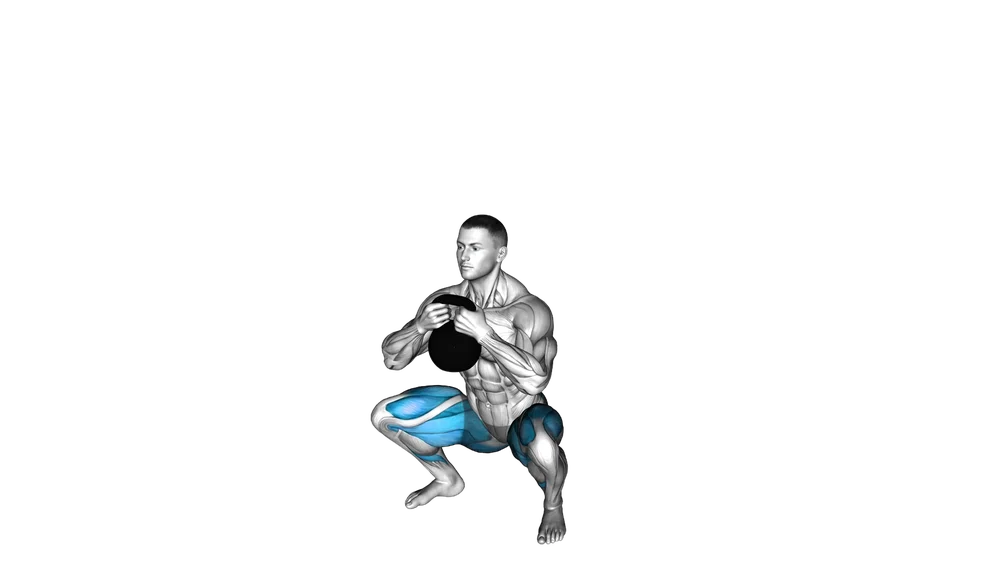
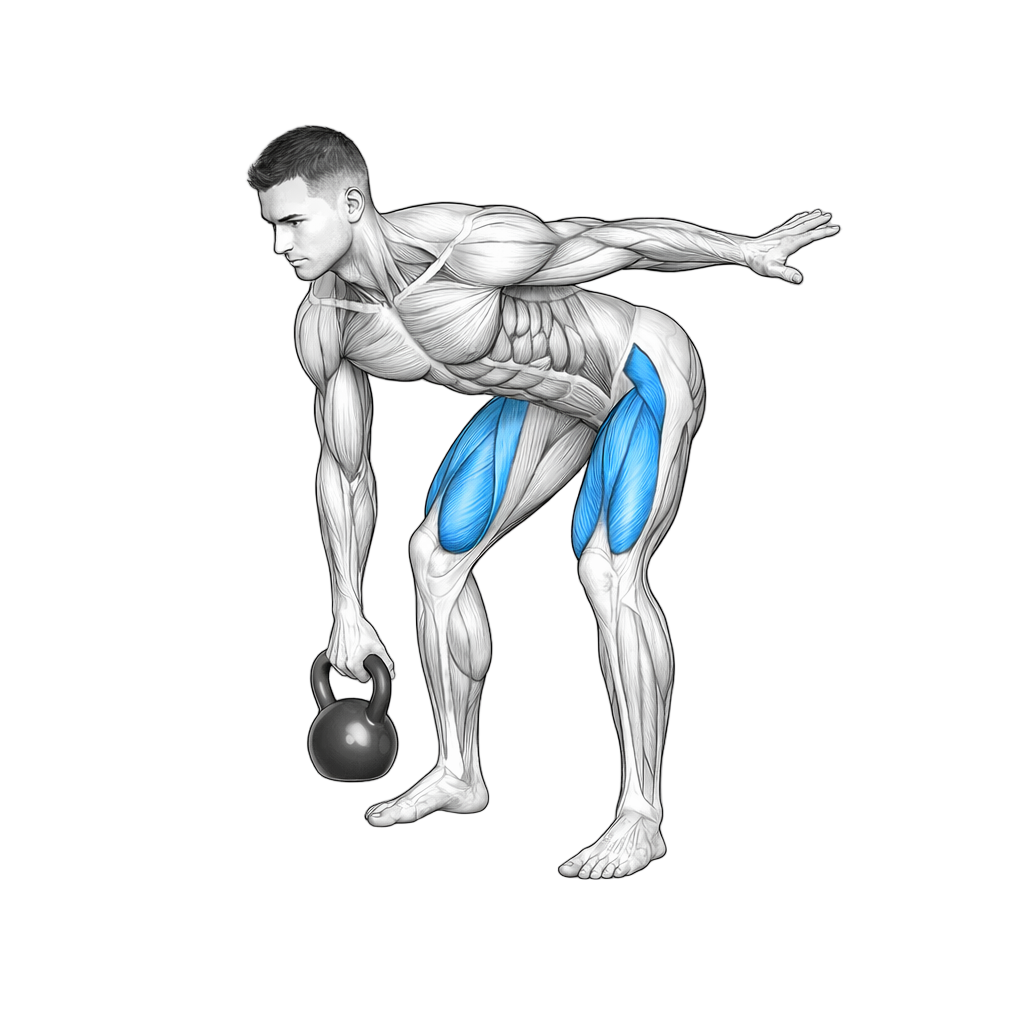
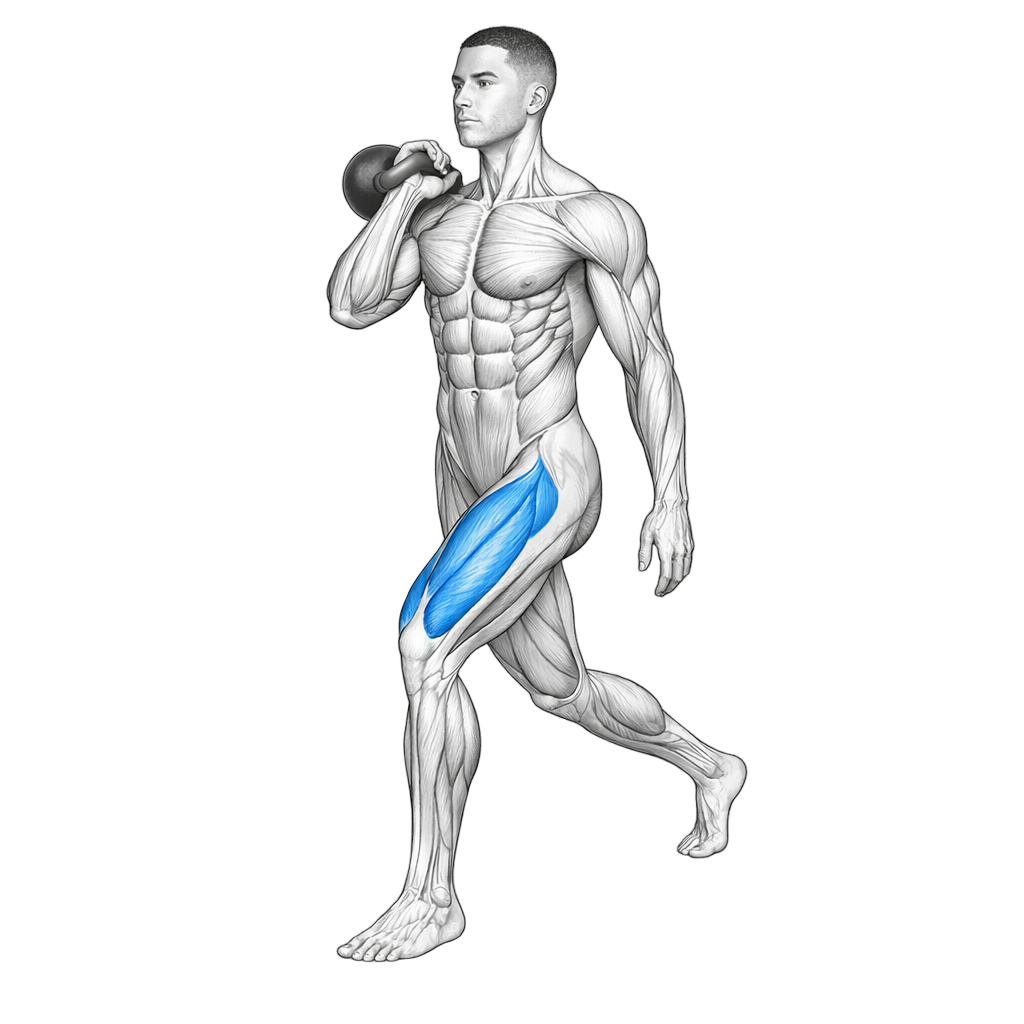
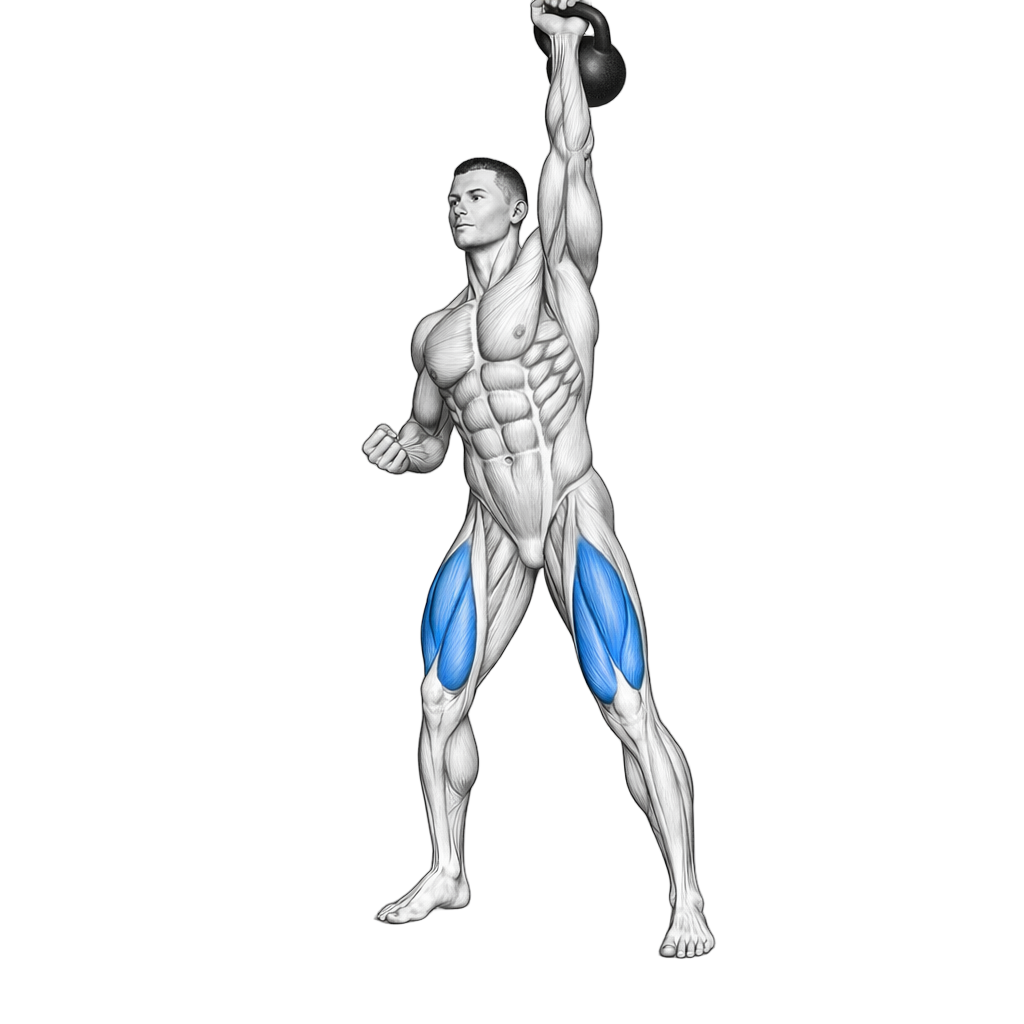
One bell locked overhead while you squat to the floor.
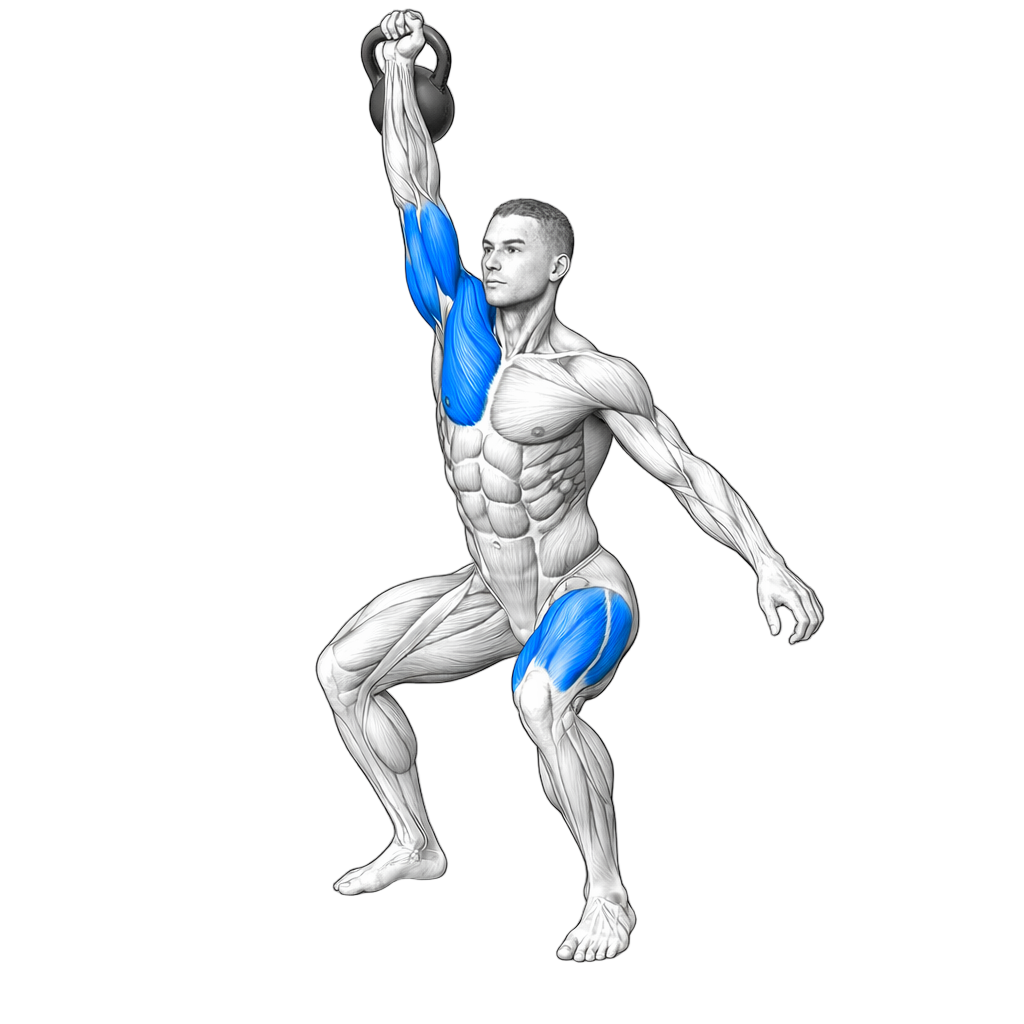
Keep the working arm locked and the bell over your shoulder. Eyes forward to stay balanced.
Squatting with one kettlebell locked overhead makes the quads and glutes drive the squat while the whole rep hangs on keeping the bell stacked over your shoulder. The bell resting on the back of your forearm gives constant feedback, drift an inch and you feel it immediately. It earns its place as a mobility test and a leg exercise in one, exposing tight ankles, hips and shoulders that a normal squat lets you hide.
The overhead position demands ankle, hip and upper-back mobility all at once. Squat only as deep as you can keep the arm locked and vertical, and let depth improve as mobility does.
The bell sits against the back of your forearm, which stabilises the wrist and tells you instantly when the arm drifts. Most people find it easier to keep stacked than a dumbbell.
Light. Position and depth are the training effect here, not load. If you are fighting the weight instead of the position, take a smaller bell.