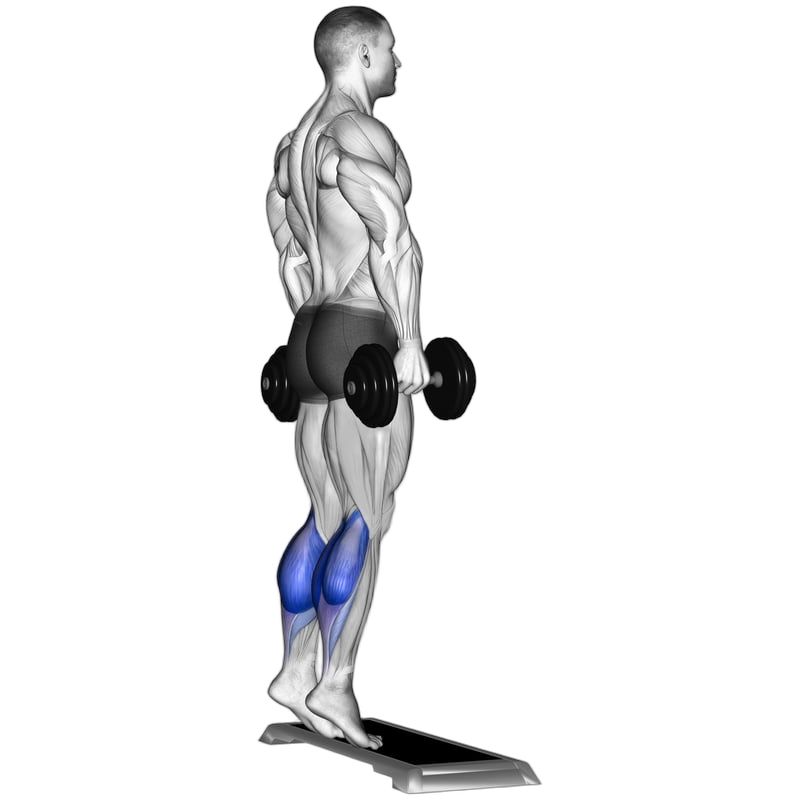
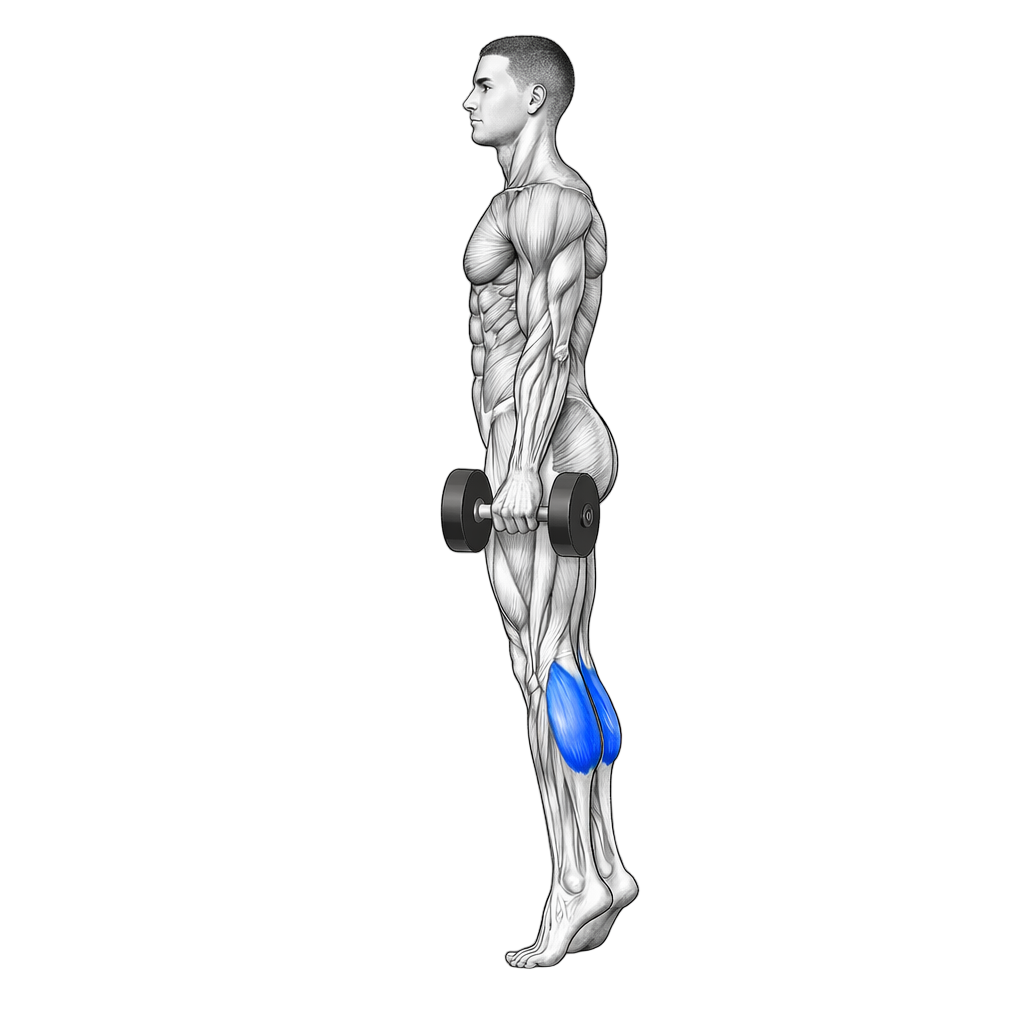
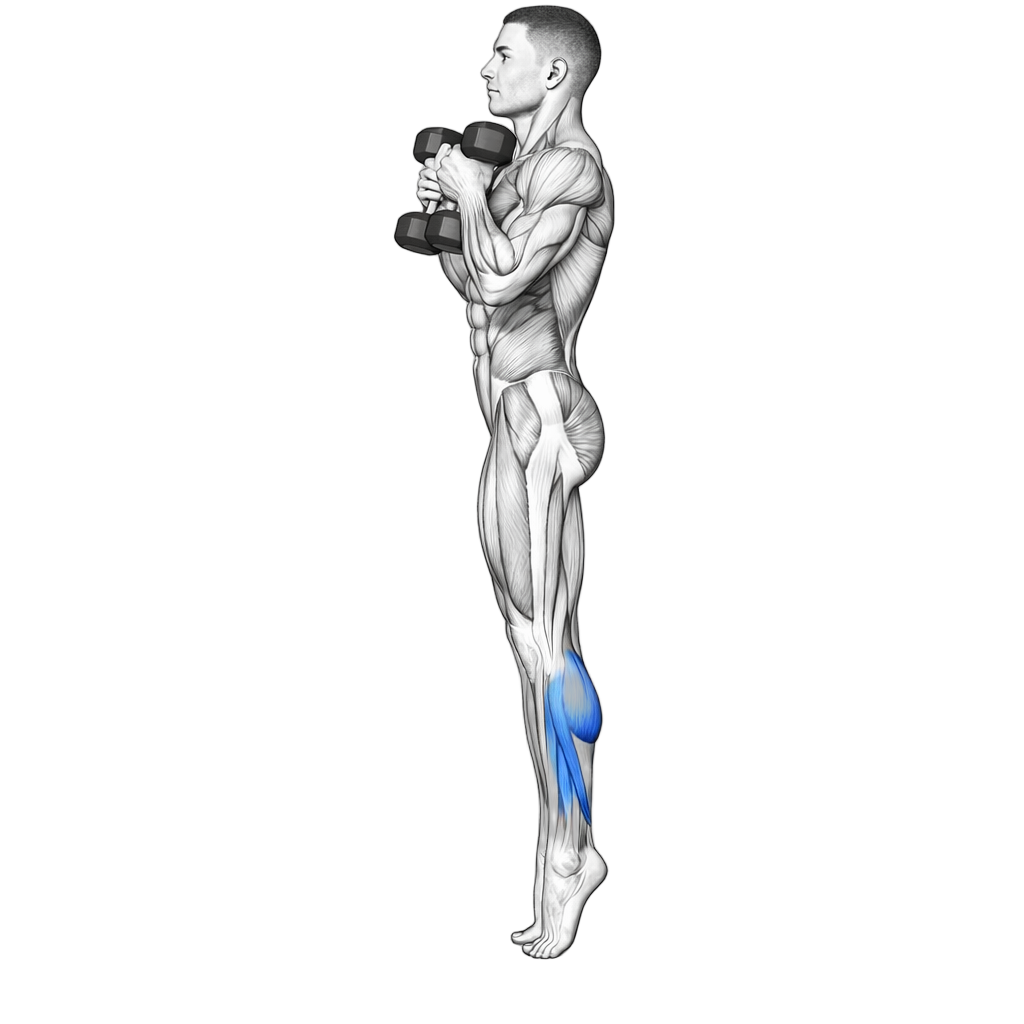
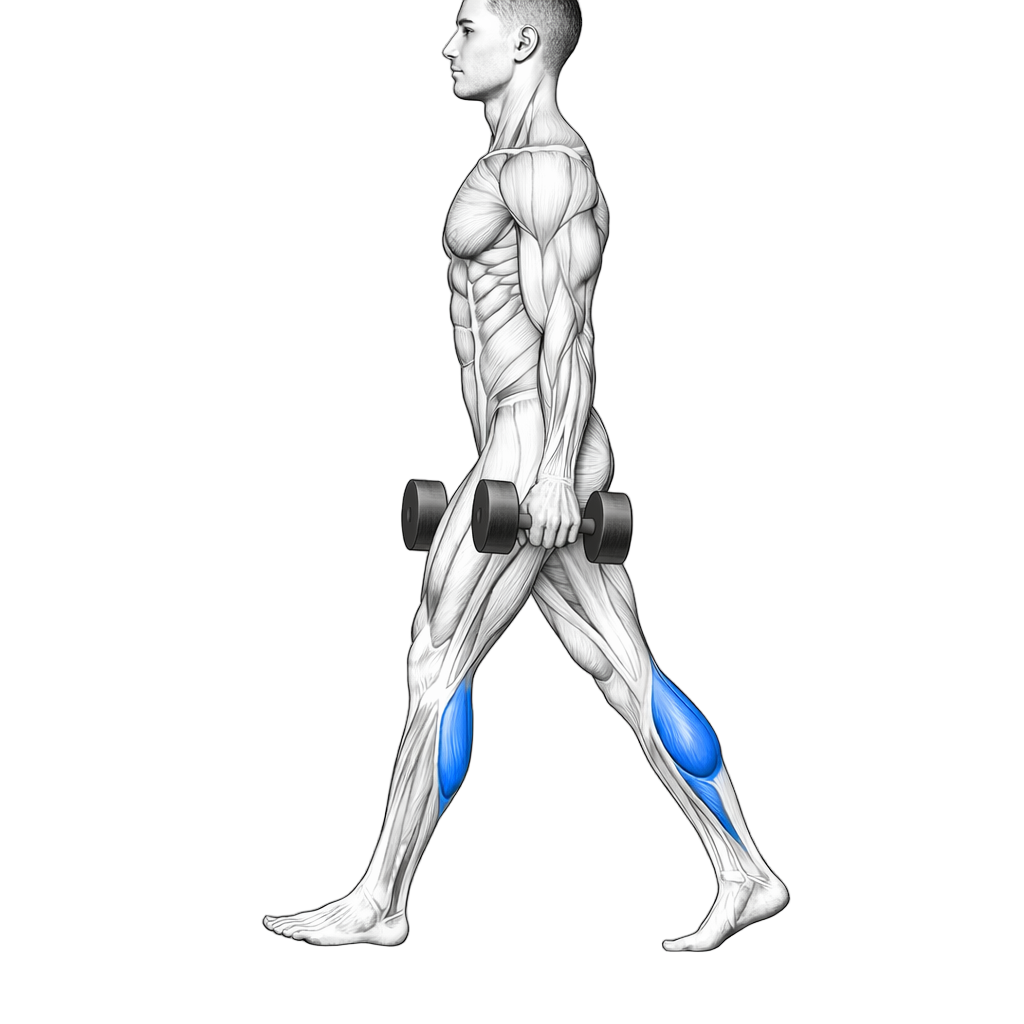
One calf at a time means nowhere to hide.
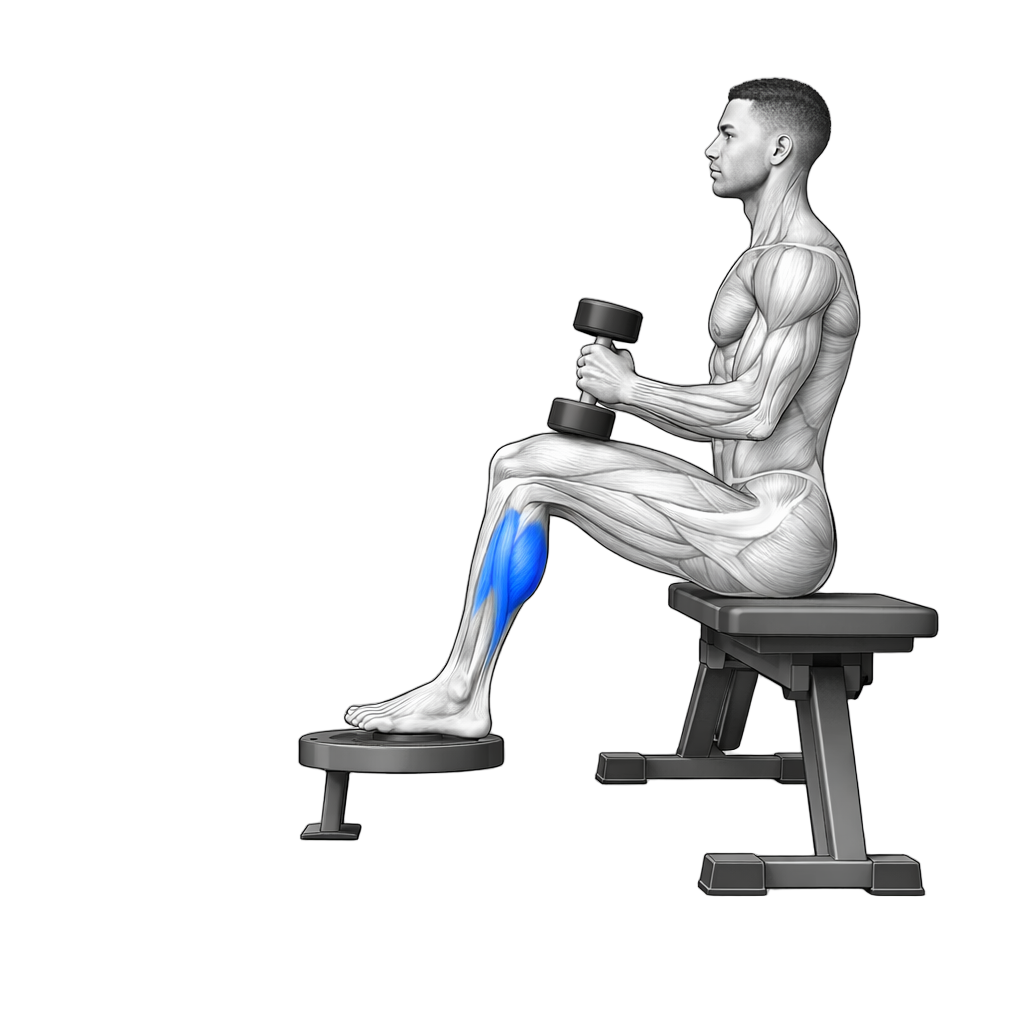
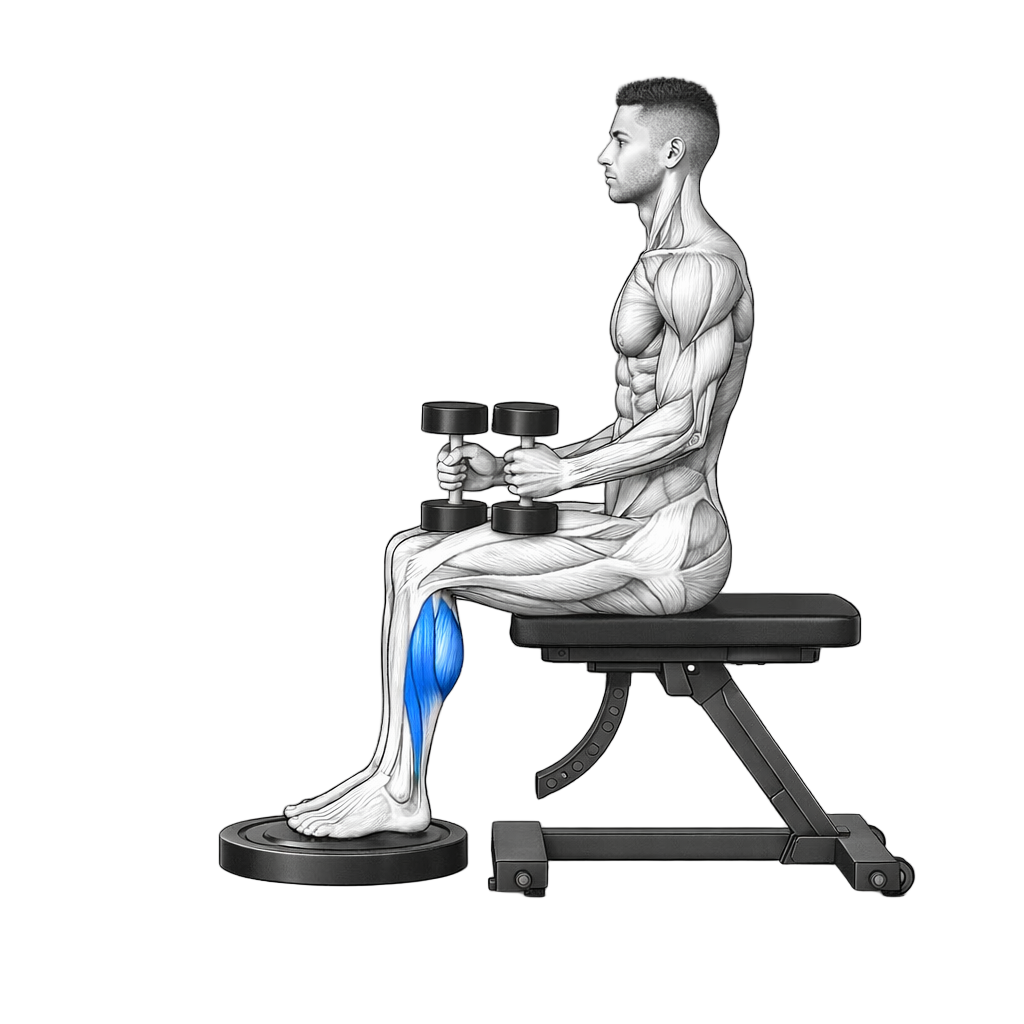
Keep the dumbbell over your knee and move only the ankle through its full range.
With your knee bent at 90 degrees, the seated position shifts the work onto the soleus, the deep calf muscle that responds to exactly this kind of loading. Doing it one leg at a time means a stronger side cannot quietly carry a weaker one, and the dumbbell resting on your thigh loads the ankle directly. The heel drop below the block gives a full stretch that most standing raises never reach.
The bent knee takes the upper calf muscle out of the movement and targets the soleus underneath it. For complete calf development you want both seated and standing work, they hit genuinely different tissue.
Calves are notorious for side-to-side imbalances, and two-leg raises let the strong side dominate. Working one leg at a time with the dumbbell over that knee makes each calf earn its own reps.
Slower than you think. Lower the heel below the block over a couple of seconds, pause in the stretch, drive up high, and squeeze at the top. Bouncing out of the bottom turns it into a tendon spring drill instead of a muscle builder.