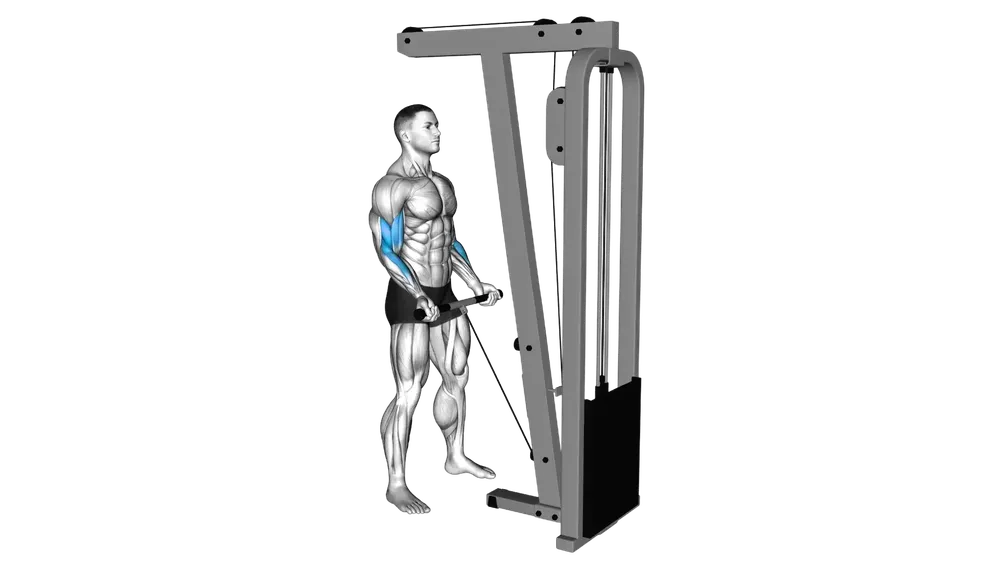
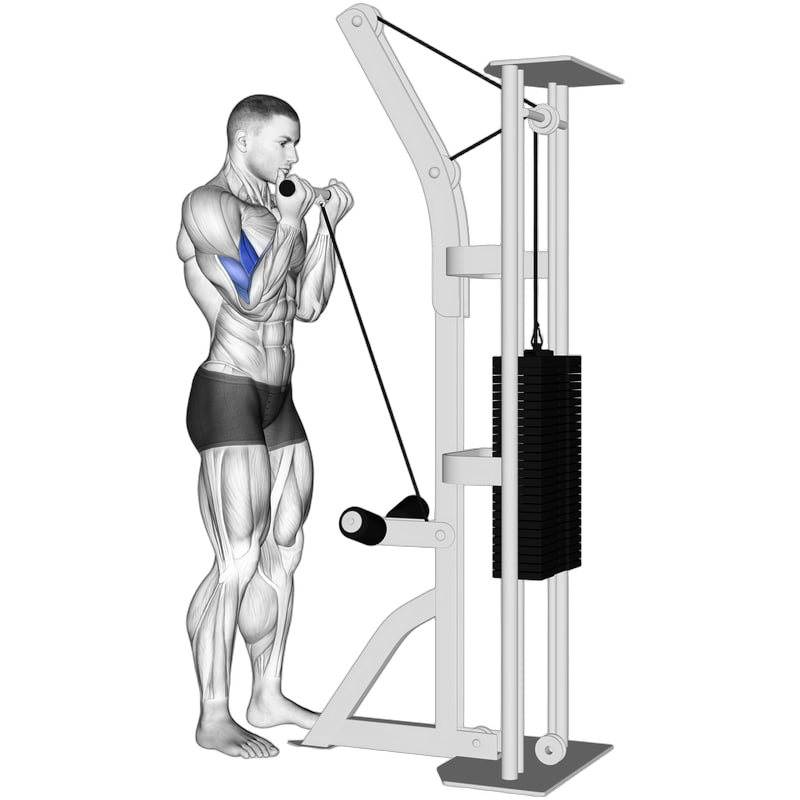
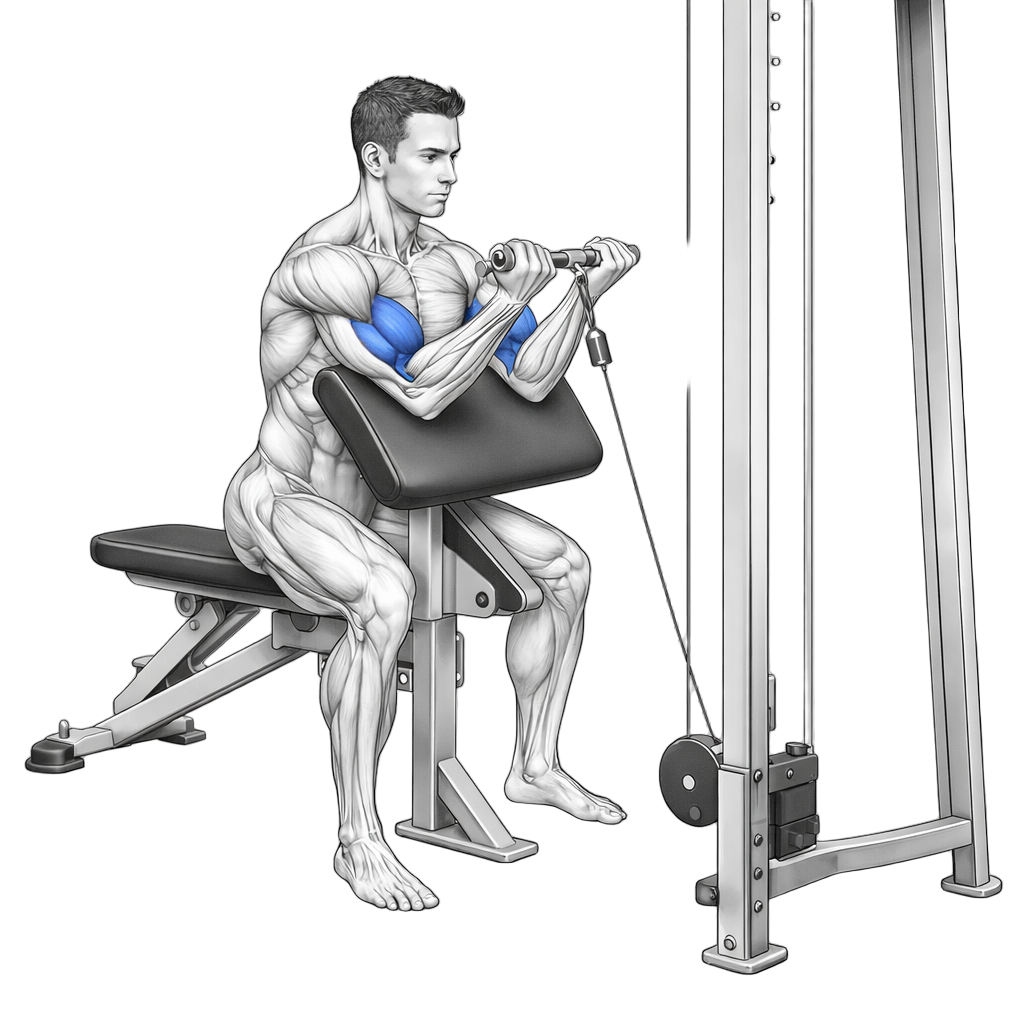
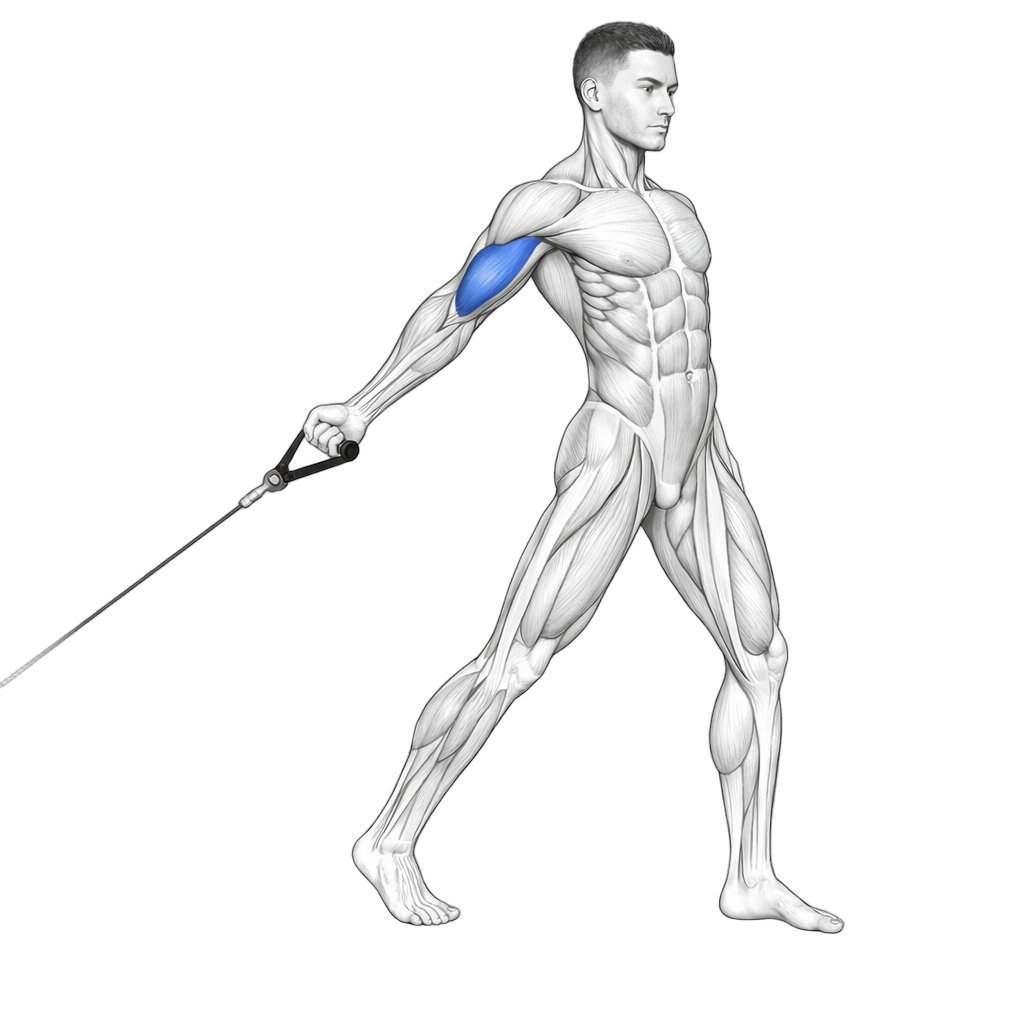
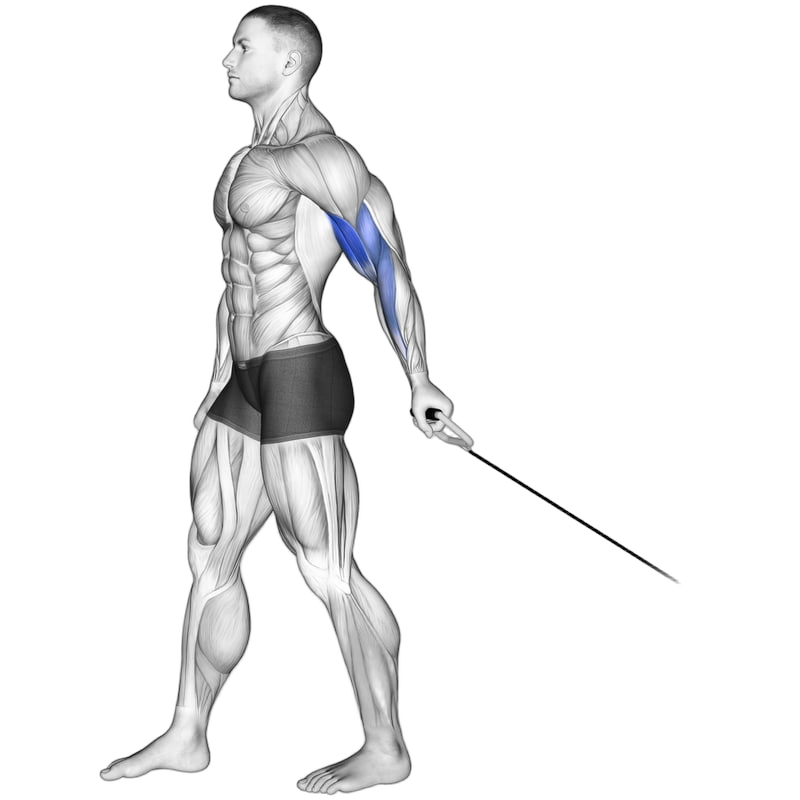
Overhand grip, constant cable burn.
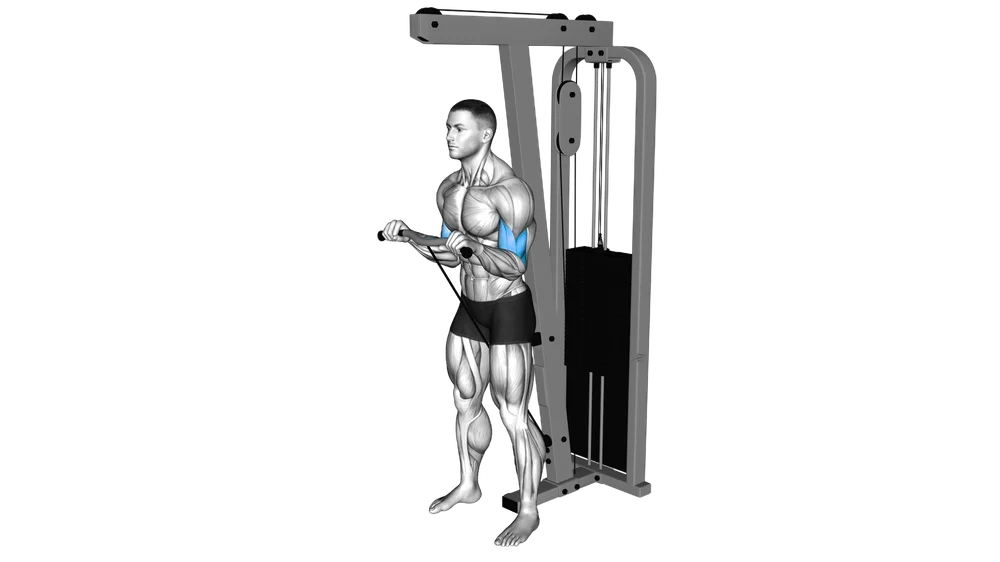
Keep your elbows pinned and wrists locked, the cable keeps the forearms under tension the whole way.
Curling with an overhand grip shifts the workload across the elbow flexors, the biceps still curl the bar but the forearms, especially the muscles along the top, take on far more than in a standard curl. The low cable keeps tension on through the entire arc, including the bottom stretch where free weights go slack. It earns its place building the forearm size and elbow strength that underhand curls alone leave on the table.
The overhand grip puts the biceps at a mechanical disadvantage and asks the forearms to pick up the slack. Everyone drops weight on these, plan for noticeably lighter than your normal curl.
The cable's advantage is constant tension, there is no dead spot at the bottom of the rep, so the forearms never get a break. Barbells work too, but the cable version keeps the burn continuous.
Letting the wrists bend under load. Lock them in a straight, rigid line with your forearms and lead the curl with the backs of your hands, if it still nags, drop the weight.