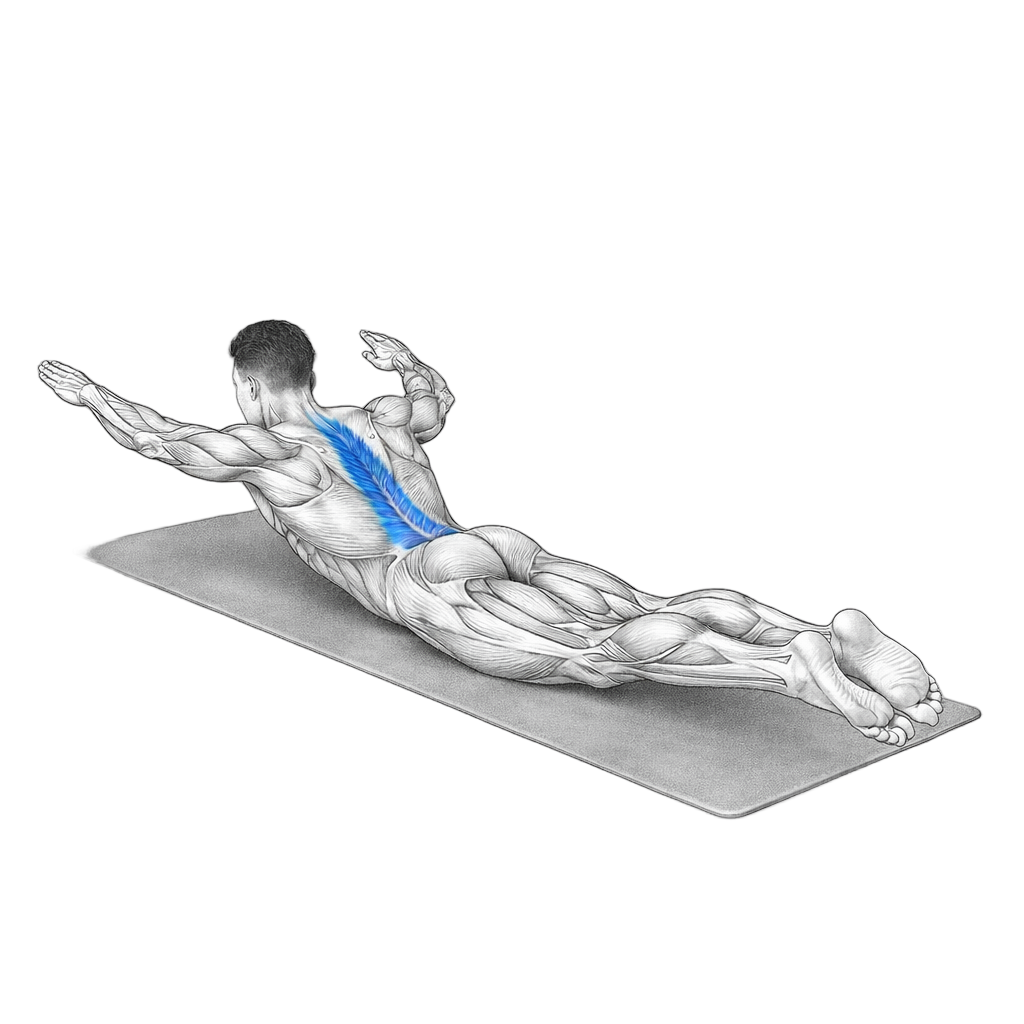
Map out hip and spine mobility with a stick as your guide.
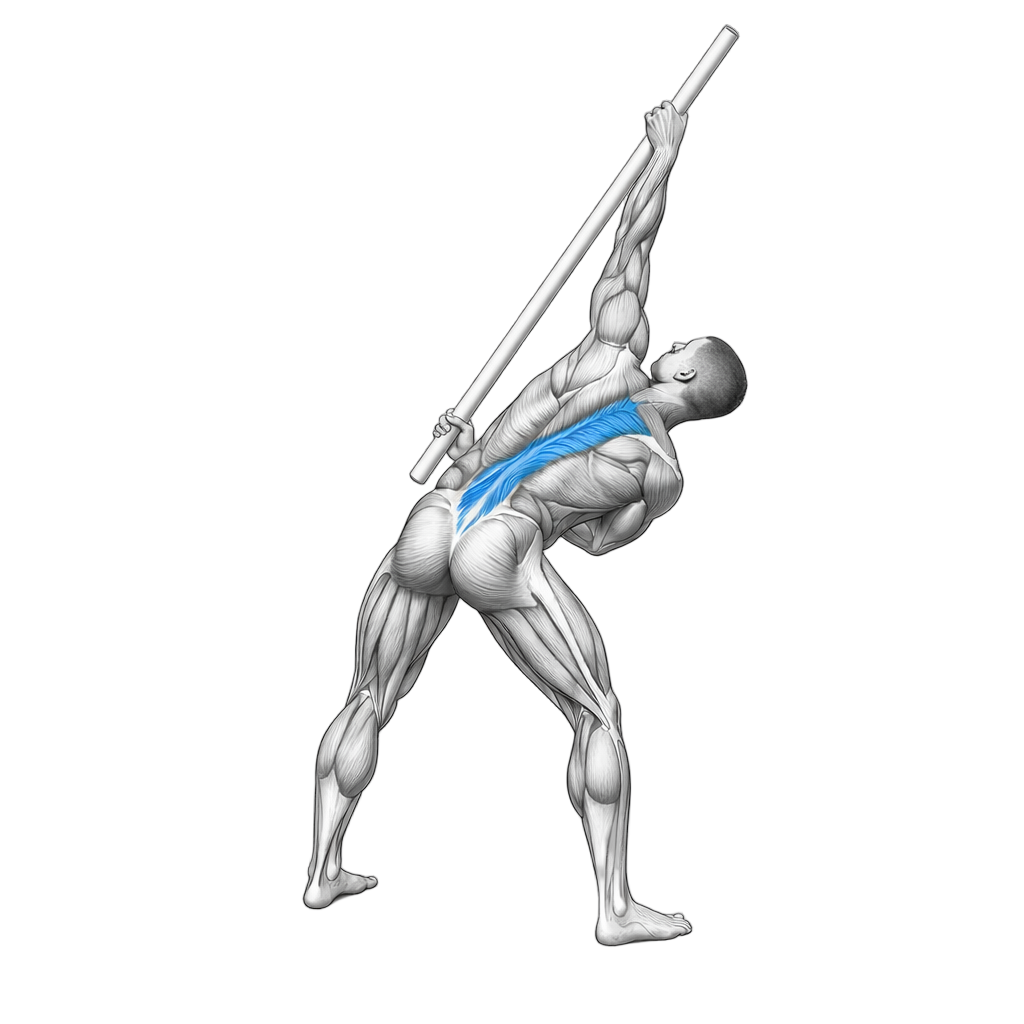
This is a hip hinge to the side, not a round. Keep that overhead arm locked and stacked.
Hinging sideways down your leg while one arm holds a pipe locked overhead makes the lower back work hard to control and reverse the lateral hinge, all while the trunk resists collapsing under the overhead arm. Doing it one side at a time with your eyes on the pipe builds the coordination and side-to-side strength that stacked, two-sided lifts never touch. It earns its place as prep for overhead work and as a fix for lifters who own the sagittal plane but fall apart moving sideways.
Same movement, no load. The pipe version is for grooving the sideways hinge and the overhead stack first, once it is smooth and stable, a kettlebell is the natural progression.
Watching the overhead hand keeps that shoulder stacked and locked while your torso folds away from it. Lose sight of it and the arm usually drifts, which collapses the whole position.
Keep the legs mostly straight with soft knees and push the hip of the overhead side out as you fold. If you have to bend deeply to reach down your leg, shorten the range instead.