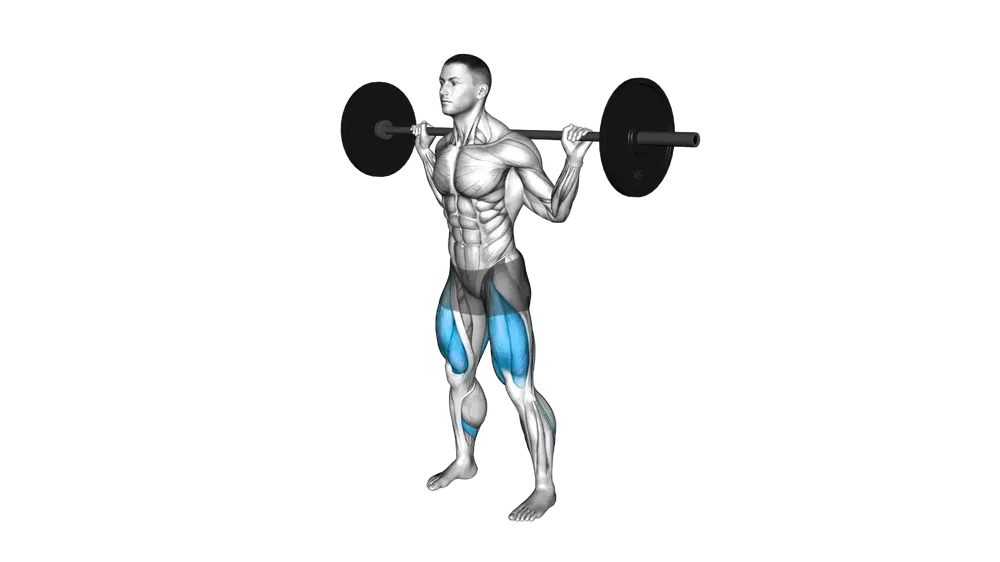
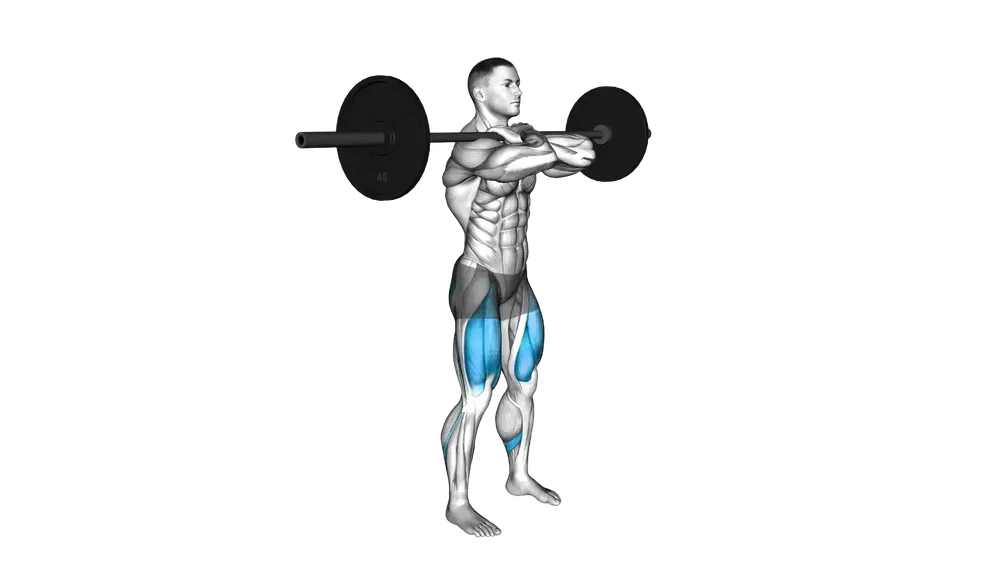
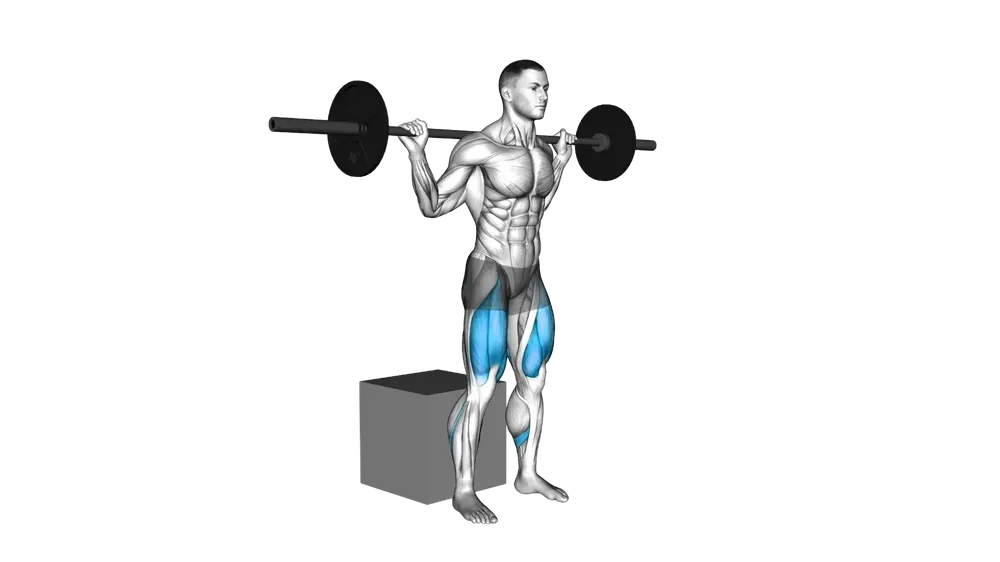
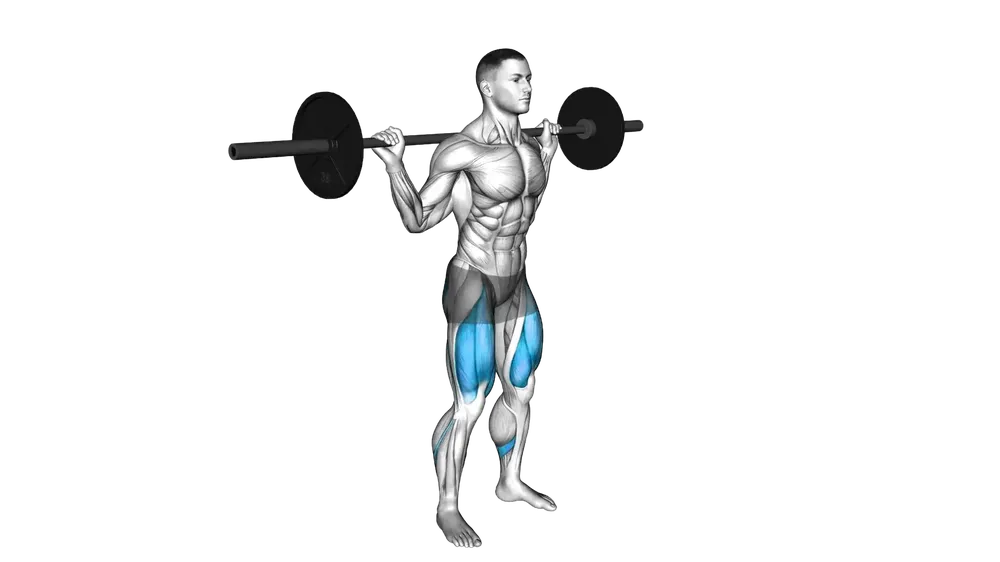
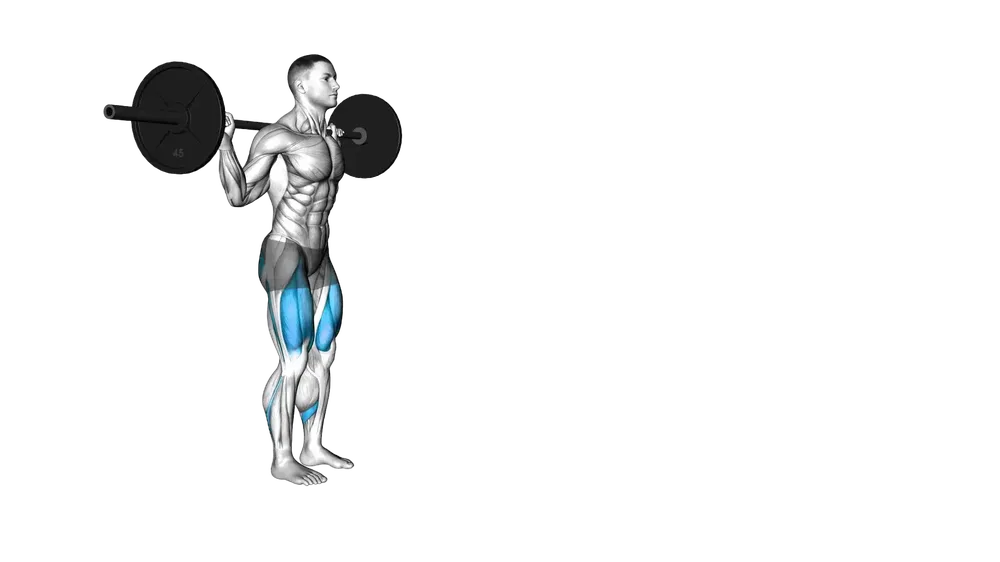
Dip, drive, punch the bar overhead.
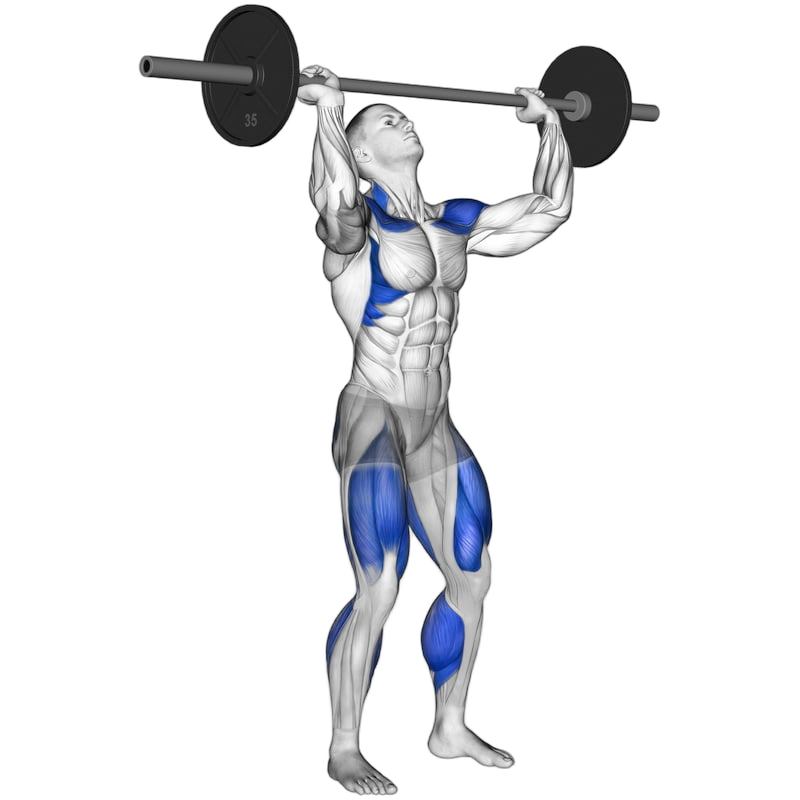
Keep the dip shallow and straight down, the leg drive launches the bar, not your arms.
The push jerk is a leg-driven overhead lift, which is why the quads lead the billing. They power the shallow dip and the explosive drive that launches the bar, then bend again as you press yourself under it. The shoulders take over to catch and lock the bar out while the glutes finish hip extension on the drive. It earns its place for putting far more weight overhead than any strict press, and for building the aggressive leg drive that carries into every explosive lift.
Both use leg drive, but in a push press you press the bar out with straight legs. In a push jerk you rebend the knees and drop under the bar to catch it locked out, which lets you handle heavier weight.
Almost always a dip problem. If the dip drifts onto your toes or your chest tips, the bar launches forward instead of straight up, so keep the dip shallow, vertical and on mid-foot.
Because the legs do the real work. The dip and drive generate the power and the knees bend again to receive the bar, the arms mostly punch to lockout and hold it there.