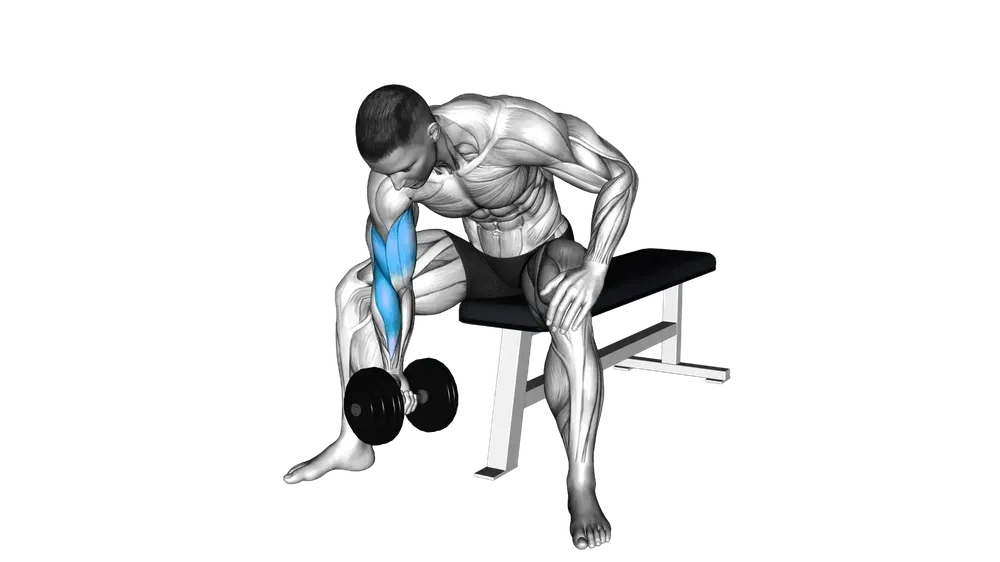
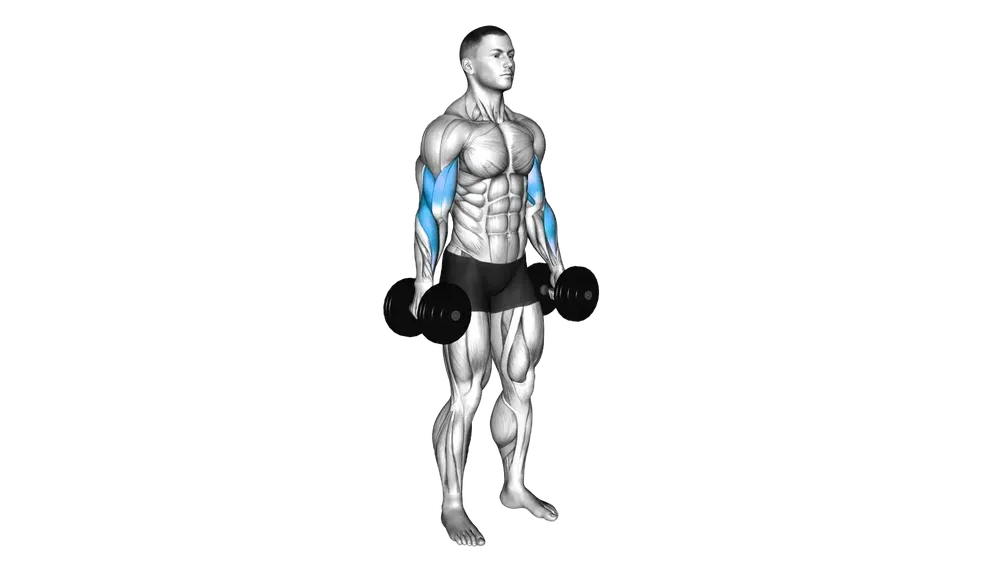
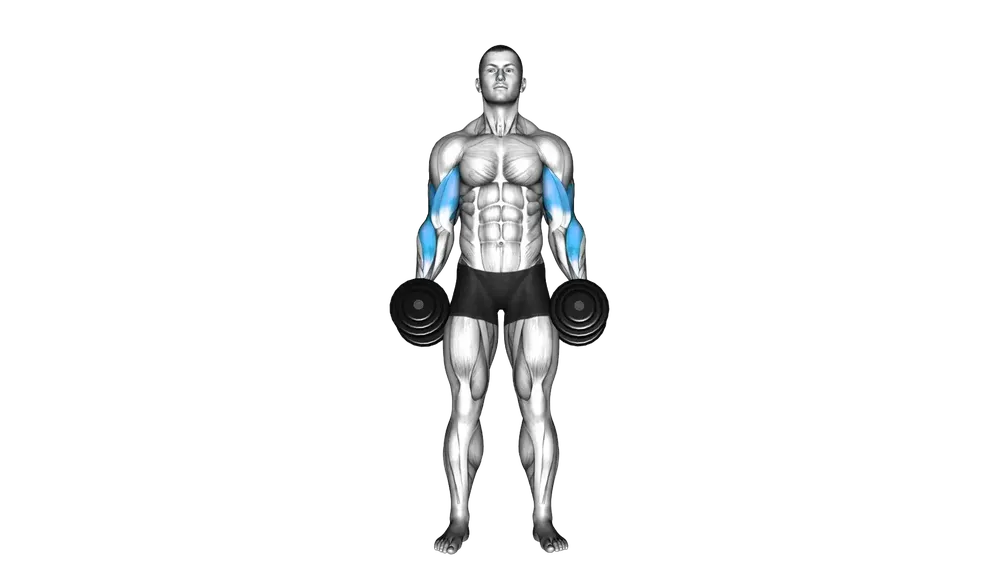
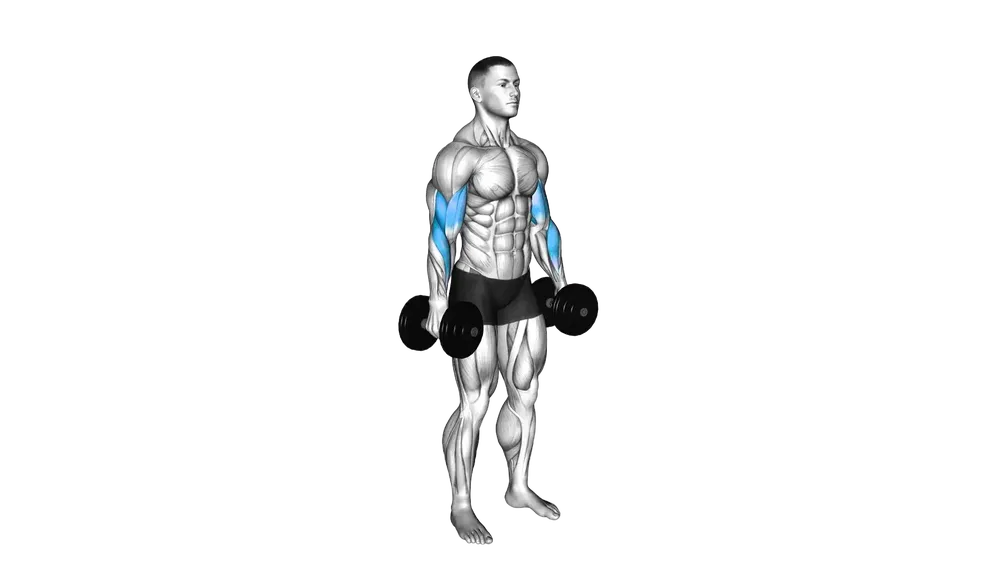
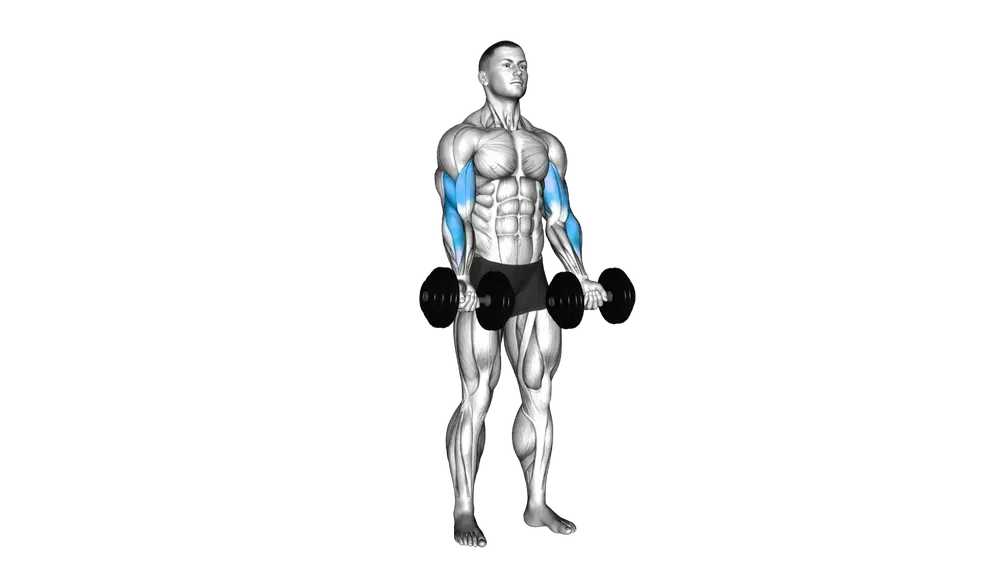
Neutral grip, thick forearms and biceps.
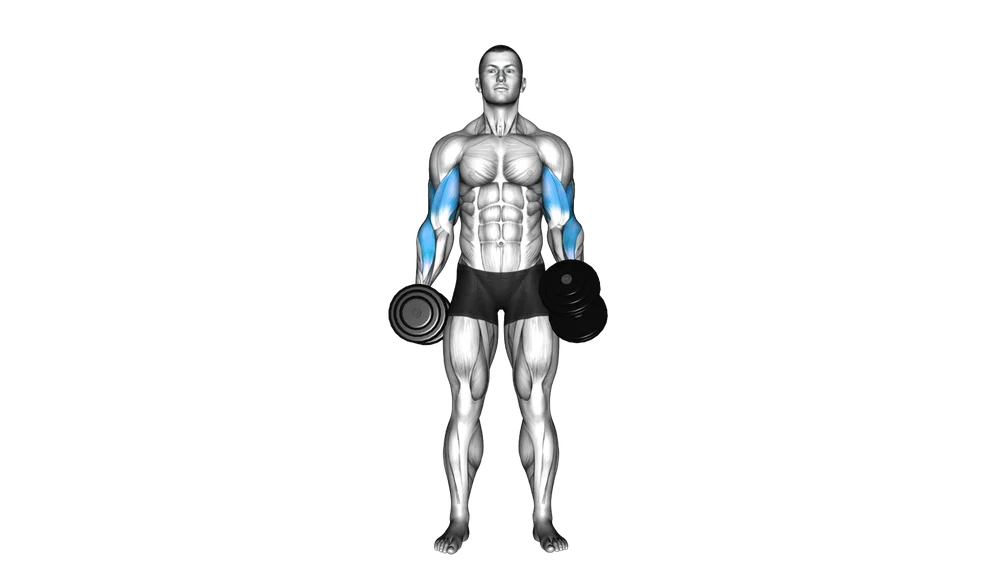
Keep the palm facing in the whole rep, this hammers the brachialis and forearm.
The pinwheel curl keeps a neutral grip and sweeps each dumbbell across your body toward the opposite shoulder, a path that hits the biceps along with the brachialis underneath and the forearms gripping the bell. That cross-body line loads the arm at a slightly different angle to a standard hammer curl, and alternating arms lets you focus on one clean rep at a time. It is a quiet favourite for building thicker arms rather than just a taller peak.
Same neutral grip, different path. A hammer curl travels straight up in front of you, while the pinwheel sweeps across your torso toward the opposite shoulder, changing the angle on the brachialis and forearm.
The neutral grip is what biases the brachialis and forearm muscles alongside the biceps. Rotate the palm up and it becomes a regular curl, which defeats the purpose.
No, the cross-body path should come from the elbow bending, not the shoulder swinging. If you need body momentum to finish reps, the dumbbells are too heavy.