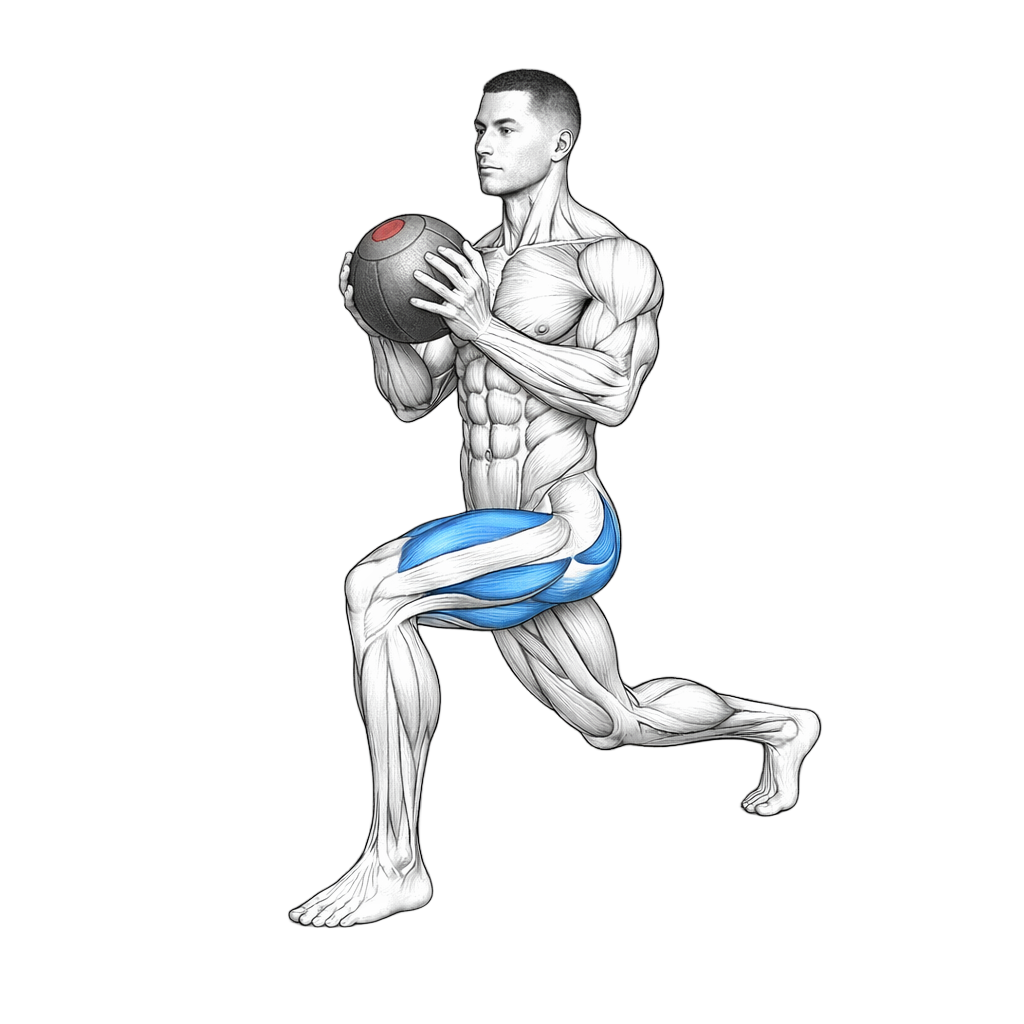
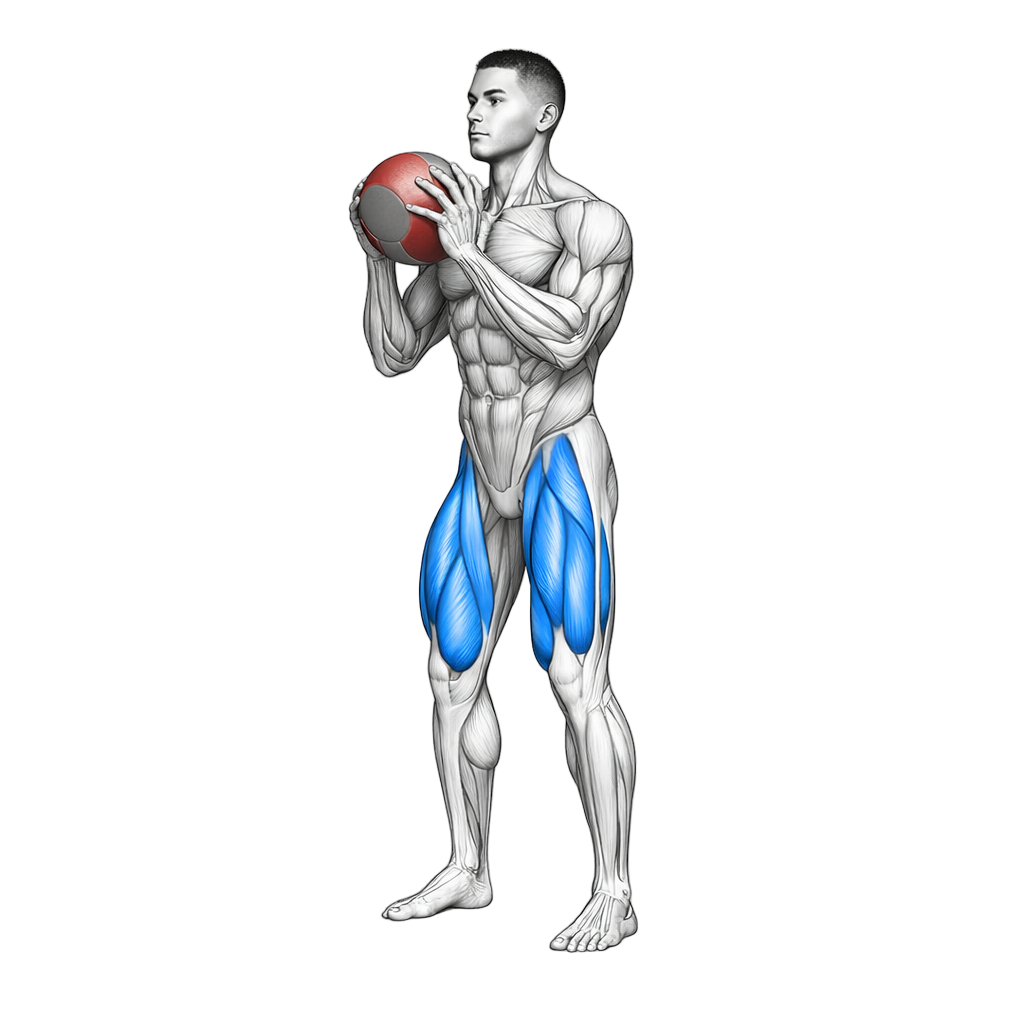
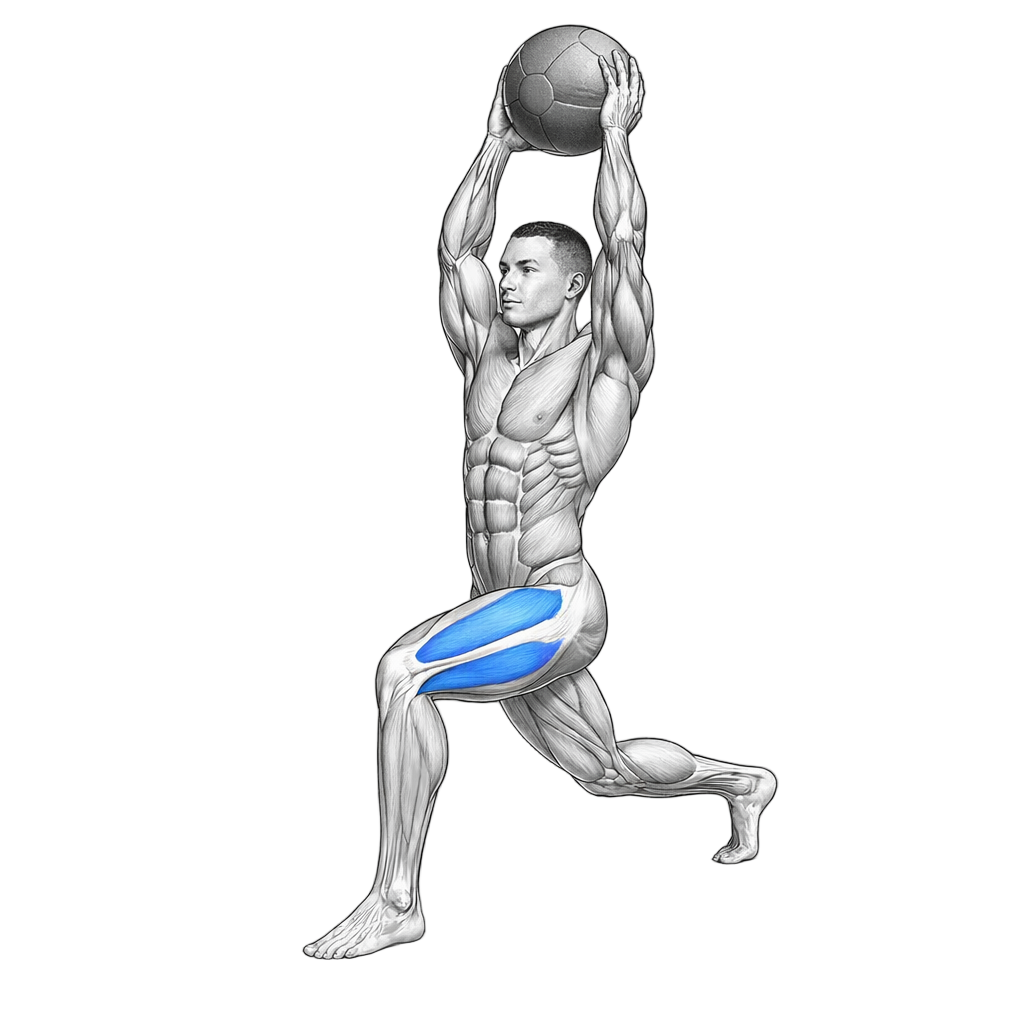
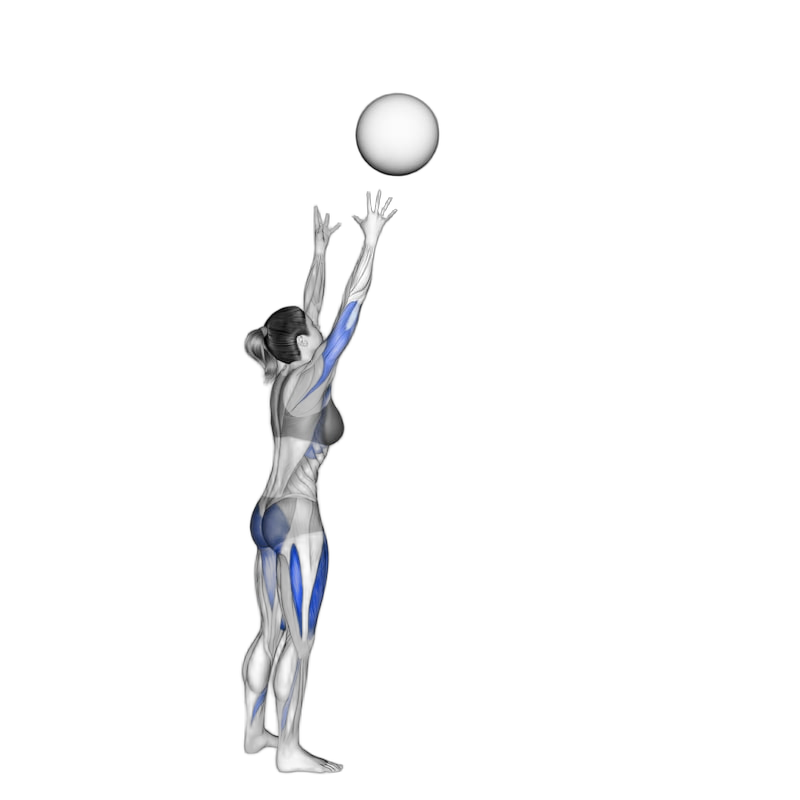
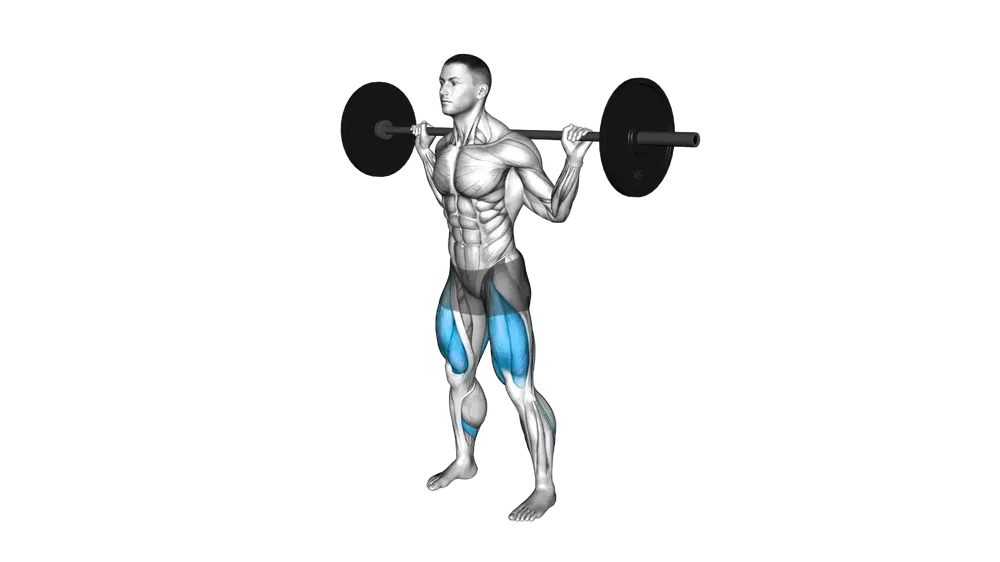
Step wide and own the lateral plane.
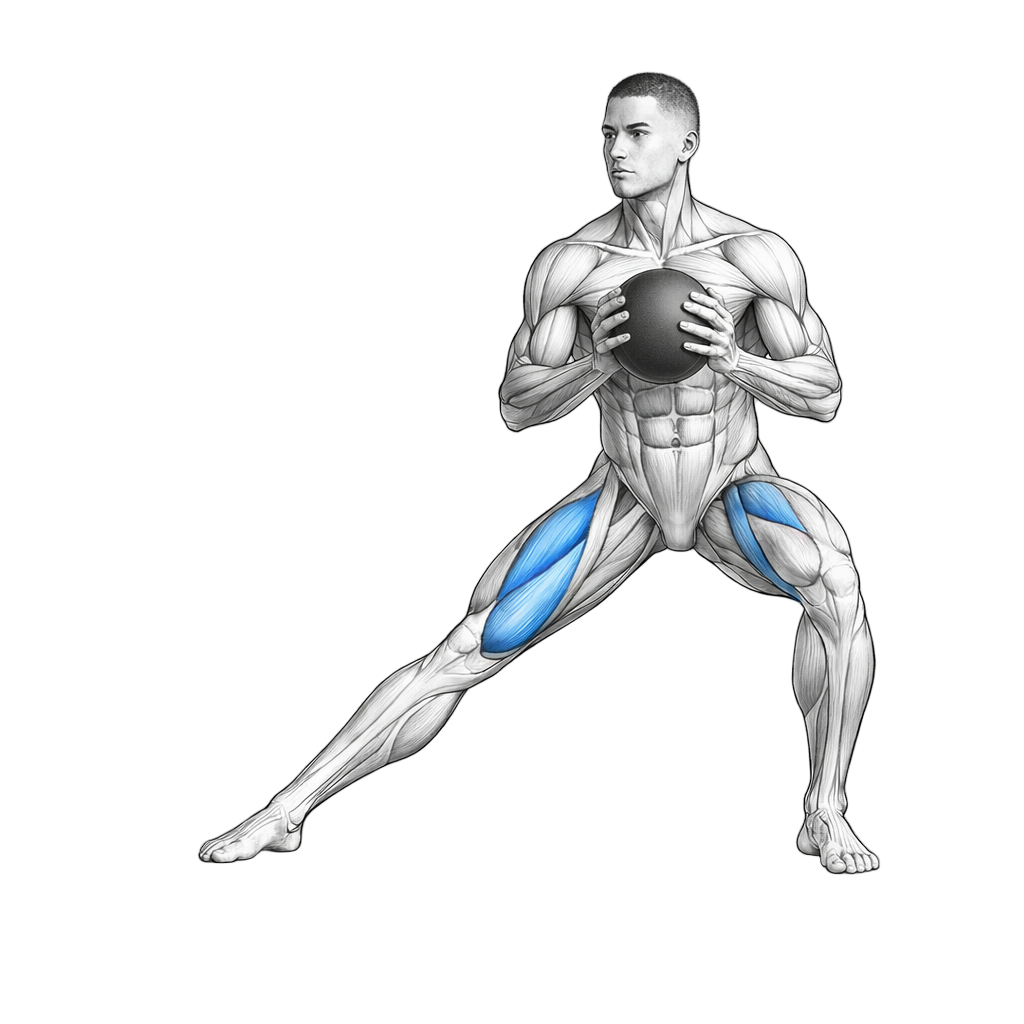
Sit into the hip of the bent leg. Keep your trailing leg straight and toes forward.
Stepping wide and sitting into one knee loads that leg's quads through a deep bend while the glutes control the hip as it sits back and out. Holding the ball at your chest acts as a counterbalance, letting you sink lower without tipping forward. Most training lives in the front-to-back plane, so this is one of the few moves that builds strength stepping sideways, which pays off in sport and in old age alike.
The straight leg gets a long adductor stretch while the bent leg does the lifting. If both knees bend you have just done a wonky squat and lost the point of the lateral step.
Sit your hips back before the knee bends and keep the bent knee tracking over the toes. Shorten the step until you can own the position, then work back out to a bigger stride.
They train the same pattern. The ball at your chest is a natural counterbalance and great for learning the move, while a dumbbell or heavier load makes sense once the pattern is clean and you need more resistance.