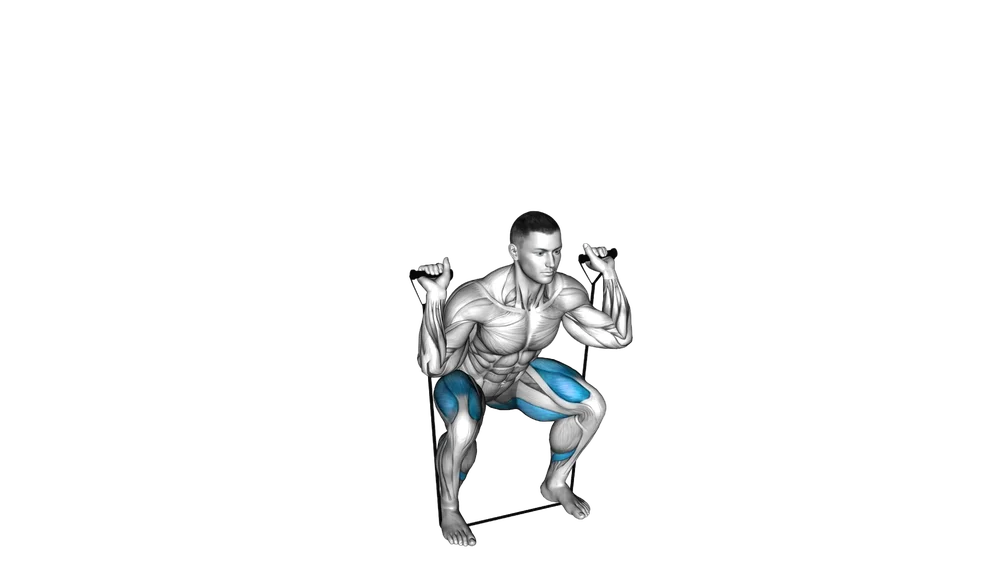
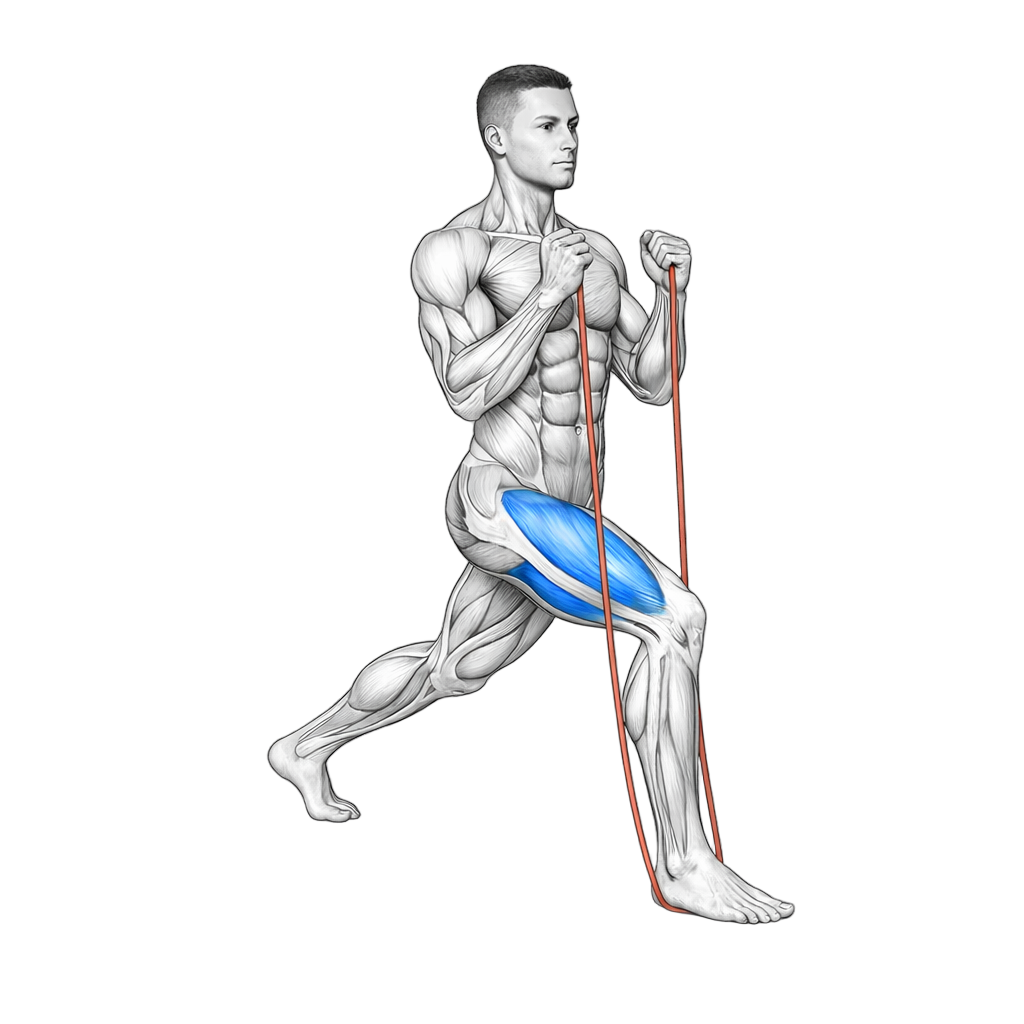
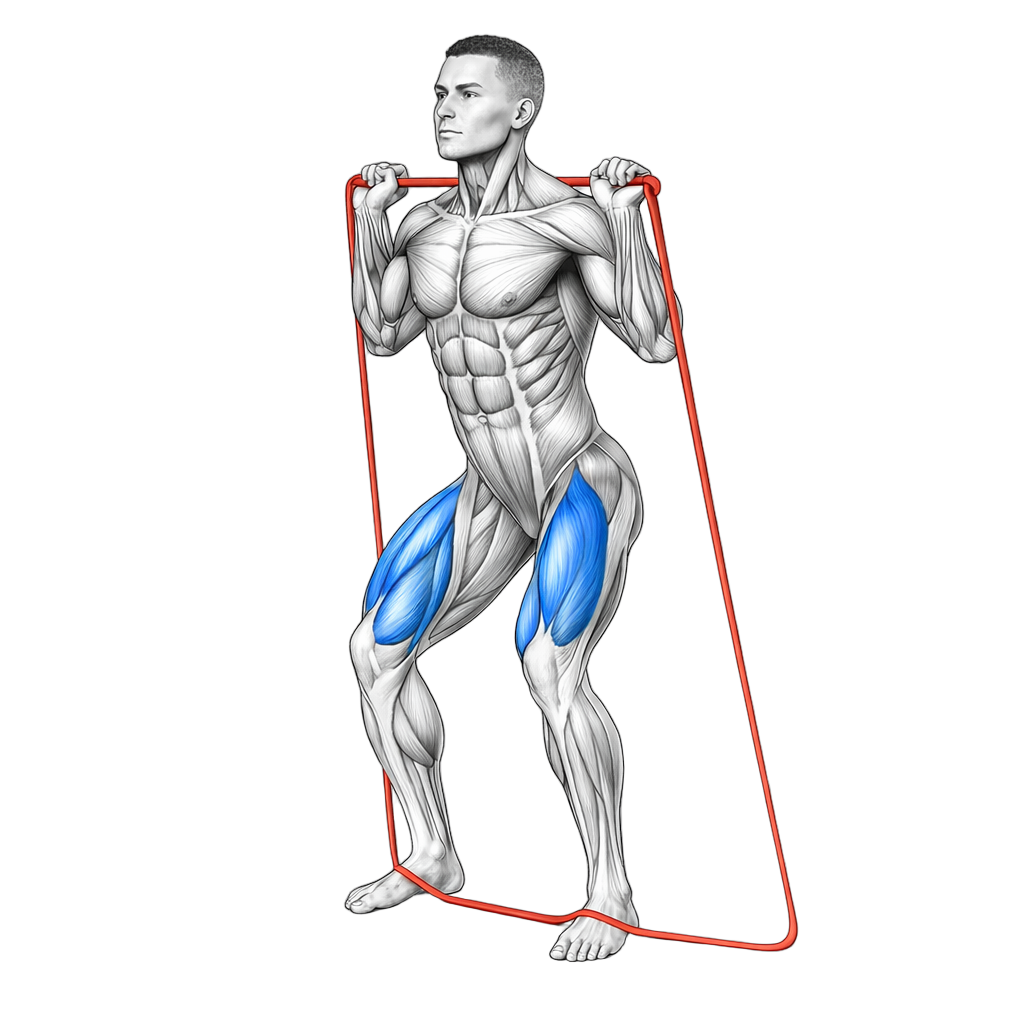
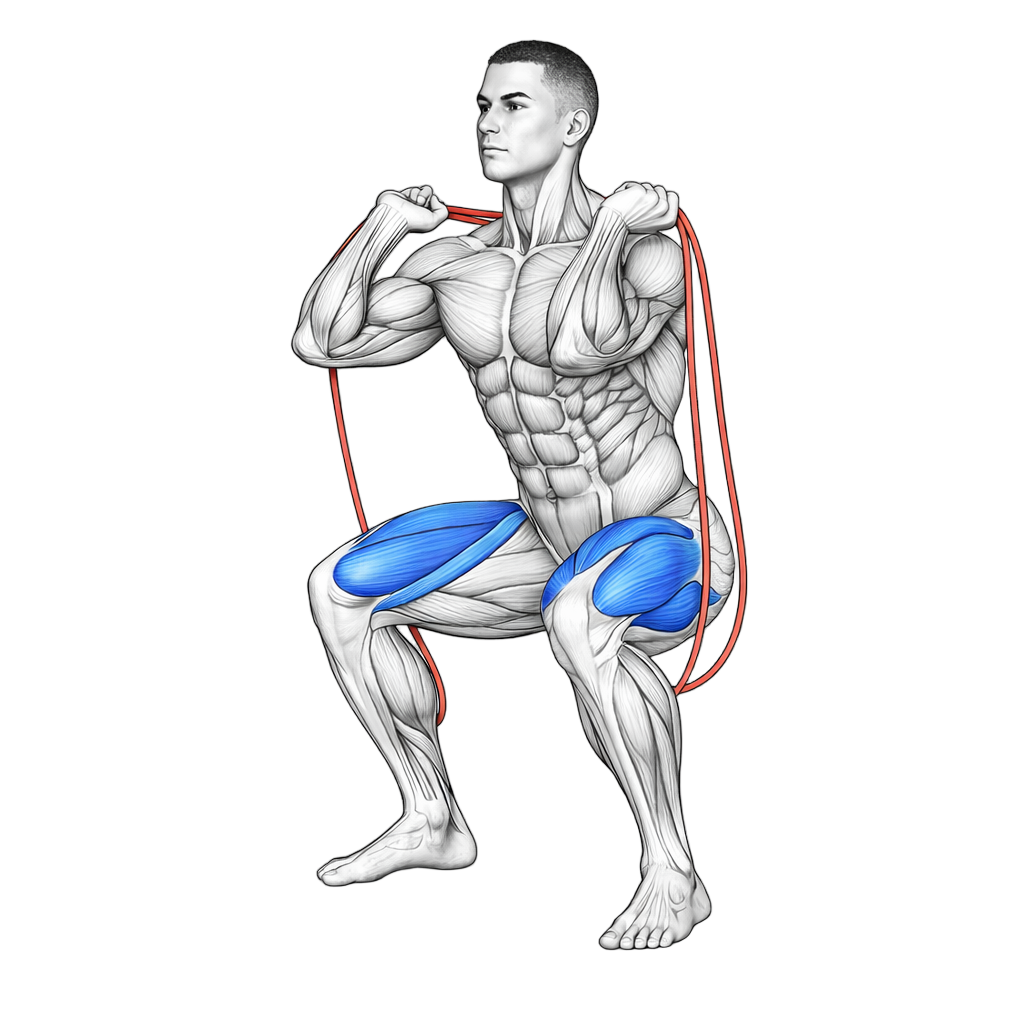
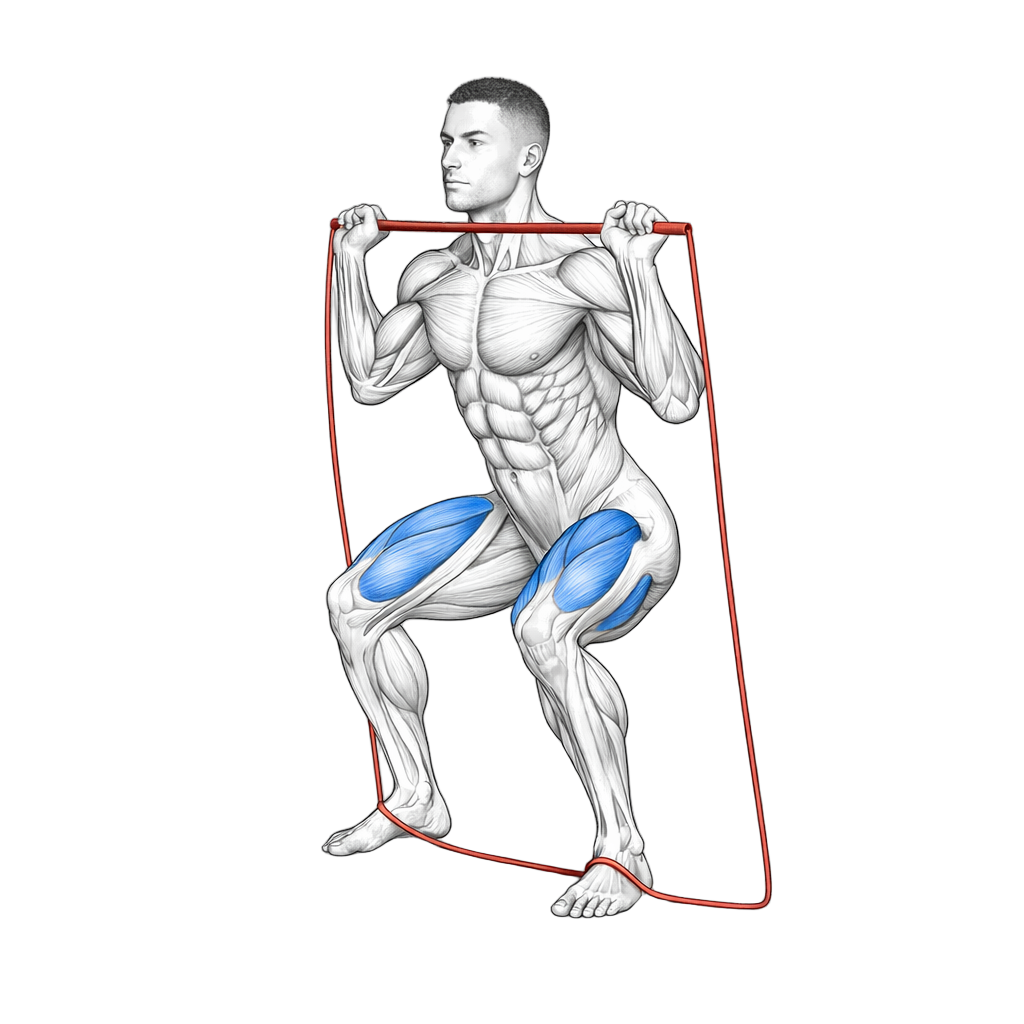
Wide-stance hip hinge powered by band tension.
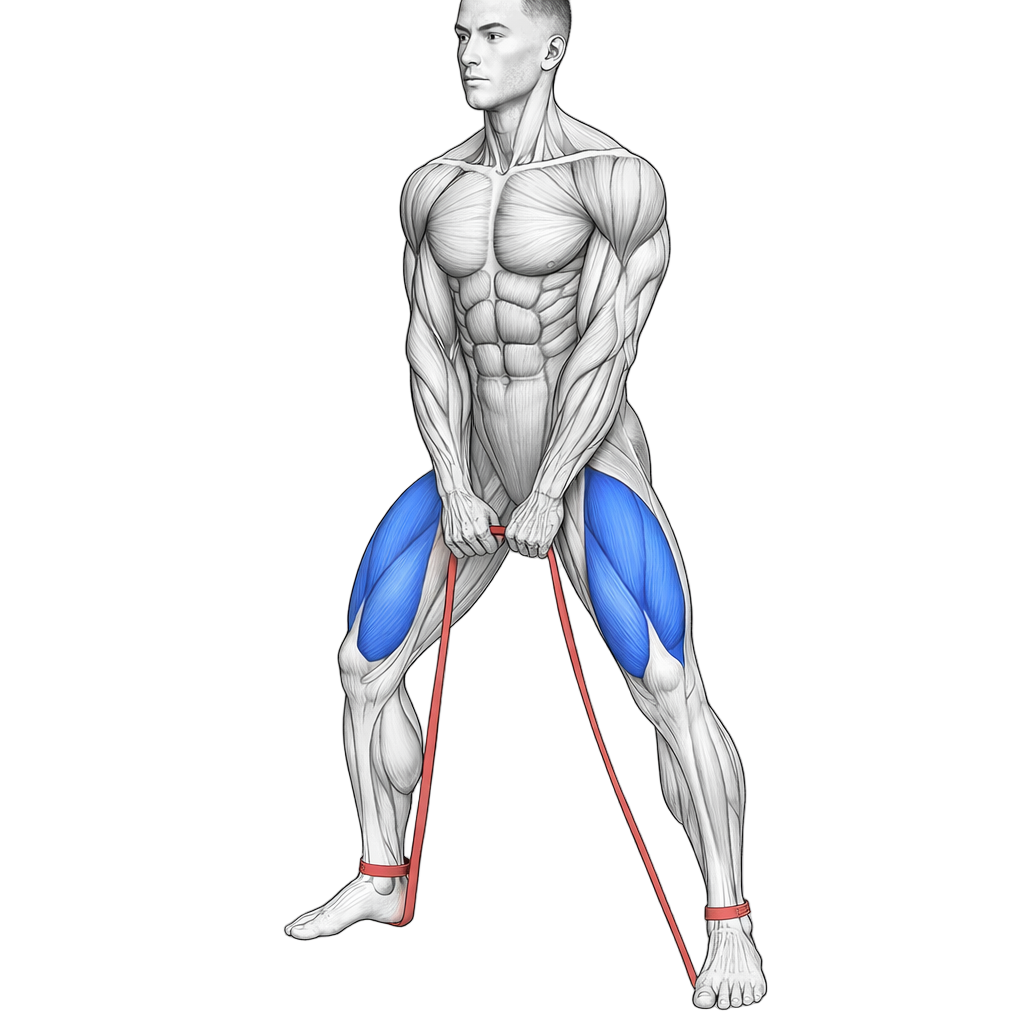
Lead with your hips, not your back, and keep your spine flat the whole pull.
The wide stance and upright torso of the sumo setup put your quads in charge of breaking the bottom position, while your hamstrings and glutes take over to drive the hips through to lockout. Standing on the band means resistance grows as you rise, so the top of the pull, where you are strongest, is where the band bites hardest. It is a smart way to groove the sumo hinge and hammer lockout strength with nothing but a loop.
The wide stance and toes-out setup keep your torso more upright and your knees more bent at the start, which shifts work from the lower back onto the quads. That is why sumo pullers feel their legs where conventional pullers feel their hips and back.
Grip lower on the band or wrap it once around your hands to shorten it, both increase starting tension. After that, double up bands or move to a thicker loop. Slowing the lowering phase also buys you more from the same band.
The wide stance asks a lot of your glutes, and the band punishes any drift. Screw your feet into the floor, push your knees out over your toes from the first pull, and drop band tension until you can hold that position for every rep.