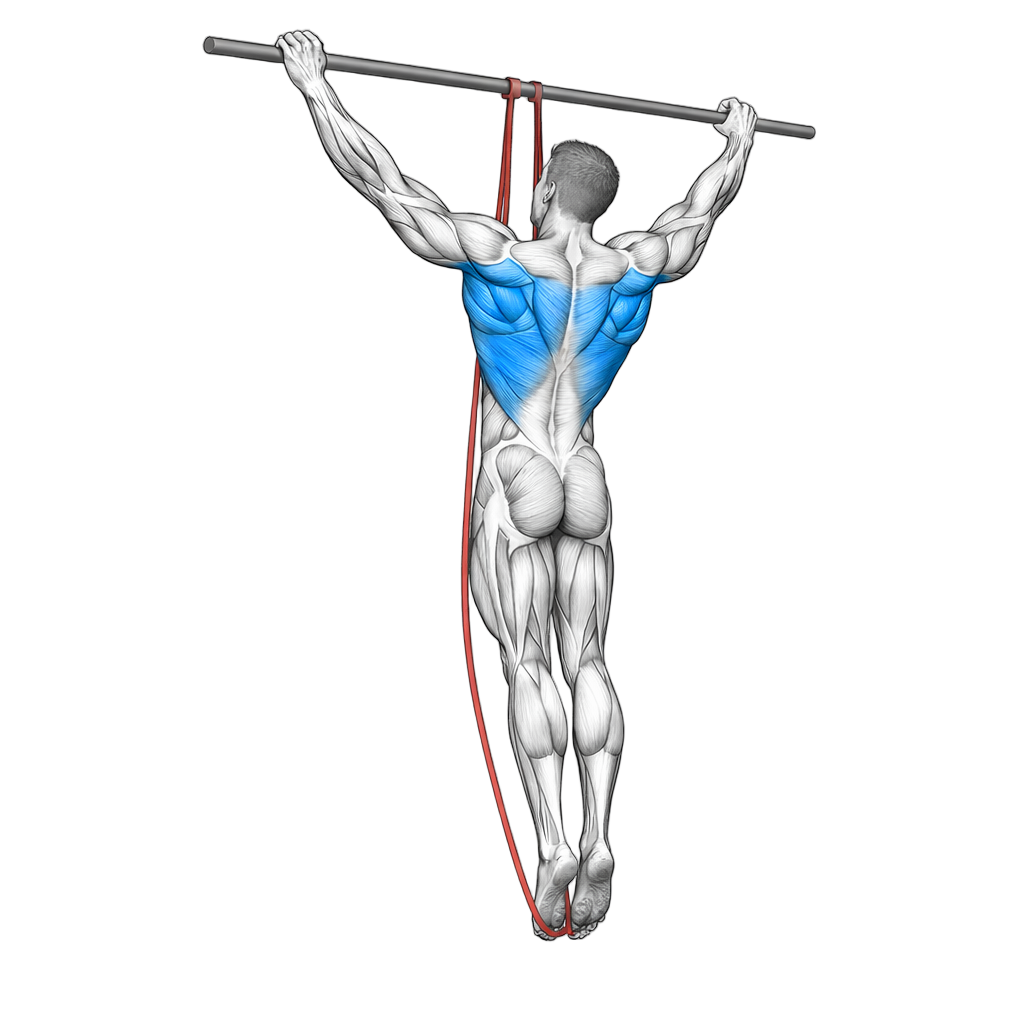
Train the lowering phase to earn your first real pull-up.
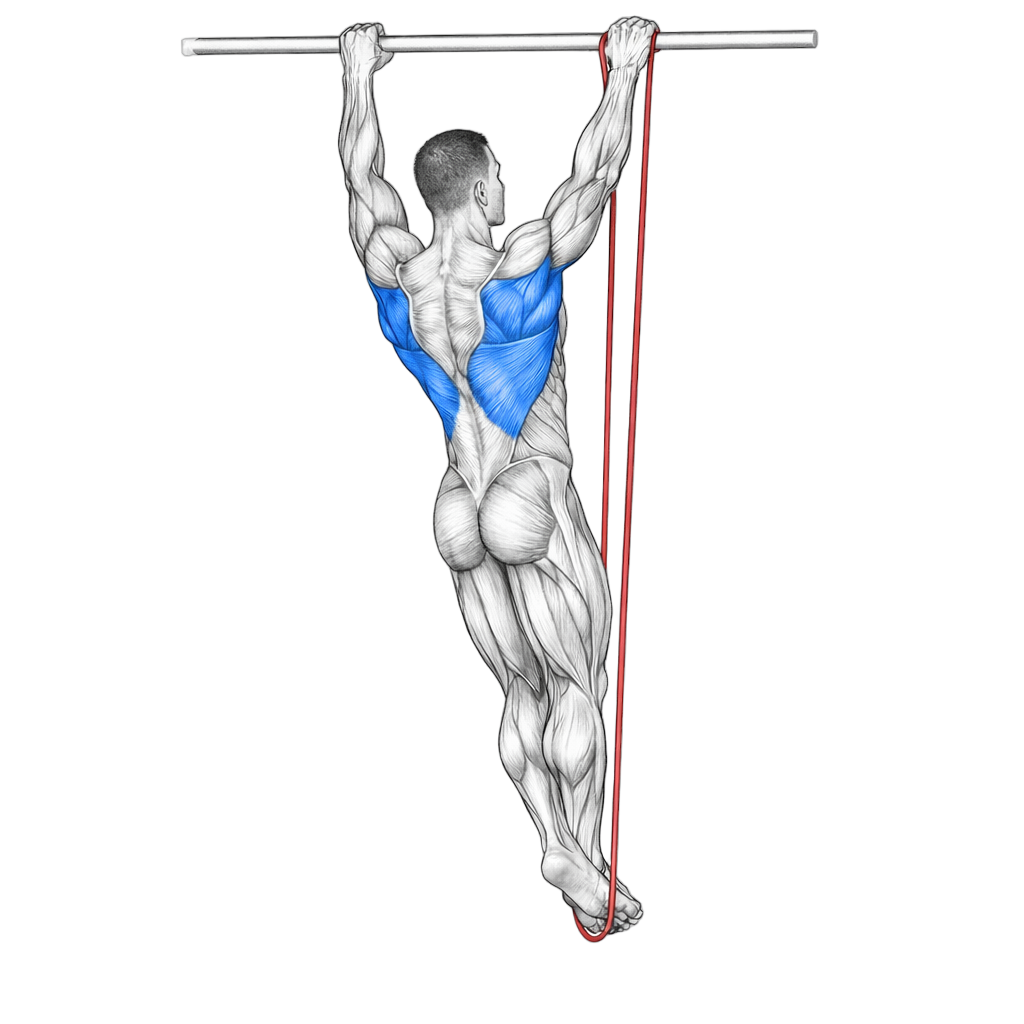
Aim for a slow three to five second descent, that eccentric is where the gains are.
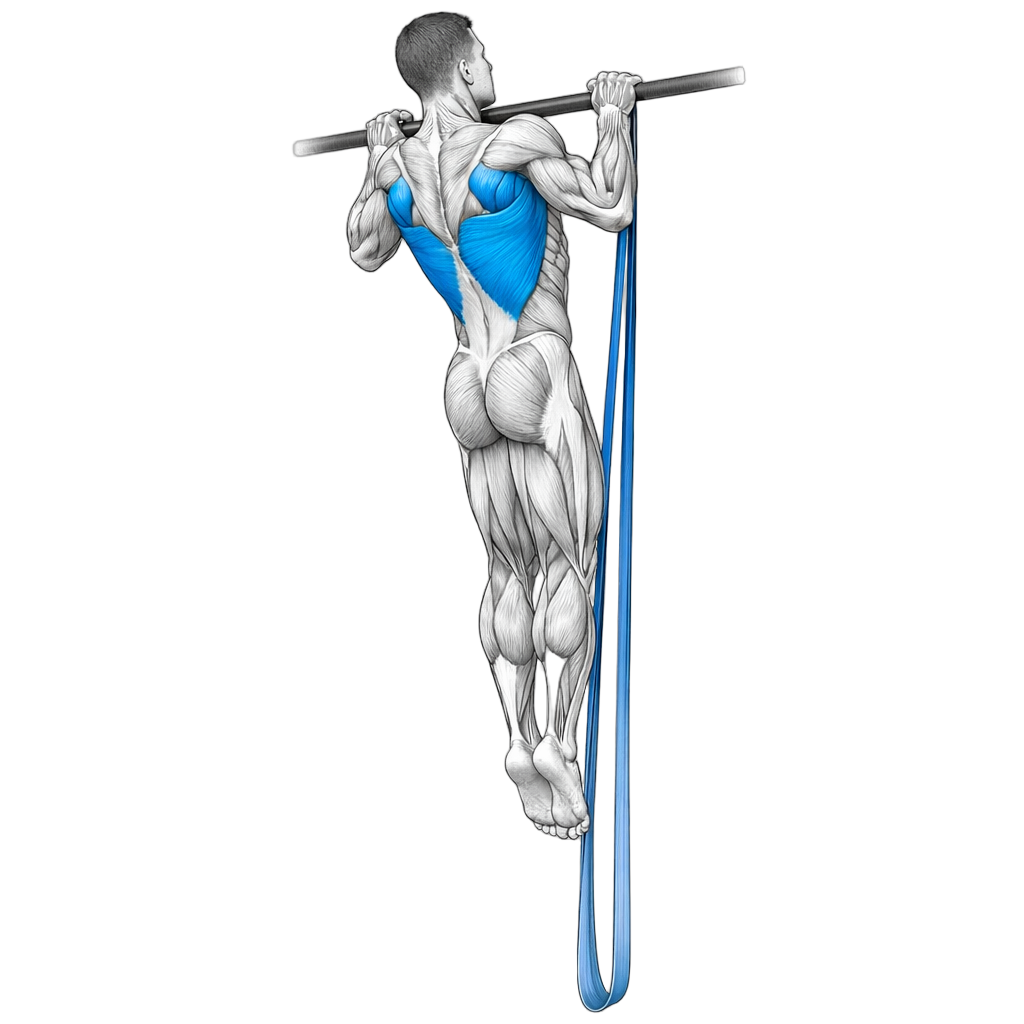
Negatives attack the pull-up from the top down, the band boosts you up to a chin-over-bar position, then you remove the assistance and your back and biceps fight gravity for the slowest descent you can manage. Muscles are strongest in the lowering phase, so this is how you load the full pull-up range before you can lift yourself through it. It's the single most reliable bridge from zero pull-ups to one, provided you treat the descent like a set in itself.
Aim for three to five seconds of smooth descent from chin over the bar to a dead hang. If you drop through any section in under a second, that's the range that needs the most work.
Quality over volume, around 3 to 6 slow reps for a few sets. Negatives create a lot of muscle soreness, so start conservative and leave a day or two between sessions early on.
When you can control several five-second negatives with an even speed all the way down, start testing a full rep, or mix in band-assisted pull-ups to train the upward phase alongside your negatives.